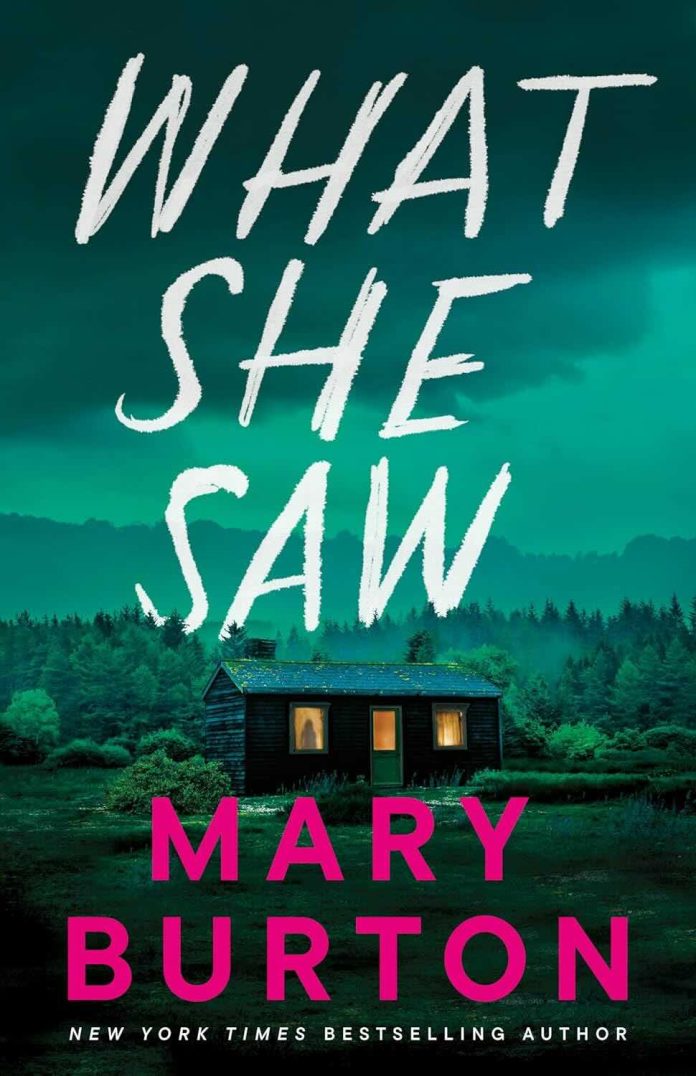
Mary Burton has built her reputation on crafting suspense novels that burrow under your skin and stay there long after the final page. With What She Saw, published in 2025, she delivers another tightly wound thriller that examines what happens when a small town’s buried secrets refuse to stay underground. This latest offering demonstrates why Burton has earned her place among the bestselling names in romantic suspense, though the novel itself presents both triumphs and minor stumbles that warrant examination.
The premise hooks immediately: cold case reporter Sloane Grayson travels to the small mountain town of Dawson, Virginia, where thirty-one years earlier, four women vanished during a chaotic music festival. The case was technically closed when festival promoter Rafe Colton was convicted of their murders. But the bodies were never recovered. And one of those missing women was Sloane’s mother, Patty Reed.
Burton establishes the stakes with characteristic efficiency. Sloane isn’t searching for closure in any sentimental sense. She’s searching for bones, for truth, for the puzzle pieces that the original investigation missed. The author wastes no time on unnecessary preamble, dropping readers directly into the investigation with the same urgency that drives her protagonist forward.
A Protagonist Who Defies Convention
Sloane Grayson stands as one of Burton’s most compelling and complicated creations. She’s not a sympathetic heroine in the traditional sense. She acknowledges her own sociopathic tendencies with unsettling frankness, admits to a history of breaking and entering, and confesses that she doesn’t experience emotions the way ordinary people do. She describes herself as a mimic, a faker who learned to wear the appropriate expressions without feeling them underneath.
This characterization presents a fascinating paradox. Sloane hunts for justice not because she feels genuine empathy for victims but because she loves puzzles. The cold cases she investigates satisfy something in her that operates beyond conventional morality. Burton handles this moral complexity with surprising nuance, allowing readers to recognize Sloane’s damage without excusing it or making her entirely unsympathetic.
The author wisely anchors Sloane’s emotional detachment in concrete backstory. Raised by her grandmother after her mother’s disappearance, abandoned by a psychopathic biological father serving life in prison, Sloane carries the genetic lottery in every cell. Yet Burton carefully distinguishes between inheritance and destiny. Sloane may share DNA with monsters, but her violence remains directed, controlled, and ultimately in service of exposing other predators.
The Architecture of Suspense
Burton employs a dual timeline structure that alternates between Sloane’s present-day investigation in 2025 and flashbacks to the original 1994 investigation conducted by Sheriff CJ Taggart. This technique serves multiple purposes, revealing how investigations can go wrong, how evidence gets compromised, and how community pressure can push law enforcement toward convenient conclusions rather than complete truths.
The historical chapters illuminate the chaos of the original festival and its aftermath without providing easy answers. Burton resists the temptation to make Taggart either hero or villain. He was a sheriff overwhelmed by circumstances, pressured by politicians, and ultimately convinced he’d caught the right man despite never finding the bodies. His chapters add texture and tragedy to a case that might otherwise feel like ancient history.
Elements Burton Executes With Expertise
- The small-town atmosphere feels authentic rather than caricatured, populated by characters protecting their own interests and reputations
- The investigation proceeds logically, with Sloane earning every clue through persistence rather than convenient coincidences
- The romantic subplot with Grant McKenna develops organically from professional collaboration to genuine connection
- The pacing maintains tension without resorting to artificial cliffhangers or withholding information unfairly from readers
- The prose style remains clean and direct, mirroring Sloane’s no-nonsense approach to her work
Where the Foundation Shows Cracks
Despite its considerable strengths, What She Saw occasionally stumbles in execution. The villain’s ultimate identity, while adequately foreshadowed, relies on motivations that feel somewhat undercooked. After building such elaborate mystery around the accomplice’s identity, the revelation lands with less impact than the setup promises.
Burton’s romantic elements, while generally well-integrated, sometimes interrupt the investigation’s momentum at inopportune moments. Grant McKenna serves the story well as both love interest and investigative partner, but certain intimate scenes feel inserted more from genre obligation than narrative necessity. Readers seeking pure crime fiction may find these passages distract from the central mystery.
The novel also occasionally overexplains its own cleverness. Sloane’s observations about investigation technique and criminal psychology sometimes edge toward lecturing rather than demonstrating. Burton clearly possesses deep knowledge of cold case methodology, but the information delivery could benefit from subtler integration.
Areas That Would Strengthen the Narrative
- Deeper exploration of the accomplice’s psychology and the circumstances that led to their participation
- Tighter integration of romantic elements with investigative plot threads
- Reduced repetition of Sloane’s self-assessment regarding her emotional limitations
- More distinctive voices in the supporting cast, particularly among the interview subjects
The Verdict on Burton’s Latest
What She Saw ultimately succeeds because Burton understands what makes cold case fiction compelling. It isn’t simply the mystery of who committed the crime. It’s the question of why justice failed in the first place, who benefited from that failure, and what resurrection of the past costs those who survived it. The novel examines how small towns protect their own, how time transforms memory into mythology, and how some wounds refuse to heal without acknowledgment.
Burton’s prose maintains the propulsive readability that has defined her career. Sentences land with purpose. Dialogue reveals character efficiently. The Virginia mountain setting breathes with convincing specificity. For readers who appreciate protagonists operating in moral gray zones while pursuing ultimately righteous goals, Sloane Grayson offers satisfying company.
For Readers of Mary Burton’s Previous Works
Those familiar with Burton’s extensive catalog will recognize her signature strengths here. The psychological complexity of protagonists seen in Another Girl Lost and The House Beyond the Dunes continues with Sloane. The small-town secrets that powered Burn You Twice and The Lies I Told find new expression in Dawson’s layered community. The methodical investigation style from her Texas Rangers series translates effectively to this Virginia setting.
Similar Books Worth Exploring
Readers who appreciate What She Saw should consider these complementary titles:
- The Good Daughter by Karin Slaughter – Another damaged investigator confronting past violence
- The Last Thing She Ever Did by Gregg Olsen – Small-town secrets with devastating consequences
- Her Last Breath by Linda Castillo – Rural settings harboring dark truths
- Still Missing by Chevy Stevens – Trauma’s long shadow over survivors
- The Breakdown by B.A. Paris – Memory and reliability in crisis
Final Assessment
What She Saw represents Mary Burton operating at near-peak form. The novel delivers on its central promise of cold case suspense while offering a protagonist complex enough to warrant the journey. Minor structural weaknesses prevent it from achieving the heights of Burton’s absolute best work, but readers seeking intelligent thriller fiction with genuine psychological depth will find their time well spent in Dawson’s shadow-laden mountains. The Festival Four may have waited thirty-one years for justice. Their story proves worth the excavation.







