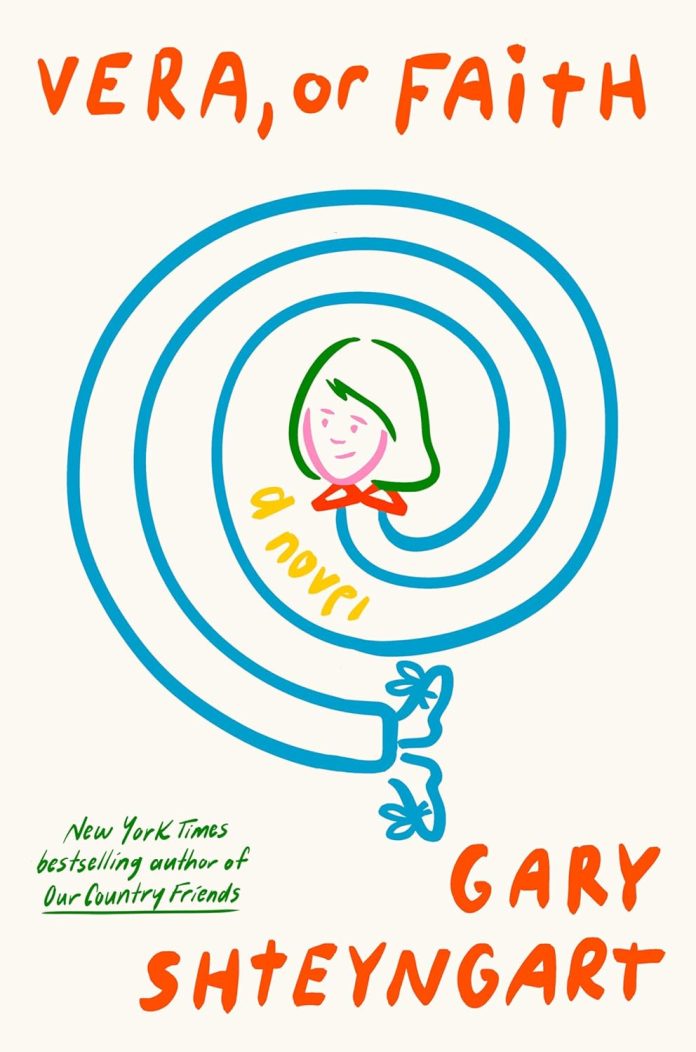
Gary Shteyngart’s latest novel, Vera, or Faith, delivers what may be his most emotionally resonant work yet—a masterful exploration of American identity, family dysfunction, and political upheaval filtered through the remarkably perceptive eyes of ten-year-old Vera Bradford-Shmulkin. Following the critical success of Super Sad True Love Story and Our Country Friends, Shteyngart continues his examination of contemporary American malaise, but this time with a protagonist whose youth makes her observations both more devastating and more hopeful.
The novel unfolds in a near-future America where constitutional conventions threaten to establish “Five-Three,” a system giving enhanced voting power to those who can trace their lineage to the Revolutionary War. Against this backdrop of creeping authoritarianism, Vera navigates the complexities of being a half-Jewish, half-Korean child in a family that embodies America’s multicultural promise while simultaneously revealing its fundamental fragility.
A Family Portrait in Crisis
The Bradford-Shmulkin Dynamics
Shteyngart excels at creating a family that feels both uniquely specific and universally recognizable. Igor “Daddy” Shmulkin, a struggling magazine editor of Russian-Jewish heritage, represents the intellectual immigrant class caught between ambition and desperation. His gradual descent into collaboration with foreign interests—selling his editorial integrity for financial security—serves as a microcosm of American democratic decay. Anne “Anne Mom” Bradford, the progressive Boston Brahmin whose trust fund barely sustains the family, embodies the exhausted liberal elite, fighting political battles while struggling to hold her personal world together.
The marriage between Daddy and Anne Mom crackles with authentic tension. Their fights, conducted in elevated vocabulary that masks deep wounds, reveal Shteyngart’s ear for how educated couples weaponize language. When Anne Mom calls Daddy “a monster, but not even a fascinating one,” the insult lands with surgical precision because it targets his writerly ego as much as his character.
Vera’s Unique Perspective
What elevates this family drama into something extraordinary is Vera herself—a character who ranks among literature’s most compelling child narrators. Her “Things I Still Need to Know Diary” becomes a brilliant device for exploring how children process adult complexity. Words like “raffish,” “pendulous,” and “zeitgeist” populate her vocabulary while she struggles with fundamental questions of belonging and identity.
Vera’s relationship with her AI chess companion Kaspie provides some of the novel’s most touching moments. Their conversations reveal how technology can serve as both connection and isolation, particularly when Kaspie becomes the vehicle through which Vera discovers her father’s treachery. The scene where Kaspie translates Russian documents detailing Igor’s collaboration is heartbreaking—a moment where artificial intelligence delivers all-too-human devastation.
The Political Landscape as Character
Authoritarianism’s Creeping Influence
Shteyngart’s speculative elements never feel heavy-handed or implausible. The “March of the Hated” (MOTH) demonstrations, the “Cycle Through” border checkpoints, and the Five-Three constitutional amendments create a believable near-future where democratic norms have eroded gradually rather than catastrophically. The novel’s genius lies in showing how these large political movements affect intimate family moments—how Vera’s insomnia worsens after witnessing marches, how her parents’ fights intensify as political pressure mounts.
The author particularly excels at depicting how children experience political upheaval. Vera’s confusion about why kids in overalls march with signs reading “THEY HAVE TAKEN MY FUTURE AWAY FROM ME” captures how young minds process abstract political concepts through concrete imagery. Her heartbreak for these children—seeing them as fellow outcasts rather than political enemies—demonstrates the novel’s underlying faith in human empathy.
Literary Craft and Technique
Narrative Voice and Structure
Shteyngart’s decision to write from Vera’s perspective pays tremendous dividends. Her voice—precocious but authentically childlike—allows the author to explore serious themes while maintaining accessibility and emotional immediacy. The chapter titles, all beginning with “She Had to,” create a sense of mounting pressure that mirrors both Vera’s internal state and the country’s political trajectory.
The novel’s structure, moving from “The First Day” through “The Fall of Vera,” traces both a school year and a family’s disintegration. This parallel timing creates natural dramatic tension while allowing for character development that feels organic rather than forced.
Language and Humor
Even in its darkest moments, the novel maintains Shteyngart’s signature humor. Vera’s mispronunciations and misunderstandings provide levity without undermining the story’s emotional weight. Her description of Dylan as “shaped lean and tubular like a dachshund” or her confusion about “preggers” and “abortion” deliver laughs while illuminating her innocence.
The author’s facility with dialogue remains exceptional. Each character speaks with a distinct voice—from Daddy’s pretentious intellectualizing to Anne Mom’s exhausted pragmatism to Yumi’s diplomatic politeness. These voices feel lived-in rather than constructed, contributing to the novel’s overall authenticity.
Strengths and Minor Shortcomings
What Works Brilliantly
- Character Development: Vera’s emotional journey from desperate child seeking approval to someone who must confront adult betrayal feels genuine and earned
- Political Commentary: The speculative elements serve the story rather than overwhelming it
- Family Dynamics: The complex relationships between parents and children ring true without sentimentality
- Cultural Identity: Vera’s Korean heritage and her search for her birth mother add layers of meaning about belonging in America
Areas of Concern
The novel occasionally suffers from pacing issues in its middle section, where Vera’s school experiences sometimes feel disconnected from the main narrative thrust. Additionally, some of the political world-building, while clever, occasionally tips toward heavy-handedness, particularly in the book’s final act where the human trafficking raid strains credibility.
The resolution, though emotionally satisfying, arrives somewhat abruptly after the intense buildup. Readers might wish for more exploration of how Vera processes her discoveries about her father and birth mother.
Legacy and Literary Context
Vera, or Faith stands as a worthy successor to Shteyngart’s previous works while marking a new maturity in his voice. Like The Russian Debutante’s Handbook and Absurdistan, it explores immigrant experience, but with greater emotional depth. The novel shares DNA with Super Sad True Love Story in its dystopian elements, but feels more grounded in recognizable reality.
The book joins a distinguished tradition of novels exploring American identity through children’s eyes, echoing works like Harper Lee’s To Kill a Mockingbird and Tayari Jones’s An American Marriage in its examination of how adult failures impact the innocent.
Recommended Reading for Similar Themes
Readers who appreciate Vera, or Faith might enjoy:
- Shteyngart’s Earlier Works: Our Country Friends and Little Failure for more of his distinctive voice
- Immigrant Family Narratives: Jess Walter’s So Far Gone and Min Jin Lee’s Pachinko
- Child Narrators in Crisis: Emma Donoghue’s Room and Hanya Yanagihara’s To Paradise
- Political Dystopia: Margaret Atwood’s The Handmaid’s Tale and Colson Whitehead’s Zone One
Final Verdict
Vera, or Faith succeeds as both an intimate family portrait and a broader meditation on American democracy’s fragility. Shteyngart has crafted a novel that trusts its young narrator to carry weighty themes without losing sight of childhood’s essential concerns—friendship, family, and the desperate need to belong. The book’s emotional core—a daughter’s love for flawed parents in an imperfect world—resonates long after the final page.
While not without minor flaws, the novel represents Shteyngart at his most emotionally generous, creating a character in Vera who embodies both America’s promise and its ongoing struggles with identity, belonging, and truth. In our current moment of political division and cultural uncertainty, Vera, or Faith offers no easy answers but provides something perhaps more valuable: a reminder that even in dark times, human connection and understanding remain possible.







