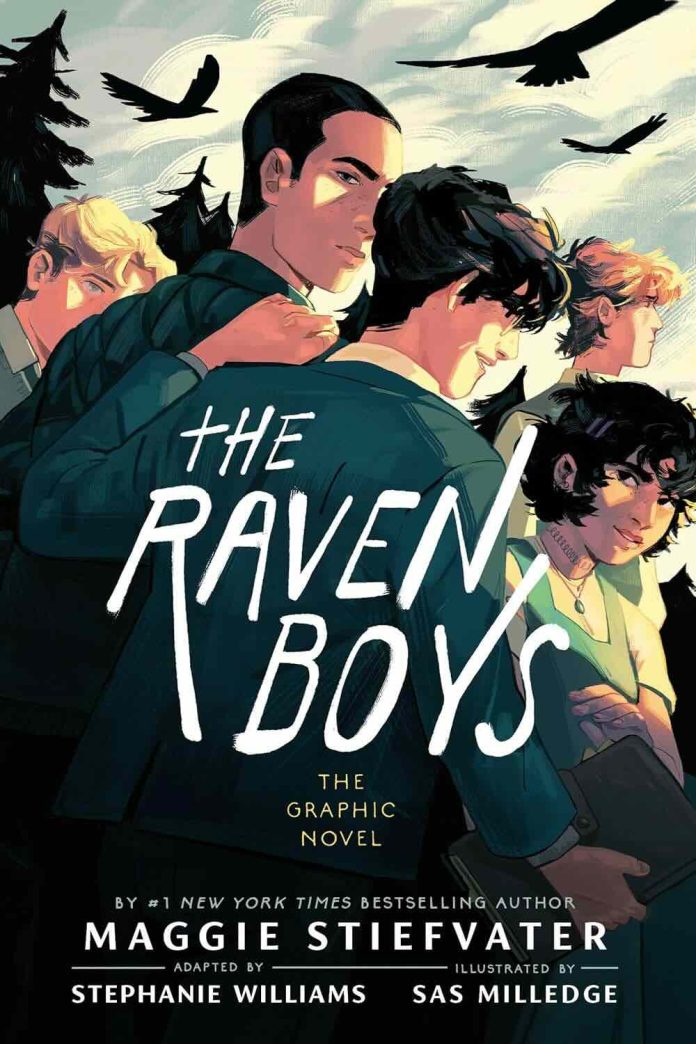
In The Raven Boys – The Graphic Novel, Stephanie Williams and Sas Milledge breathe vivid visual life into Maggie Stiefvater’s haunting and lyrical tale of mysticism, fate, and found family. The original The Raven Boys—first published in 2012—launched The Raven Cycle, a critically acclaimed YA fantasy series known for its moody prose, enigmatic characters, and ethereal sense of atmosphere.
This graphic adaptation, the first in The Raven Cycle: The Graphic Novels, preserves the emotional heartbeat of the original story while offering a fresh, visual format that is inviting for both new readers and longtime fans. With an average reader rating of 4 out of 5 stars, this adaptation has garnered both admiration and thoughtful critique—and for good reason. It is as much a tribute to Stiefvater’s unique world as it is a standalone work of storytelling art.
Series Context: What is The Raven Cycle?
To appreciate the full scope of The Raven Boys – The Graphic Novel, it helps to understand its place within Maggie Stiefvater’s broader narrative universe. The Raven Cycle comprises four main titles:
- The Raven Boys
- The Dream Thieves
- Blue Lily, Lily Blue
- The Raven King
The story centers on Blue Sargent and a group of prep school boys—collectively known as the Raven Boys—as they search for the mythical Welsh king Glendower, believed to be buried along a magical ley line beneath the fictional town of Henrietta, Virginia. As their search unfolds, so does a tangle of personal histories, mythologies, and relationships that evolve far beyond their original quest.
This graphic novel adaptation covers the events of the first book, distilling its supernatural core and emotional resonance into illustrated form.
Story Overview: When Fate Meets Found Family
Blue Sargent is not psychic, though she was born into a house full of clairvoyants. All her life, she’s been told one chilling prophecy: if she kisses her true love, he will die. This idea—equal parts tragic and romantic—hovers above everything she does, especially when she encounters four boys from the elite Aglionby Academy: Gansey, Ronan, Adam, and Noah.
Drawn into their quest to uncover the resting place of Glendower, Blue is torn between skepticism and wonder. What begins as a reluctant curiosity transforms into a powerful bond between herself and the boys. Together, they unlock secrets buried in the earth—and within themselves. The Raven Boys are each haunted in their own way, and Blue is the axis around which their lives begin to shift.
The graphic novel captures this transformation with remarkable clarity, using both visual storytelling and streamlined dialogue to trace the arc of connection, discovery, and danger.
Visual Storytelling: Art as Emotion
Sas Milledge’s artwork plays a defining role in how The Raven Boys – The Graphic Novel unfolds. Her style is painterly, emotionally tuned, and often dreamlike—perfect for a story that deals as much in feelings as in plot.
Highlights of Milledge’s visuals include:
- The muted, earthy color palette that deepens mood rather than distracts
- Blue’s eclectic home at 300 Fox Way, rendered with warm clutter and mystical detail
- The ley lines that glow with surreal energy, giving a sense of something otherworldly pulsing beneath the page
- Distinctive panel transitions that reflect inner monologues, memory flashes, and magical shifts
The visual language doesn’t overwhelm the narrative; rather, it enhances it. Characters are often drawn in posture and gesture that say as much as their words do. The close-ups of Blue’s uncertainty, Gansey’s obsession, and Ronan’s barely restrained anger give texture to every moment.
Strengths of the Adaptation
Stephanie Williams’ adaptation remains largely faithful to the spirit and substance of Maggie Stiefvater’s novel. While some readers may miss the introspective lyricism of Stiefvater’s prose, the graphic novel compensates by evoking mood through color, framing, and visual pacing.
What makes The Raven Boys – The Graphic Novel stand out is how it balances world-building and character study. These are not just puzzle pieces in a magical scavenger hunt—they’re young people trying to make sense of their identities in a world that constantly shifts beneath them.
Some notable strengths include:
- A strong emotional core focused on character relationships
- Balanced representation of magical realism with grounded teen drama
- A visual style that mirrors the novel’s dreamy, introspective tone
- Faithful handling of core themes like destiny, class struggle, love, and autonomy
Critiques and Limitations
While the graphic novel succeeds in many ways, its strengths also highlight some structural constraints. The most noticeable is pacing. A novel like The Raven Boys thrives on slow burns—revelations that unfold across pages and subtle shifts in character dynamics. The graphic novel, by necessity, condenses these moments, and in doing so, occasionally shortchanges emotional weight.
Three key limitations:
- Compressed Plot Progression: The adaptation, though faithful, must streamline subplots and backstories. Emotional build-up sometimes feels rushed, especially in scenes involving Adam’s home life or Blue’s moral dilemma.
- Simplified Dialogue: Some of the original’s most compelling lines are trimmed or restructured. While necessary for space, it slightly flattens Stiefvater’s poetic cadence and character-specific speech rhythms.
- Visual Clarity in Character Design: First-time readers may find some of the characters visually similar. More exaggerated design differences or unique aesthetic cues would help distinguish the boys more clearly in group scenes.
These critiques don’t undermine the work, but they do shape its interpretation. The adaptation is not a replacement for the novel—it’s a companion piece.
Thematic Depth: Love, Magic, and Moral Grayness
What sets The Raven Boys – The Graphic Novel apart from standard YA fare is its embrace of ambiguity. Blue’s relationship to love is shadowed by death. Gansey, for all his charm and curiosity, comes from a place of privilege he doesn’t fully understand. Adam’s pursuit of independence is both empowering and isolating. Ronan hides depths of grief and tenderness beneath his sharp edges. And Noah—well, to say too much about Noah is to spoil a truly eerie, beautiful twist.
These complexities are not erased in the adaptation. If anything, they are magnified by the way Milledge’s art layers expressions and environment, giving readers a more immersive understanding of tone and atmosphere.
Core themes include:
- The search for meaning and legacy in a mundane world
- Love that is not romantic but transformational
- The burden of being “chosen” when one feels ordinary
- The blurred line between myth and reality
The graphic novel highlights how fantasy, when done well, doesn’t distract from emotional truth—it amplifies it.
Who Should Read This Book?
The Raven Boys – The Graphic Novel will especially resonate with:
- Readers aged 12 and up who enjoy introspective fantasy with contemporary themes
- Graphic novel fans drawn to moody, character-driven narratives
- Existing fans of The Raven Cycle eager to revisit Henrietta through new eyes
- Visual learners who prefer illustrated storytelling to dense prose
It’s also an excellent choice for reluctant readers, as it provides a highly engaging point of entry into a complex literary world.
If You Enjoyed This, You Might Also Like:
- The Witch Boy by Molly Knox Ostertag
- Anya’s Ghost by Vera Brosgol
- Through the Woods by Emily Carroll
- The Girl from the Sea by Molly Ostertag
- In Real Life by Cory Doctorow and Jen Wang
Each of these titles carries thematic or stylistic kinship with The Raven Boys – The Graphic Novel, whether in their exploration of identity, use of supernatural motifs, or emotionally rich character arcs.
Final Thoughts: A Worthy Visual Rebirth
The Raven Boys – The Graphic Novel is a successful reinterpretation of a modern YA classic. It neither dilutes nor distorts the original but offers a visual retelling that carries its own creative merit. Stephanie Williams and Sas Milledge have crafted something familiar yet fresh—where shadows whisper secrets, ley lines shimmer beneath the soil, and destiny feels just a touch closer with every page.
For those already enchanted by Stiefvater’s world, this is a nostalgic return. For new readers, it’s an invitation to a deeper universe waiting beneath the surface.
This adaptation proves that some stories—especially those that deal in fate, friendship, and forgotten kings—are worth telling more than once. And this version, The Raven Boys – The Graphic Novel, tells it well.