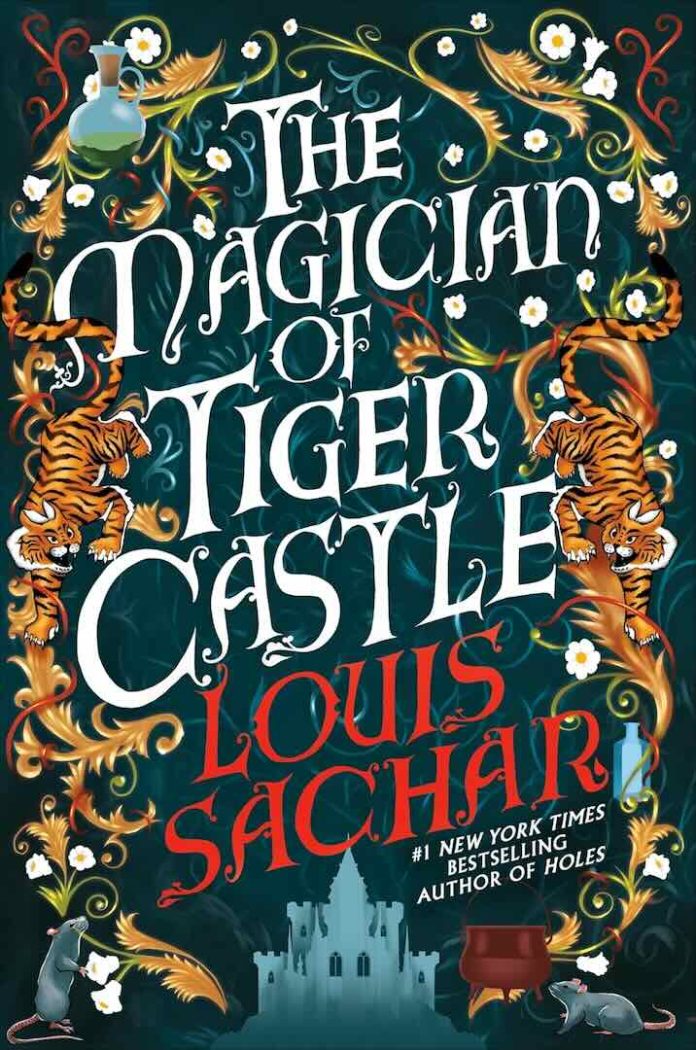
Louis Sachar, the celebrated author behind the beloved Holes and the whimsical Wayside School series, ventures into uncharted territory with The Magician of Tiger Castle, his first adult novel. Known for crafting memorable characters in middle-grade fiction, Sachar demonstrates remarkable range as he weaves a complex tale of political intrigue, forbidden love, and magical realism set in Renaissance-era Europe.
This ambitious departure from his established body of work showcases Sachar’s evolution as a storyteller, proving that his narrative gifts extend far beyond the classroom and summer camp settings that made him famous. The transition from children’s literature to adult fantasy is seamless, maintaining his signature wit while embracing darker, more sophisticated themes.
A Kingdom on the Brink of Collapse
The fictional kingdom of Esquaveta serves as both setting and metaphor for a world caught between medieval tradition and Renaissance innovation. Sachar expertly captures the political volatility of 16th-century Europe, where kingdoms rise and fall based on strategic marriages and military alliances. The author’s research into period details—from sumptuary laws to the revolutionary impact of triangular sails—creates an immersive historical backdrop that feels authentic without being overwhelming.
Princess Tullia emerges as the story’s emotional center, a young woman trapped between duty and desire. Her asymmetrical eyes—one brown, one blue—serve as a powerful symbol of her internal conflict between pragmatic acceptance and rebellious hope. Sachar’s portrayal of Tullia avoids the typical damsel-in-distress trope, instead presenting a character who actively shapes her destiny while navigating the constraints of royal obligation.
The political machinations surrounding her arranged marriage to the odious Prince Dalrympl of Oxatania reveal Sachar’s understanding of how personal relationships become pawns in larger power struggles. The “wedding of the century” represents not just a union between two people, but the potential salvation or destruction of an entire kingdom.
The Unlikely Hero: Anatole’s Journey from Disgrace to Redemption
Anatole, the court magician whose reputation has crumbled through a series of spectacular failures, anchors the narrative with his distinctive voice. Sachar’s decision to tell the story from Anatole’s perspective—both as a contemporary observer visiting the modern-day Tiger Castle and as the participant in historical events—creates a layered narrative structure that enhances the mythic quality of the tale.
The character of Anatole represents the Renaissance tension between science and superstition. His “magic” often relies on practical knowledge of herbs, chemistry, and human psychology, yet the results appear supernatural to his contemporaries. This ambiguity allows Sachar to explore themes of perception versus reality while maintaining the fantasy elements that give the story its charm.
Anatole’s relationship with Princess Tullia forms the emotional core of the novel. As her unofficial guardian and confidant, he faces an impossible choice between personal loyalty and political necessity. His internal struggle—whether to help Tullia escape her fate or ensure the kingdom’s survival through her sacrifice—drives much of the narrative tension.
The Memory Potion: Love, Loss, and Moral Complexity
The central plot device of the memory potion introduces profound ethical questions about free will, identity, and the nature of love. When Anatole discovers that Tullia has fallen for the young scribe Pito, he must decide whether to erase their memories of each other to ensure the royal marriage proceeds.
Sachar handles this dilemma with remarkable sophistication, avoiding easy moral judgments. The memory potion represents more than magical intervention—it becomes a meditation on whether love can exist without memory, and whether protecting someone from pain justifies robbing them of choice. The author’s exploration of these themes elevates the novel beyond simple fantasy adventure into philosophical territory.
The relationship between Tullia and Pito unfolds with genuine emotional complexity. Their connection transcends typical romantic clichés, built instead on intellectual compatibility and shared dreams of equality. Pito’s introduction of concepts from Thomas More’s Utopia provides ideological depth to their romance while establishing the revolutionary undercurrents that challenge the established order.
Technical Mastery and Narrative Innovation
Sachar’s prose style adapts remarkably well to adult fiction, maintaining the accessibility that characterizes his children’s books while embracing more sophisticated vocabulary and complex sentence structures. His attention to historical detail—from the specifics of Renaissance medicine to the social implications of triangular sails—demonstrates extensive research without overwhelming the narrative flow.
The novel’s structure, alternating between contemporary framing devices and historical narrative, creates multiple layers of meaning. The modern-day Anatole, observing how history has remembered (or forgotten) the events he witnessed, adds poignancy to the medieval tale while commenting on the subjective nature of historical truth.
Sachar’s handling of magical elements strikes an effective balance between wonder and believability. The magic feels organic to the world rather than imposed upon it, growing from the character’s deep understanding of natural phenomena rather than arbitrary supernatural powers.
Themes of Power, Identity, and Transformation
Beyond its surface adventure, The Magician of Tiger Castle examines how individuals navigate systems of power that seem unchangeable. Tullia’s struggle against arranged marriage, Pito’s rise from humble origins, and Anatole’s attempts to redeem his reputation all reflect different responses to societal constraints.
The novel’s treatment of class dynamics adds social commentary to the fantasy elements. The distinction between the popolo grasso (wealthy merchants) and popolo minuto (common people) reflects real Renaissance social structures while highlighting how rigid hierarchies limit human potential.
Transformation—both literal and metaphorical—permeates the narrative. Characters change physically through magical intervention, but more importantly, they evolve psychologically as they confront moral choices that define their identities.
Minor Criticisms and Areas for Improvement
While The Magician of Tiger Castle succeeds admirably as Sachar’s adult fiction debut, certain elements feel slightly underdeveloped. The political intrigue surrounding the Oxatanian alliance, while compelling, could benefit from deeper exploration of the economic and military factors driving the kingdoms’ desperation.
Some secondary characters, particularly the various court officials and nobles, remain somewhat two-dimensional despite their importance to the plot. A fuller development of these figures would have strengthened the political aspects of the story.
The novel’s pacing occasionally falters during the middle sections, particularly during the monastery sequence, where the philosophical discussions sometimes slow the narrative momentum despite their thematic relevance.
A Worthy Addition to Fantasy Literature
The Magician of Tiger Castle stands as a remarkable achievement in Sachar’s literary evolution. The novel successfully bridges the gap between accessible storytelling and sophisticated themes, creating a work that satisfies both casual readers and those seeking deeper philosophical engagement.
The book’s exploration of love, power, and moral choice resonates beyond its historical setting, offering insights relevant to contemporary readers. Sachar’s ability to maintain hope and humor even in dark circumstances reflects the optimistic worldview that has always characterized his finest work.
For Readers Who Enjoyed
Fans of The Magician of Tiger Castle should consider exploring:
- Susanna Clarke’s Jonathan Strange & Mr Norrell – Another blend of historical detail with magical realism
- Robin Hobb’s Fitz and Fool trilogy – For complex character relationships and moral ambiguity
- Katherine Addison’s The Goblin Emperor – Court intrigue with fantasy elements
- Terry Pratchett’s Small Gods – Religious themes mixed with humor and philosophical depth
- Guy Gavriel Kay’s The Lions of Al-Rassan – Historical fantasy with political complexity
The Magician of Tiger Castle proves that Louis Sachar’s storytelling talents extend far beyond children’s literature, marking an impressive debut in adult fantasy that should establish him as a significant voice in the genre.







