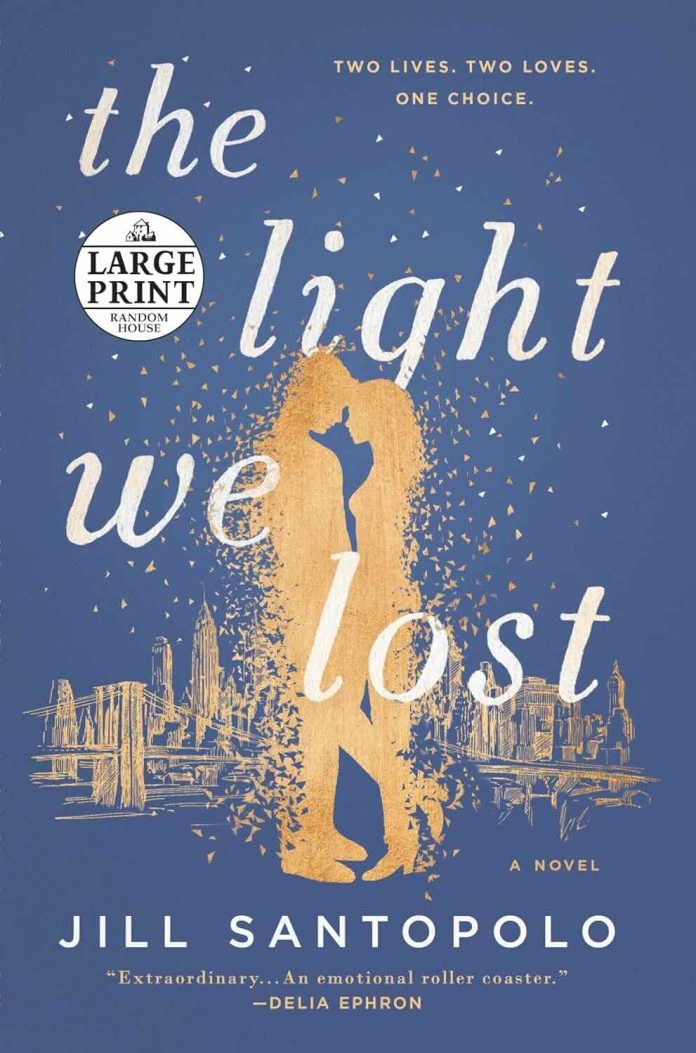
The Light We Lost is a poignant, emotionally charged novel that explores the complexities of love, ambition, and the choices that shape our lives. Jill Santopolo’s debut adult fiction delivers a powerful narrative that will resonate with anyone who has ever wondered about the roads not taken and the people who might have been their destiny.
Published in 2017, this captivating love story follows Lucy and Gabe, who meet as seniors at Columbia University on September 11, 2001—a day that irrevocably changes both their lives and sets them on intertwining paths of passion, purpose, and heartache spanning thirteen years.
Santopolo’s storytelling is uniquely intimate—written as an extended letter from Lucy to Gabe—creating a deeply personal narrative that pulls readers into the emotional landscape of her protagonist. This technique works brilliantly, allowing us to experience Lucy’s joy, heartbreak, and difficult choices with raw immediacy.
When Fate and Choice Collide
The novel’s central question—whether our lives are directed by fate or by choice—permeates every page of this emotional journey. Lucy and Gabe’s initial meeting on September 11th feels predestined, creating an immediate, powerful connection as they witness the horror and destruction together from a rooftop in New York. This pivotal moment becomes the touchpoint of their relationship, influencing their perceptions of purpose and meaning.
Santopolo explores this theme with nuance and depth. When Gabe leaves New York to pursue his dream of becoming a photojournalist in the Middle East, is it fate pulling them apart or their own choices? When Lucy builds a life with Darren—stable, loving, but perhaps lacking the passionate intensity she felt with Gabe—is she following her destiny or making the best decision she can with the information she has?
The author doesn’t offer easy answers, instead presenting the messy truth: that life is a complicated dance of circumstance and agency, where neither fate nor choice alone determines our path.
Characters Painted in Shades of Gray
Santopolo excels at creating morally complex characters who defy easy categorization. Lucy is relatable, flawed, and achingly human. Her ambition to make a difference through children’s television stands in stark contrast to her occasional recklessness in her personal life. Her growth from passionate college student to successful producer to devoted mother unfolds organically and believably.
Gabe is equally complex—passionate and committed to documenting global injustice, yet sometimes selfish in his single-minded pursuit of his dream. His character raises important questions about the price of ambition and whether the desire to change the world justifies sacrificing personal relationships.
Darren, often positioned as Gabe’s foil, is neither villain nor hero. He represents security, stability, and genuine love, though perhaps lacking the all-consuming passion Lucy experienced with Gabe. Santopolo refuses to make him a convenient antagonist, instead portraying him as a good man who simply loves differently.
Strengths that Illuminate
The Light We Lost shines brightest when Santopolo delves into:
- Emotional authenticity: The novel captures the messiness of love and the difficult choices we make with unflinching honesty. Lucy’s internal struggles feel genuine and relatable.
- Themes of purpose and meaning: The characters’ desire to create lives that matter resonates powerfully, especially against the backdrop of September 11th.
- Vividly rendered settings: From Columbia University to Brooklyn Heights to war-torn Jerusalem, each location comes alive through sensory details.
- Temporal structure: The thirteen-year span allows for meaningful character development while maintaining the emotional intensity of Lucy and Gabe’s connection.
- Literary references: Shakespeare, Frost, and other writers are woven organically into the narrative, enriching the themes without feeling pretentious.
Areas Where the Light Dims
Despite its emotional power, The Light We Lost occasionally stumbles in:
- Moral complexity: While the novel presents infidelity and secrets with nuance, it sometimes skirts the deeper ethical implications of Lucy’s choices, particularly regarding her deception toward Darren.
- Secondary character development: Characters like Kate and Julia sometimes feel like narrative devices rather than fully realized individuals with their own complex lives.
- Professional realism: Lucy’s career trajectory occasionally feels too smooth, with few of the setbacks or political challenges common in competitive industries.
- Pacing in the middle section: The novel’s middle occasionally meanders, with certain scenes feeling repetitive in emotional tone.
Prose That Pulses with Life
Santopolo’s writing style is accessible yet elegant, with moments of striking imagery that elevate the prose beyond typical women’s fiction. Consider this passage describing Lucy’s feelings for Gabe:
“But you were like a drug. When I was high on you, nothing else mattered.”
The first-person narration creates an immersive experience, drawing readers into Lucy’s perspective with intimate immediacy. Santopolo eschews flowery language in favor of emotional precision, creating prose that feels authentic to Lucy’s voice.
The structure—chapters of varying lengths that function almost as vignettes—creates a rhythm that mirrors memory itself: some moments expanded into exquisite detail, others compressed into brief but significant beats.
A Story For Anyone Who Has Loved and Lost
The Light We Lost will particularly resonate with readers who:
- Enjoy emotionally complex love stories with realistic complications
- Appreciate narratives that span significant time periods
- Are drawn to stories exploring “what if” questions and paths not taken
- Have experienced the pull between career ambition and personal relationships
- Find meaning in examining how pivotal historical events shape individual lives
The novel invites comparison to works like Taylor Jenkins Reid’s Maybe in Another Life, Audrey Niffenegger’s The Time Traveler’s Wife, and Nicholas Sparks’ The Choice—all stories that examine parallel lives and love that persists despite time and circumstance.
Looking Ahead: The Love We Found
Fans of Lucy and Gabe’s story have reason to celebrate with the March 2025 release of Santopolo’s follow-up novel, The Love We Found. While details are still emerging, early reports suggest the new novel will explore the aftermath of the events in The Light We Lost, potentially focusing on Lucy’s life moving forward and how she reconciles her past with her future. The title itself suggests a journey from loss to discovery—perhaps hinting at new beginnings while honoring what came before.
A Notable Debut in Adult Fiction
The Light We Lost marked Jill Santopolo’s transition from children’s and young adult literature to adult fiction—and what an entrance it was. Prior to this novel, Santopolo was known for her successful children’s series including the Sparkle Spa series and the Follow Your Heart books. This background in youth literature likely contributed to her ability to create emotionally resonant stories that avoid cynicism while embracing complexity.
Her experience as an editorial director at Philomel Books (an imprint of Penguin Young Readers) seems to inform her careful attention to structure and pacing—though her adult fiction allows her to explore more mature themes and moral ambiguities.
Final Reflections: Four Stars of Brilliance and Shadow
The Light We Lost earns its four-star rating through its emotional honesty, compelling characters, and thought-provoking exploration of fate versus choice. While it occasionally falls into predictable patterns and could dig deeper into its ethical questions, these minor flaws don’t diminish the novel’s considerable emotional impact.
Santopolo has crafted a love story that transcends typical romance tropes to ask profound questions about purpose, sacrifice, and the lasting impact we have on those we love. Lucy and Gabe’s story reminds us that some connections never truly fade—that certain people continue to shape us long after they’ve exited our daily lives.
The novel’s final chapters deliver an emotional gut-punch that will leave readers contemplating their own choices and wondering about the roads they didn’t take. But perhaps more importantly, it leaves us questioning whether it’s possible to love two people at once, in different ways, and whether happiness requires choosing one path definitively.
For readers seeking an emotionally immersive experience that balances romance with deeper existential questions, The Light We Lost shines brightly, illuminating the complexity of human hearts with compassion and insight. And with The Love We Found on the horizon, there’s even more light to look forward to.
The Light We Lost by Jill Santopolo was published by G.P. Putnam’s Sons, an imprint of Penguin Random House, in 2017. The follow-up novel, The Love We Found, will be released in March 2025.







