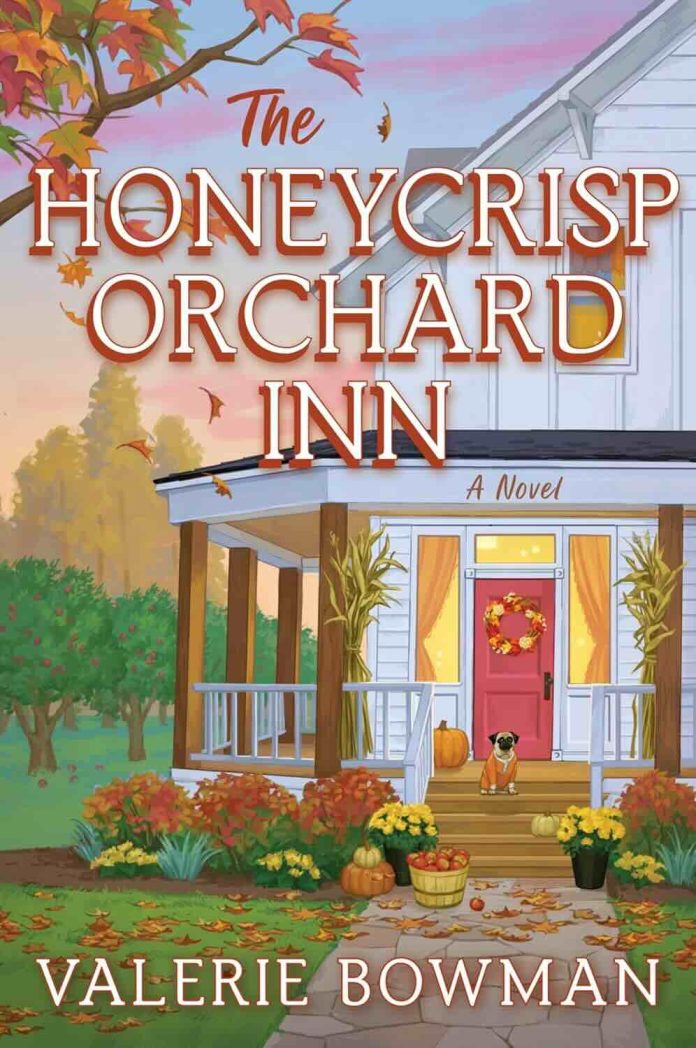
Valerie Bowman’s The Honeycrisp Orchard Inn arrives like a warm autumn breeze, carrying the scent of apple blossoms and the promise of second chances. As the inaugural novel in the Honeycrisp Orchard series, this contemporary romance serves up everything readers crave in cozy small-town fiction: genuine characters grappling with real problems, the magic of community, and a love story that feels both inevitable and hard-won.
Bowman, known for her successful Austen Hunks trilogy (Hiring Mr. Darcy, Kissing Mr. Knightley, and Marrying Mr. Wentworth), demonstrates remarkable growth as she transitions from Regency-inspired romance to contemporary settings. The result is a novel that feels both familiar and refreshingly authentic, avoiding many of the genre’s common pitfalls while delivering the emotional satisfaction readers seek.
A Heroine Worth Rooting For: Ellie’s Journey Home
The Perfect Storm of Professional Disaster
Eleanor “Ellie” Lawson’s introduction couldn’t be more devastating—or more relatable. Within the span of twelve hours, she loses both her boyfriend and her dream job at a prestigious New York event planning firm, thanks to workplace betrayal that feels painfully realistic. Bowman handles Ellie’s professional downfall with remarkable nuance, avoiding both excessive victim-blaming and unrealistic vindication. The corporate politics, stolen ideas, and boys’-club mentality ring true without feeling heavy-handed.
What sets Ellie apart from typical romance heroines is her genuine struggle with identity and belonging. Her seven-year absence from Harvest Hollow stems not from simple ambition but from a complex mix of shame, fear, and the very human desire to prove herself worthy. Bowman skillfully reveals that Ellie’s exodus wasn’t just about career aspirations—it was about escaping the suffocating feeling of being small-town ordinary.
The Complexity of Going Home
The author excels at portraying the awkwardness of returning home after years away. Ellie’s embarrassment at being treated like the prodigal daughter, her forgotten names of longtime residents, and her defensive reactions to questions about her absence feel authentic. Bowman doesn’t minimize the genuine discomfort of confronting the life you left behind, nor does she romanticize small-town acceptance.
Ellie’s character arc unfolds organically as she rediscovers not just her hometown’s charms, but her own capabilities outside the toxic environment that nearly destroyed her confidence. Her evolution from defensive outsider to engaged community member feels earned rather than mandated by plot convenience.
Aiden Parker: More Than a Pretty Farmboy
Depth Beneath the Surface
Aiden Parker could have easily fallen into the “grumpy farmer” archetype that populates many small-town romances, but Bowman imbues him with genuine complexity. His Cornell education and agricultural innovation work establish him as intellectually accomplished, while his deep connection to the land and community provides emotional grounding. The revelation of his academic credentials serves multiple purposes—challenging both Ellie’s and readers’ assumptions while highlighting the theme that intelligence and ambition can flourish in unexpected places.
His resistance to change stems not from narrow-mindedness but from a deep-seated fear of losing what matters most. The orchard represents security, tradition, and identity for Aiden, making his eventual openness to Ellie’s innovations a genuine character growth moment rather than simple romantic capitulation.
The Chemistry Factor
Bowman crafts the romantic tension between Ellie and Aiden with admirable restraint. Their forced cohabitation in the inn’s attic apartment creates natural opportunities for both conflict and connection without relying on contrived circumstances. The slow burn develops through shared work on the Harvest Festival, allowing their professional respect to build alongside personal attraction.
The author’s handling of their physical chemistry feels mature and authentic. When Aiden appears in a towel early in the novel, Ellie’s reaction is refreshingly honest—she notices, she’s affected, but she doesn’t lose her mind or her dignity. Their eventual romantic moments feel like natural progressions rather than plot checkpoints.
Small-Town Magic Without the Manipulation
Harvest Hollow as Character
Bowman’s fictional Harvest Hollow achieves the delicate balance between charming and realistic. The town gossip blog, the predictable parade traditions, and the interconnected relationships all feel genuine rather than artificially quaint. The author avoids the common romance novel trap of making small-town life universally perfect while also not dismissing its very real advantages.
The supporting cast, from Ellie’s parents to Aiden’s sister Charlotte, feels lived-in rather than constructed. Each character serves the story without feeling like they exist solely to facilitate the romance. The community’s response to the Harvest Festival provides authentic stakes—this isn’t just about two people falling in love, but about the economic survival of businesses that employ real people.
Seasonal Atmosphere
The autumn setting permeates every page without overwhelming the narrative. Bowman’s descriptions of changing leaves, apple harvests, and crisp fall air create genuine atmosphere while serving the story’s themes of transformation and renewal. The Harvest Festival itself becomes a perfect metaphor for community cooperation and the fruits of hard work.
Professional Stakes with Personal Heart
The Event Planning Elements
One of the novel’s strongest aspects is Bowman’s detailed attention to event planning logistics. Ellie’s professional expertise feels authentic, from budget considerations to vendor coordination to social media strategy. The Harvest Festival planning scenes provide genuine tension—will they pull it off? Will it be successful enough to save both businesses?
The author avoids the common romance trap of making the heroine’s career feel secondary to her love life. Ellie’s professional identity matters, both to her and to the story, and her skills prove essential to the plot’s resolution.
Workplace Betrayal and Recovery
The corporate storyline involving Ellie’s former boss Steve and ex-boyfriend Geoff provides more than romantic obstacle—it explores themes of professional integrity, gender dynamics in male-dominated fields, and the courage required to stand up for oneself. When Steve and Geoff appear at the festival offering Ellie her job back, her refusal feels like genuine character growth rather than romance-mandated choice.
Technical Craft: Bowman’s Evolved Voice
Dialogue and Pacing
Bowman’s dialogue captures the rhythms of both small-town conversation and professional communication without caricature. Ellie’s voice shifts naturally between her defensive city persona and her more relaxed hometown self, while Aiden’s speech patterns reflect his education without sacrificing his rural authenticity.
The pacing maintains steady momentum without rushing crucial emotional beats. The author allows time for both characters to process their attraction and their fears, creating a romance that feels mature and considered.
Dual Timeline Management
The novel effectively weaves together multiple timeframes—Ellie’s immediate crisis, the festival preparation timeline, and the longer arc of her reconnection with home. Bowman manages these various threads without confusion, maintaining forward momentum while allowing for necessary character development.
Critical Considerations: Areas for Growth
Predictability vs. Comfort
While The Honeycrisp Orchard Inn delivers satisfying romance beats, some plot elements follow familiar patterns. The forced proximity, the misunderstanding that temporarily separates the couple, and the grand gesture resolution will feel familiar to seasoned romance readers. However, Bowman’s execution is strong enough that these traditional elements feel comforting rather than tired.
Secondary Character Development
Some supporting characters, particularly Aiden’s sister Charlotte and her mysterious boyfriend, feel slightly underdeveloped. While this is presumably setup for future books in the series, a bit more depth in the present novel would strengthen the community feeling Bowman works to create.
Economic Realities
The novel occasionally glosses over the genuine economic challenges facing small businesses and young adults trying to build careers. While the Harvest Festival’s success provides a hopeful ending, the real-world complexities of sustaining such success might have added additional depth.
Romance Genre Strengths
Emotional Authenticity
What sets this novel apart in the crowded small-town romance field is its emotional honesty. Both Ellie and Aiden face genuine internal conflicts that extend beyond simple romantic obstacles. Their fears about change, belonging, and self-worth feel universal and relatable.
Consent and Communication
Bowman handles physical intimacy with appropriate care, showing clear communication between partners and respecting boundaries. When Ellie expresses uncertainty about their relationship, Aiden responds with understanding rather than pressure—a refreshing approach in a genre that sometimes conflates persistence with romance.
Supporting Relationships
The novel’s treatment of family relationships adds depth beyond the central romance. Ellie’s relationship with her parents, strained by years of distance and misunderstanding, develops alongside her romantic storyline without feeling secondary. The community connections that develop through festival planning demonstrate how personal growth often happens within broader social contexts.
Recommended Reading for Romance Fans
Readers who enjoy The Honeycrisp Orchard Inn might appreciate:
- The Pumpkin Spice Café by Laurie Gilmore – Similar small-town autumn atmosphere
- In a Holidaze by Christina Lauren – Second-chance romance with seasonal charm
- The Spanish Love Deception by Elena Armas – Professional heroine with genuine stakes
- Beach Read by Emily Henry – Enemies-to-lovers with depth and humor
- The Kiss Quotient by Helen Hoang – Contemporary romance with authentic character growth
Final Verdict: A Promising Series Beginning
The Honeycrisp Orchard Inn succeeds in launching what promises to be an engaging series while standing alone as a satisfying romance. Bowman demonstrates clear growth as a writer, moving beyond genre conventions to create characters with genuine depth and conflicts with real emotional weight.
The novel’s greatest strength lies in its refusal to choose between romance and realism. Ellie and Aiden’s relationship develops within a context of genuine community concern, professional responsibilities, and personal growth that extends beyond their romantic connection. The result is a love story that feels both inevitable and earned.
While the plot follows some familiar romance patterns, Bowman’s execution elevates the material through authentic characterization, genuine chemistry, and a deep understanding of what makes small communities work. This is comfort reading at its finest—familiar enough to feel like coming home, fresh enough to surprise and delight.
For readers seeking romance that combines emotional satisfaction with authentic contemporary concerns, The Honeycrisp Orchard Inn delivers exactly what it promises: a sweet, satisfying story about finding love, purpose, and belonging in unexpected places. It’s the perfect novel for anyone who has ever wondered if going home might actually be moving forward.







