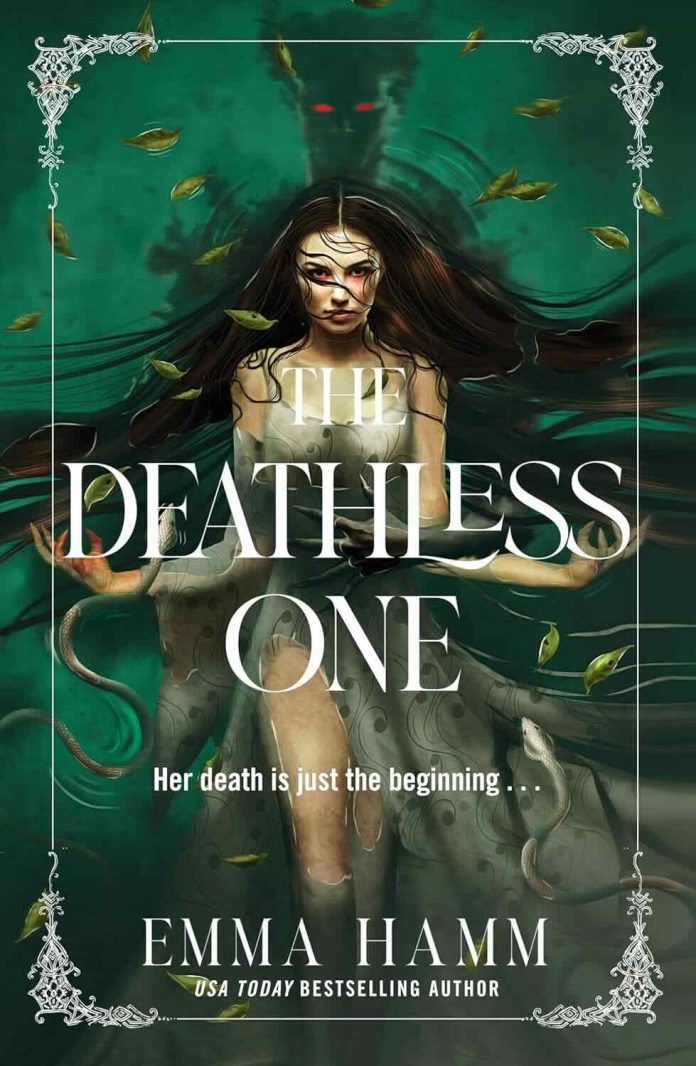
Emma Hamm’s latest venture into dark fantasy romance, The Deathless One, marks a significant evolution in the romantasy genre—one that dares to explore the genuine terror of divine love while maintaining the passionate intensity readers crave. This inaugural novel in the Gravesinger series presents a narrative that transcends typical fantasy romance tropes, offering instead a psychologically complex exploration of power, resurrection, and the dangerous allure of loving something both divine and damned.
A Kingdom Built on Betrayal
The story opens with Princess Jessamine of Inverholm, a character who embodies the tragic archetype of the sacrificial royal while subverting expectations at every turn. Hamm crafts Jessamine’s world with meticulous detail—a plague-ravaged kingdom where political marriage becomes the only salvation, yet even this desperate hope transforms into ultimate betrayal. The wedding scene, where Jessamine’s new husband murders her at the altar, serves as both a literal and metaphorical death of innocence.
What distinguishes Hamm’s approach is her unflinching portrayal of violence and its psychological aftermath. Jessamine’s death isn’t merely a plot device but a transformative trauma that reshapes her entire worldview. The author’s prose during these moments carries a haunting quality that lingers: the blood on white silk, the cold press of steel, the final tumble into unforgiving waves. These images echo throughout the narrative, demonstrating Hamm’s skill in weaving trauma into the fabric of character development.
The Deathless One: A God Worth Fearing
The titular Deathless One—revealed as Elric—emerges as perhaps one of the most compelling divine figures in recent fantasy romance. Unlike sanitized supernatural love interests, Elric carries the weight of centuries of torment, manipulation, and genuine monstrosity. Hamm’s portrayal acknowledges his dangerous nature without excuse or redemption arc; instead, she presents a being shaped by endless cycles of worship and betrayal.
The god’s characterization operates on multiple levels. Physically, he appears as shadows given form, scarred and marked by countless previous relationships with gravesingers who ultimately betrayed him. Emotionally, he oscillates between vulnerability and predatory calculation. This complexity creates genuine tension in his relationship with Jessamine—readers never quite know whether his affections are authentic or simply another manipulation in an eternal game.
The Dark Art of Gravesinging
Hamm introduces the concept of gravesingers with sophisticated world-building that feels both fresh and rooted in mythological tradition. These rare witches serve as conduits between the world of the living and the realm of death, specifically connected to the Deathless One. The magic system operates through sacrifice and connection rather than spell-casting, creating intimate bonds between practitioner and deity that blur the lines between worship and possession.
The author’s exploration of this magical connection becomes increasingly sensual as the narrative progresses. The scenes where Jessamine learns to channel Elric’s power read like seduction, with magic flowing between them in ways that mirror physical intimacy. This interweaving of magical and sexual tension demonstrates Hamm’s maturity as a writer, creating genuine chemistry that extends beyond surface attraction.
Character Development Through Darkness
Jessamine’s character arc represents one of the novel’s greatest strengths. Her journey from naive princess to formidable gravesinger unfolds organically, driven by necessity rather than convenience. The author allows her protagonist to make morally questionable choices without judgment, presenting a character who embraces darkness not from corruption but from survival instinct.
The supporting cast, particularly Sybil the established witch and Callum Quen the betrayer, serves to illuminate different aspects of Jessamine’s development. Sybil represents the potential future of complete devotion to the Deathless One, while Callum embodies the political machinations that destroyed her previous life. These relationships create a character web that feels authentic rather than constructed solely to advance plot.
Romance in the Shadow of Death
The romantic elements of The Deathless One succeed precisely because they acknowledge the problematic nature of the central relationship. Hamm doesn’t attempt to soften Elric’s predatory aspects or minimize the power imbalance between mortal and god. Instead, she leans into the darkness, creating a romance that thrills through its very danger.
The intimate scenes between Jessamine and Elric carry weight beyond physical attraction. Their connection through the gravesinger bond means that every touch, every moment of passion, fundamentally alters both characters. The author’s prose during these sequences maintains an almost ritualistic quality, emphasizing the sacred and profane aspects of their union.
Technical Mastery and Atmospheric World-Building
Hamm’s writing style has evolved considerably from her earlier works. The prose in The Deathless One carries a Gothic sensibility that perfectly matches the dark subject matter. Her descriptions of the plague-ravaged kingdom feel genuinely oppressive, while scenes in the Deathless One’s shadow realm pulse with otherworldly menace.
The pacing balances action sequences with character development effectively, though some readers may find the middle section slightly slower as Jessamine learns to navigate her new powers. However, these slower moments serve important functions in building the psychological tension that makes the climactic sequences so effective.
Contextualizing Within Emma Hamm’s Bibliography
For readers familiar with Hamm’s previous series—including the Heart of the Fae and Fire Heart collections—The Deathless One represents a significant departure toward darker themes. While her earlier works explored monster romance and fae politics, this novel delves into psychological horror territory while maintaining the romantic elements that define her authorial voice.
The influence of classical mythology is more pronounced here than in her previous works, with clear echoes of Hades and Persephone, Orpheus and Eurydice, and various death deity legends. However, Hamm subverts these familiar narratives by centering female agency and the complex psychology of divine worship.
Critical Considerations
While The Deathless One succeeds on most levels, certain elements may challenge readers. The novel’s unflinching portrayal of violence and psychological manipulation, while thematically appropriate, creates genuinely disturbing moments that extend beyond typical dark romance boundaries. Some readers may find Elric’s characterization too morally ambiguous to support romantic investment.
The world-building, while atmospheric, occasionally prioritizes mood over clarity. Certain aspects of the magic system and political situation could benefit from more explicit explanation, particularly regarding the plague that devastates Jessamine’s kingdom and the broader political landscape that enables Leon’s coup.
Similar Reads for Fellow Dark Romance Enthusiasts
Readers drawn to The Deathless One will likely appreciate:
- From Blood and Ash by Jennifer L. Armentrout – for divine romance with complex mythology
- Hunt on Dark Waters by Katee Robert – for morally gray love interests and nautical dark fantasy
- One Dark Window by Rachel Gillig – for atmospheric dark fantasy with dangerous magic systems
- Assistant to the Villain by Hannah Nicole Maehrer – for morally complex characters in fantasy settings
- The Shadows Between Us by Tricia Levenseller – for romance with genuinely villainous love interests
Final Verdict
The Deathless One establishes Emma Hamm as a significant voice in dark romantasy, delivering a novel that refuses to sanitize either its violence or its passion. This is romantasy for readers who appreciate psychological complexity, mythological depth, and protagonists who choose power over purity. While not for the faint of heart, it rewards those willing to embrace its darker elements with a genuinely compelling narrative that lingers long after the final page.
The novel succeeds in launching the Gravesinger series with enough unresolved tension and world-building potential to make the sequel, The Heartless One, an anticipated read. For those seeking romantasy that challenges as much as it entertains, The Deathless One delivers a haunting meditation on love, power, and the price of resurrection.







