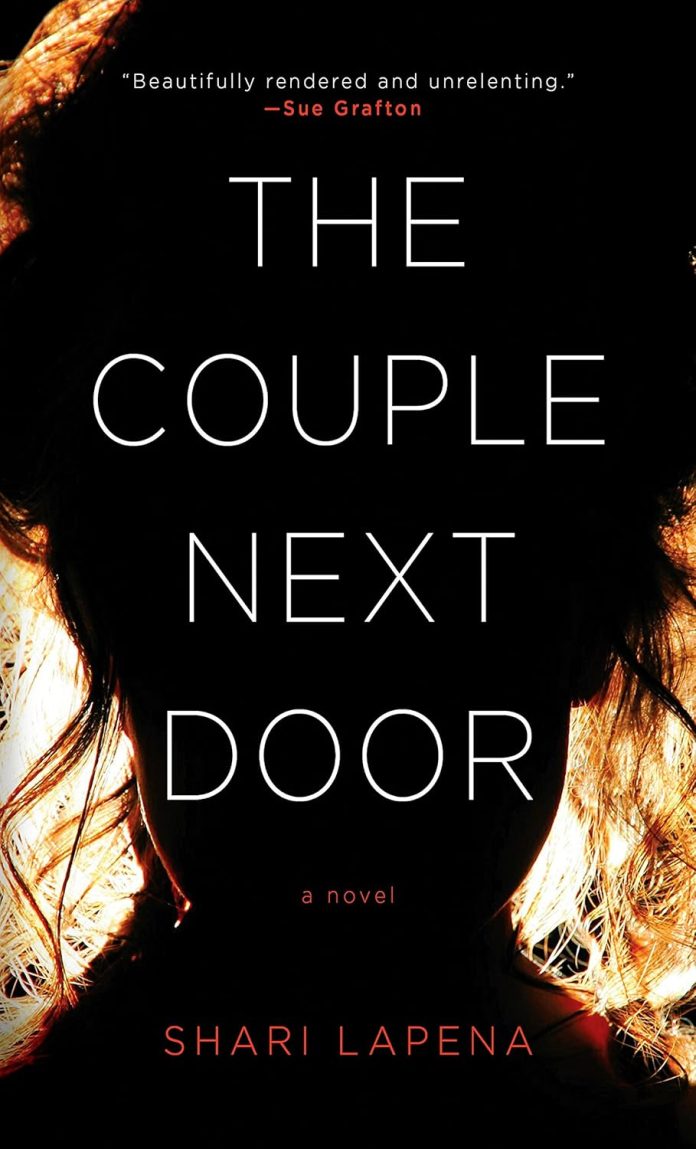
Shari Lapena’s debut novel, “The Couple Next Door,” immediately establishes itself as a masterclass in domestic suspense, beginning with what should have been an ordinary evening between neighbors. The premise is deceptively simple yet brilliantly executed: Anne and Marco Conti attend a dinner party next door, leaving their six-month-old daughter Cora at home with a baby monitor. When they return, their worst nightmare has materialized—the crib is empty, the front door ajar, and their baby has vanished without a trace.
What follows is a psychological thriller that dissects the fragile veneer of suburban respectability, revealing the dark secrets that lurk beneath perfectly manicured lawns and friendly neighborhood facades. Lapena demonstrates remarkable skill for a debut novelist, crafting a narrative that maintains its grip from the opening chapter through to its shocking conclusion.
Complex Characters Hiding Devastating Secrets
Anne Conti: A Mother’s Worst Nightmare
Anne emerges as perhaps the most compelling character in the novel, struggling with postpartum depression while grappling with the unthinkable loss of her child. Lapena portrays her mental health struggles with sensitivity and authenticity, showing how depression can create gaps in memory and perception that become crucial to the mystery. Anne’s relationship with her wealthy parents adds another layer of complexity, revealing how money and class dynamics can strain even the closest family bonds.
The author’s depiction of Anne’s dissociative episodes—stemming from childhood trauma—provides both psychological depth and plot significance. These moments where Anne “checks out” mentally become integral to understanding the events of that fateful night, though Lapena skillfully avoids using mental illness as a mere plot device.
Marco Conti: Desperation and Poor Choices
Marco’s character arc represents the novel’s exploration of how financial pressure can corrupt moral judgment. His struggling business and mounting debts create a perfect storm of desperation that makes him vulnerable to manipulation. Lapena effectively shows how a fundamentally good man can make catastrophically bad decisions when backed into a corner.
The relationship between Marco and Anne’s parents, particularly her controlling father Richard, adds tension that extends beyond the central mystery. Their class differences and Richard’s obvious disdain for his son-in-law create an undercurrent of resentment that proves crucial to the plot’s development.
The Stillwells: Neighbors with Hidden Agendas
Cynthia and Graham Stillwell serve as more than mere plot devices; they represent the performative nature of suburban relationships. Cynthia’s manipulative sexuality and Graham’s voyeuristic tendencies reveal how marriage can become a game of secrets and power plays. Their hidden camera footage becomes a pivotal element, though its discovery feels organic rather than contrived.
A Master Class in Psychological Suspense
Building Tension Through Uncertainty
Lapena excels at creating an atmosphere of uncertainty that permeates every chapter. The reader constantly questions what they know and whom they can trust. The investigation led by Detective Rasbach unfolds methodically, with each revelation casting previous events in a new light. The author’s background in criminal law becomes evident in the realistic portrayal of police procedure and interrogation techniques.
The novel’s strength lies in its refusal to provide easy answers. Just when readers think they’ve identified the culprit, Lapena introduces new evidence that shifts suspicion elsewhere. This isn’t mere manipulation for its own sake; each twist feels earned and logically consistent with the established facts.
The Art of Misdirection
The investigation reveals multiple potential motives and suspects:
- Financial desperation driving Marco to extreme measures
- Mental health struggles creating uncertainty about Anne’s actions
- Family dynamics involving wealthy in-laws and inheritance issues
- Neighborhood secrets hiding darker truths about seemingly perfect couples
Exploring Contemporary Anxieties
Parenting in the Modern World
“The Couple Next Door” taps into fundamental parental fears about leaving children unattended, even briefly. The judgment faced by Anne and Marco from both authorities and the public reflects real societal pressures about “perfect” parenting. Lapena doesn’t shy away from examining how quickly public opinion can turn against parents in crisis.
Marriage Under Pressure
The stress of the missing child investigation reveals cracks in Anne and Marco’s relationship that existed long before the kidnapping. Their different backgrounds, financial pressures, and communication failures create a realistic portrait of a marriage struggling under multiple stressors. The revelation of affairs and deceptions shows how crisis can either unite couples or tear them apart completely.
Wealth and Class Dynamics
The stark contrast between Anne’s privileged background and Marco’s middle-class origins adds depth to the family dynamics. Richard Dries represents old money’s sense of superiority and control, while Marco embodies the struggles of contemporary entrepreneurship. These tensions prove central to understanding the novel’s shocking revelations.
Writing Style and Narrative Structure
Lapena’s prose is clean and accessible, focusing on character development and plot advancement rather than literary flourishes. The multiple perspective structure allows readers to see events through different eyes, creating a more complete picture while maintaining uncertainty about the truth. The pacing is expertly managed, with short chapters that maintain momentum without feeling rushed.
The author’s legal background shows in the realistic courtroom scenes and police procedures, adding authenticity to the investigation elements. However, she never allows technical details to overwhelm the human drama at the story’s heart.
Areas for Improvement
While “The Couple Next Door” succeeds as a page-turner, some elements feel slightly underdeveloped. The final revelation, while shocking, might strain credibility for some readers. Additionally, certain character motivations could have been explored more deeply, particularly regarding the antagonist’s long-term planning and psychological profile.
The resolution, while dramatic, raises questions about Anne’s mental state and future that remain unanswered. Some readers may find the ending’s ambiguity unsatisfying, though others will appreciate its realistic acknowledgment that not all wounds heal completely.
A Promising Start to a Thriller Career
“The Couple Next Door” establishes Lapena as a significant new voice in domestic suspense. Her ability to create complex, flawed characters dealing with extraordinary circumstances while maintaining a gripping pace marks her as an author to watch. The novel’s success led to subsequent works including “A Stranger in the House” and “An Unwanted Guest,” confirming her talent for crafting compelling psychological thrillers.
Final Verdict: A Captivating Debut with Lasting Impact
“The Couple Next Door” succeeds brilliantly as both a mystery and an examination of contemporary family life. Lapena has crafted a novel that works on multiple levels—as a police procedural, a psychological study, and a domestic drama. While not without minor flaws, it represents an impressive debut that established the author as a major talent in the thriller genre.
The book’s exploration of parental guilt, financial pressure, and family secrets resonates beyond its mystery elements, creating a story that lingers in readers’ minds long after the final page. It’s a novel that reminds us that the most dangerous threats often come from those closest to us, and that the perfect life we present to the world may hide the darkest secrets.
Similar Books Worth Reading
If you enjoyed “The Couple Next Door,” consider these comparable domestic thrillers:
- “Gone Girl” by Gillian Flynn – Another tale of marriage secrets and media manipulation
- “The Girl on the Train” by Paula Hawkins – Unreliable narrators and shocking revelations
- “Big Little Lies” by Liane Moriarty – Suburban secrets and parenting pressures
- “The Silent Patient” by Alex Michaelides – Psychological suspense with unexpected twists
- “In the Woods” by Tana French – Atmospheric crime fiction with complex characters







