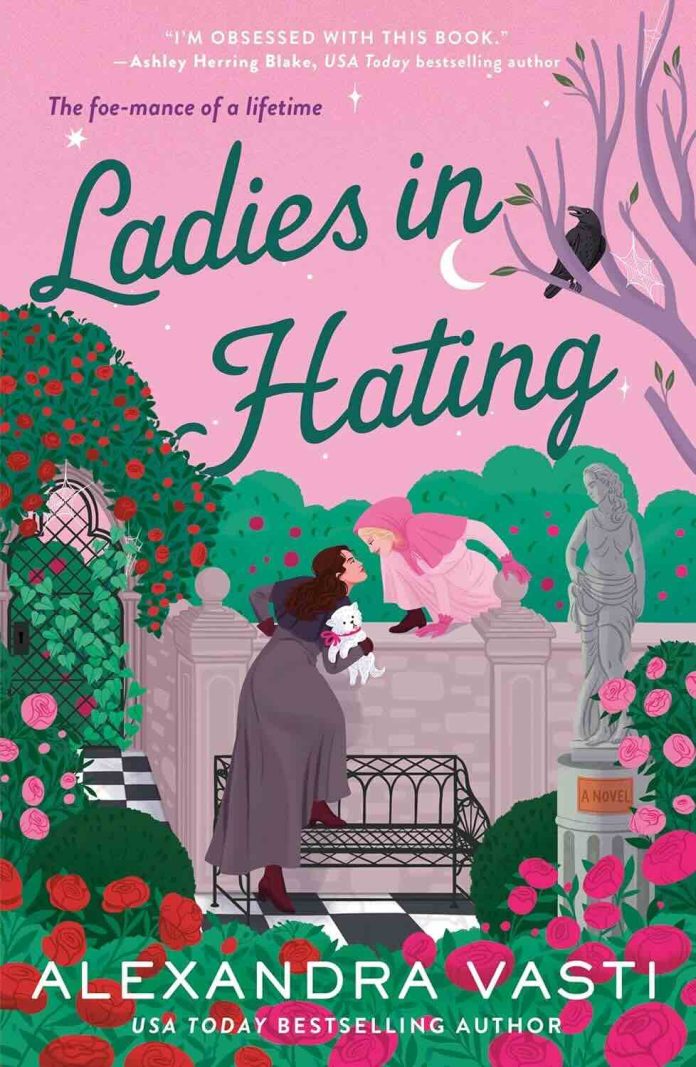
In the crowded landscape of sapphic historical romance, Alexandra Vasti’s Ladies in Hating arrives like a Gothic manor emerging from the mist—mysterious, captivating, and unexpectedly tender. The third installment in the Belvoir’s Library series stands confidently on its own while delivering the kind of intelligent, emotionally resonant storytelling that has become Vasti’s signature.
The Premise That Hooks You Immediately
Lady Georgiana Cleeve, celebrated Gothic novelist writing under the pen name Geneva Desrosiers, has a problem. For years, another writer called Lady Darling has been publishing novels suspiciously similar to her own—same themes, eerily parallel plots, and releases timed just weeks apart. When coincidence stretches beyond credibility, Georgiana decides to unmask her rival once and for all.
What she discovers sends her reeling: Lady Darling is actually Cat Lacey, the butler’s daughter from Georgiana’s childhood estate and the object of her long-buried teenage infatuation. The revelation transforms everything, and when both women find themselves invited to the same crumbling Gothic manor to research their next novels, the stage is set for a collision between past wounds and present desire.
Characters Who Breathe and Bleed
Vasti’s greatest strength lies in crafting protagonists who feel startlingly real. Georgiana is no simple aristocratic heroine—she carries the weight of a complicated family history, including an estrangement from her brothers that she believes necessary for their protection. Her sharp intellect and fierce independence mask a deep-seated fear of hurting those she loves. The author captures Georgiana’s internal conflict with remarkable nuance, showing us a woman who has built walls around herself not from coldness but from an excess of care.
Cat Lacey proves equally compelling, though in entirely different ways. Where Georgiana retreats, Cat advances. She writes with passion, loves with her whole heart, and refuses to let circumstances diminish her joy. Yet she isn’t without her own scars. Cat has spent a decade clawing her family out of poverty after Georgiana’s father destroyed her father’s reputation, and every word she writes carries the weight of that struggle. The contrast between Cat’s warmth and Georgiana’s reserve creates a dynamic tension that drives the narrative forward with irresistible momentum.
A Gothic Romance That Understands Its Genre
Vasti demonstrates an intimate understanding of Gothic literature, weaving its elements throughout the story with both reverence and playfulness. Renwick House itself becomes a character—all crumbling stonework, mysterious sounds in the night, and family secrets buried in cryptic letters. The author includes genuine supernatural elements that enhance rather than overwhelm the romance, from ghostly moans echoing through corridors to the legend of Luna Renwick, who may still haunt the gardens she once tended.
The metafictional aspect of two Gothic novelists navigating their rivalry while trapped in an actual Gothic setting provides delicious irony. Georgiana doesn’t believe in ghosts despite writing about them prolifically, while Cat embraces the supernatural with infectious enthusiasm. Their debates about fiction versus reality, the purpose of Gothic literature, and the responsibility of authors to their readers add intellectual depth without slowing the pacing.
The Complexity of Class and Consequence
What elevates Ladies in Hating beyond standard romance fare is Vasti’s unflinching examination of class dynamics and historical injustice. The revelation of why Cat’s family fell into poverty—the direct result of Georgiana’s father’s cruelty—casts a long shadow over their relationship. Georgiana’s guilt isn’t performative; it manifests in her conviction that she’s somehow tainted by her father’s actions, that everyone she touches suffers for her proximity.
The author resists easy resolutions. Cat doesn’t simply forgive and forget, and Georgiana’s journey toward accepting love involves genuine reckoning with her past choices and future responsibilities. The inclusion of Cat’s younger brother Jem, who works as a clerk to support the family, grounds the romance in material reality. These aren’t just two women falling in love—they’re navigating real obstacles of financial security, social reputation, and family obligation.
Where the Story Occasionally Stumbles
Despite its considerable strengths, the novel occasionally falters in pacing. The middle section, where both women research their books while avoiding emotional confrontation, drags slightly. Some readers may find the extended sequences of historical investigation more tedious than tantalizing, though others will appreciate the detailed research Vasti clearly conducted.
The mystery subplot involving the deceased porter Horace Rogers and the cryptic encoded letters feels somewhat underdeveloped. While it connects thematically to questions of hidden identities and secret loves, the resolution arrives abruptly. More time spent establishing stakes and building tension around this mystery would have strengthened its impact.
Additionally, while the supporting cast—Georgiana’s mother Edith, Cat’s sister Pauline, and the brilliant translator Iris Duggleby—are all vivid and engaging, they sometimes feel like they’re waiting in the wings for their moments rather than existing fully within the narrative.
The Emotional Landscape
Where Vasti truly excels is in charting the emotional terrain between her protagonists. The intimate scenes crackle with tension and tenderness in equal measure, written with the kind of specificity that makes them feel both deeply personal and universally resonant. Georgiana’s terror of vulnerability, expressed through her recurring impulse to flee, creates genuine dramatic tension. When she finally allows herself to stay—to wake beside Cat in the morning light—the moment carries the weight of everything she’s overcome to get there.
The author captures the particular quality of queer desire in a historical setting with both authenticity and hope. Cat and Georgiana discuss actual historical figures like Lady Caroline Lamb and reflect on discovering sapphic literature—including the erotic novel Fanny Hill—that showed them they weren’t alone. These moments ground the romance in historical reality while celebrating the joy of queer existence across centuries.
A Style That Serves the Story
Vasti’s prose strikes an admirable balance between period-appropriate language and contemporary accessibility. She employs the formal speech patterns and social conventions of Regency England without allowing them to create distance between reader and character. The dialogue particularly shines—witty, natural, and revealing of personality. When Cat teases Georgiana about not believing in ghosts despite being a Gothic novelist, their banter feels organic rather than performative.
The author also demonstrates mastery of sensory detail. The rain-slicked streets of London, the crumbling grandeur of Renwick House, the warmth of Cat’s family kitchen—each setting comes alive through carefully chosen specifics. You can smell the roses in Luna’s garden, taste the pastries from Cat’s pie shop, feel the cold stone beneath your fingers as you trace the manor’s ancient walls.
How It Fits in the Series and Beyond
While Ladies in Hating concludes the Belvoir’s Library trilogy, new readers can enter the series here without feeling lost. Vasti provides sufficient context about the lending library and its proprietors without overwhelming the narrative with backstory. Fans of the previous books—Ne’er Duke Well and Earl Crush—will appreciate seeing familiar characters and watching the library continue to serve as a gathering place for unconventional romances.
For readers seeking similar stories, this novel occupies rewarding territory alongside other sapphic historical romances. Fans of Freya Marske’s A Marvellous Light, Cat Sebastian’s Unmasked by the Marquess, or KJ Charles’s work will find much to love here. The Gothic elements and literary setting also evoke Alexis Hall’s Mortal Follies and the atmospheric historical mysteries of India Holton.
Those who enjoyed the Regency-set queer romances of Emma R. Alban (Don’t Want You Like a Best Friend) or the intellectual heroines of Olivia Waite’s work will particularly appreciate Vasti’s approach. The book also resonates with readers of Alix E. Harrow’s historical fantasies, though Vasti’s supernatural elements remain subtler and more ambiguous.
The Deeper Themes That Linger
Beneath the romance and Gothic intrigue, Ladies in Hating explores profound questions about art, originality, and influence. The initial conflict—Georgiana’s accusation that Cat has stolen her ideas—gradually reveals itself as more complicated. Are shared themes theft or simply writers responding to similar cultural moments? When do inspiration and imitation diverge? The novel suggests that creativity exists in conversation, that no artist creates in isolation, and that collaboration can produce something greater than competition ever could.
Ladies in Hating also meditates on the nature of family—both the one you’re born into and the one you choose. Georgiana’s estrangement from her brothers and Cat’s fierce devotion to her siblings provide contrasting models of familial obligation. The resolution doesn’t suggest one approach is superior but rather shows how both women must reckon with their relationships to family in order to move forward.
The Ending That Earns Its Joy
Without venturing into spoiler territory, the conclusion delivers genuine satisfaction while maintaining emotional honesty. Vasti resists the temptation to tie every thread into a neat bow, allowing some ambiguities to remain while ensuring readers feel confident in the couple’s future. The discovery of Luna Renwick’s hidden jewels—embedded in the garden tiles where only the right angle of sunlight reveals them—serves as a perfect metaphor for the story itself: treasure that requires patience, the right perspective, and willingness to look beyond surface appearances.
The epilogue, which reveals the machinations that brought both women to Renwick House simultaneously, adds a delightful meta-layer while affirming the power of community support. Sometimes love needs a little nudge from caring friends.
Final Verdict
Ladies in Hating succeeds as both a swoony romance and a thoughtful meditation on creativity, class, and the courage required to love openly. Alexandra Vasti has crafted a novel that honors Gothic traditions while subverting them, that celebrates queer joy without ignoring historical realities, and that delivers emotional payoff through earned character growth rather than convenient plot contrivances.
Ladies in Hating isn’t without minor flaws—pacing issues in the middle third and an occasionally underdeveloped mystery subplot prevent it from achieving absolute perfection. However, these are small blemishes on an otherwise exquisite work. Readers seeking intelligent historical romance with genuine heart, sparkling prose, and heroines worth rooting for will find all that and more within these pages.
For anyone who has ever felt torn between protecting themselves and reaching for connection, who has struggled with inherited guilt or chosen isolation over risking hurt, Georgiana and Cat’s journey offers both mirror and balm. Vasti reminds us that love requires vulnerability, that art demands courage, and that sometimes the most Gothic element of all is the human heart—haunted by past wounds but capable of transformation when it finds the right companion in the darkness.
Recommended for Readers Who Enjoy
- Sapphic historical romance with emotional depth
- Gothic atmosphere and supernatural elements
- Rivals-to-lovers dynamics with genuine conflict
- Literary heroines and metafictional elements
- Class-conscious historical fiction
- Found family narratives
- Regency settings that feel both authentic and accessible
- Romance that earns its happy ending through character growth
Similar Books Worth Exploring
If Ladies in Hating captured your heart, consider these companion reads:
- A Marvellous Light by Freya Marske – Historical fantasy with queer romance and manor house mysteries
- Unmasked by the Marquess by Cat Sebastian – Class-crossing romance with identity complications
- Don’t Want You Like a Best Friend by Emma R. Alban – Sapphic Regency romance with sharp social commentary
- The Hellion’s Waltz by Olivia Waite – Musical romance between women in Regency England
- Proper English by KJ Charles – Sapphic romance set in a country manor with secrets
- Delilah Green Doesn’t Care by Ashley Herring Blake – Contemporary rivals-to-lovers with similar emotional beats
- Mortal Follies by Alexis Hall – Regency-set queer romance with supernatural elements
- Swordcrossed by Freya Marske – Another Marske offering featuring sapphic romance and gorgeous prose
Ladies in Hating stands as a worthy conclusion to the Belvoir’s Library series while promising that Alexandra Vasti has many more stories worth telling. In an era when historical romance continues expanding to include diverse voices and experiences, this novel demonstrates why representation matters—not just for visibility’s sake, but because these stories, told with skill and heart, enrich the genre for everyone.