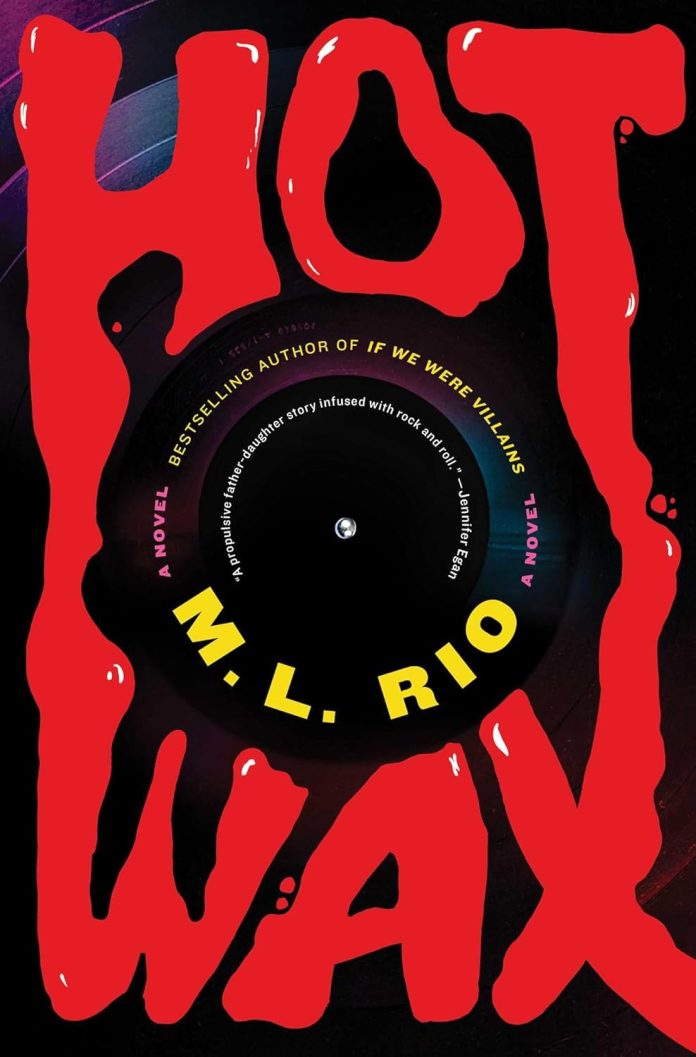
M.L. Rio, the mastermind behind the cult sensation If We Were Villains and the haunting novella Graveyard Shift, trades Shakespeare’s stages for concert halls drenched in sweat and violence in her latest offering, Hot Wax. This visceral exploration of rock and roll mythology doesn’t just capture the chaos of the late 1980s music scene—it weaponizes it, creating a narrative that burns as hot and dangerous as molten vinyl.
Rio’s signature blend of literary sophistication and genre sensibilities finds perfect expression in this tale of Suzanne Delgado, a woman haunted by the violent collapse of her father’s band and her own complicity in keeping its darkest secrets. The novel operates as both a coming-of-age story and a psychological thriller, proving that Rio’s talents extend far beyond the academic halls of her previous works.
The Anatomy of a Breakdown: Plot and Structure
Hot Wax unfolds across two timelines with the precision of a perfectly executed guitar solo. In 1989, ten-year-old Suzanne accompanies her father Gil and his band “Gil and the Kills” on what becomes their final, catastrophic tour. The present-day narrative follows adult Suzanne as she abandons her sterile suburban life following Gil’s death, embarking on a cross-country journey that becomes equal parts self-discovery and descent into chaos.
Rio structures the novel like a concept album, with each chapter building toward an inevitable crescendo of violence and revelation. The pacing mimics the rhythm of a rock show—moments of quiet tension punctuated by explosive confrontations that leave both characters and readers reeling. The dual timeline approach allows Rio to gradually reveal the traumatic incident that shattered Suzanne’s childhood while simultaneously showing how those wounds continue to bleed decades later.
The plot’s genius lies in its restraint. Rio could have easily sensationalized the rock and roll lifestyle, but instead she focuses on the human cost of pursuing artistic greatness at any expense. The violence, when it comes, feels both shocking and inevitable—a natural culmination of the toxic dynamics that have been simmering throughout the narrative.
Characters That Bleed Ink: Literary Depth Meets Raw Emotion
Rio’s character work demonstrates remarkable growth from her previous novels. Suzanne emerges as a fully realized protagonist whose trauma has calcified into a kind of protective numbness that makes her both sympathetic and occasionally frustrating. Her relationship with her mild-mannered husband Rob serves as a stark contrast to the volcanic passion she inherited from her father’s world, creating a tension that drives much of the novel’s emotional core.
The supporting cast crackles with authenticity, particularly the nomadic couple Simon and Phoebe, whose Airstream trailer becomes a sanctuary for Suzanne’s rediscovered wildness. Their polyamorous relationship is handled with remarkable sensitivity, avoiding both idealization and exploitation while exploring themes of chosen family and unconventional love.
The flashback sequences introduce us to Gil and the band with painterly detail. Skelly, the skeletal guitarist with bones tattooed on his hands, emerges as a particularly haunting figure—part mentor, part predator, wholly magnetic in his self-destructive charisma. Rio captures the seductive danger of such figures without romanticizing their ultimately toxic influence.
The Music of Memory: Thematic Resonance
At its heart, Hot Wax is an excavation of inherited trauma and the ways violence echoes across generations. Rio explores how children absorb and internalize the chaos around them, particularly when that chaos is wrapped in the intoxicating package of artistic rebellion. Suzanne’s journey becomes a reckoning not just with her past, but with the mythology she’s constructed around it.
The novel’s treatment of music as both salvation and curse feels particularly resonant. Rio understands that rock and roll’s power lies not just in its ability to transport and transform, but in its capacity to destroy. The contrast between Suzanne’s sterile adult life and the vivid, dangerous world of her childhood suggests that safety often comes at the cost of authenticity—a theme that resonates beyond the music industry.
Gender dynamics receive careful attention throughout the novel. Rio examines how women navigate male-dominated spaces, the price of being the only witness to violence, and the ways society expects women to absorb and process trauma quietly. Suzanne’s final transformation into someone capable of decisive action feels both cathartic and disturbing.
Technical Mastery: Style and Craft
Rio’s prose has evolved considerably since her debut, developing a muscular confidence that matches her subject matter. Her descriptions of live performances pulse with kinetic energy, making readers feel the sweat and chaos of packed venues. The sensory details are particularly effective—the smell of cigarettes and spilled beer, the feel of sticky vinyl seats, the visual assault of stage lights cutting through smoke.
The author’s background in music writing serves her well here. Her technical knowledge of instruments, recording equipment, and industry dynamics adds authenticity without overwhelming casual readers. She captures the specialized language of rock culture while maintaining accessibility for those unfamiliar with the scene.
Rio’s pacing deserves special recognition. She builds tension with the patience of a master storyteller, allowing seemingly mundane moments to accumulate weight until they become suffocating. The novel’s final act unfolds with brutal efficiency, each revelation landing with maximum impact because of the careful groundwork laid in earlier chapters.
Shadows and Dissonance: Critical Perspectives
While Hot Wax largely succeeds in its ambitious scope, certain elements feel less fully developed. The novel’s treatment of the music industry’s exploitative nature sometimes relies on familiar tropes rather than fresh insight. The corrupt manager figure and predatory band dynamics, while well-executed, don’t break significant new ground in rock fiction.
Some readers may find Suzanne’s transformation from passive victim to active agent feels rushed in the novel’s final third. While her evolution is psychologically credible, the pacing of her character arc doesn’t quite match the meticulous development of the earlier sections.
The novel’s violence, while narratively justified, is genuinely disturbing and may challenge readers expecting Rio’s typically more cerebral approach to darkness. The climactic confrontation between Suzanne and her husband Rob achieves genuine horror through its intimate brutality, but some may find the shift in tone jarring.
Comparative Literature: Echoes and Influences
Hot Wax occupies fascinating territory within contemporary fiction, sharing DNA with works like Daisy Jones & The Six by Taylor Jenkins Reid and The Seven Husbands of Evelyn Hugo by the same author, but with a significantly darker edge. Where those novels romanticize the music industry’s golden age, Rio’s work exposes its predatory underbelly with unflinching honesty.
The novel also recalls My Education by Susan Choi in its exploration of a woman’s sexual and emotional awakening outside traditional marriage boundaries. However, Rio’s work is far more violent and nihilistic in its worldview, suggesting that some forms of self-discovery require burning down everything you’ve built.
Fans of literary horror will recognize echoes of The Silent Companions by Laura Purcell in Rio’s ability to make the past feel malevolently alive, while her exploration of inherited trauma recalls the generational horror of Mexican Gothic by Silvia Moreno-Garcia.
Final Verdict: A Discordant Masterpiece
Hot Wax represents a significant evolution for M.L. Rio as a novelist, demonstrating her ability to channel her literary sensibilities into a more visceral, immediate form of storytelling. While the novel occasionally stumbles under the weight of its own ambitions, its successes far outweigh its flaws.
This is a book that will stay with readers long after the final page, not just for its shocking climax but for its unflinching examination of how trauma shapes us and how we shape ourselves in response. Rio has created a modern gothic that uses the mythology of rock and roll to explore timeless themes of family, identity, and the price of survival.
Similar Reads: For Fans of Dark Music Fiction
If Hot Wax resonated with you, consider these complementary reads:
- The Final Revival of Opal & Nev by Dawnie Walton – A nuanced exploration of rock’s racial dynamics
- Songs in Ursa Major by Emma Brodie – 1970s folk scene with romantic complications
- Utopia Avenue by David Mitchell – Epic novel following a British band’s rise and fall
- The Invisible Bridge by Julie Orringer – Generational trauma and survival
- Tampa by Alissa Nutting – Disturbing psychological exploration of predatory behavior
Hot Wax confirms M.L. Rio’s position as one of contemporary fiction’s most compelling voices, capable of finding profound humanity within the darkest corners of human experience. This is essential reading for anyone interested in the intersection of trauma, music, and the stories we tell ourselves to survive.







