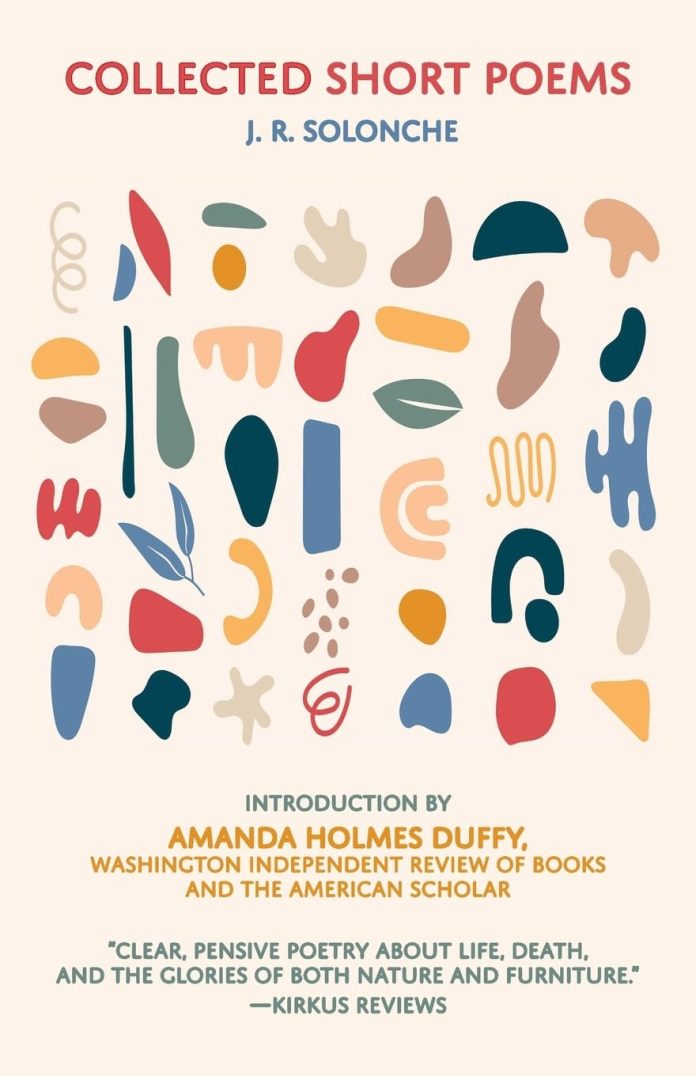
In an age where poetry often sprawls across lengthy verses or hides behind impenetrable academic language, J R Solonche’s Collected Short Poems emerges as a masterclass in compression and clarity. This substantial collection, spanning a decade from 2015 to 2025, gathers the poet’s finest work in poems of twelve lines or fewer—each one a perfectly cut gem that captures light from unexpected angles. What Solonche achieves in these brief forms is nothing short of remarkable: he transforms the mundane into the transcendent, finding profound meaning in the smallest moments of human experience.
The collection opens with an illuminating introduction by Amanda Holmes Duffy, who identifies something crucial about Solonche’s appeal—his ability to make poetry accessible without sacrificing depth. This accessibility becomes evident from the very first poems, where everyday observations bloom into philosophical insights with the naturalness of flowers turning toward sunlight.
A Decade of Poetic Evolution
The Chronological Journey
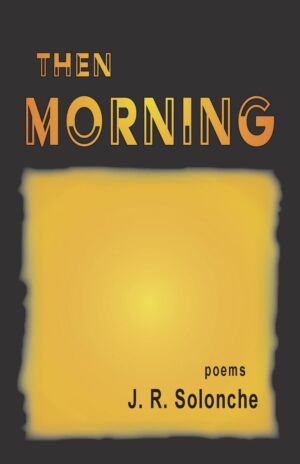
Organized chronologically through individual collections, the book allows readers to witness Solonche’s artistic evolution over ten years. Beginning with selections from Won’t Be Long (2016) and concluding with poems from Barren Road (2025), the collection reveals a poet who has maintained remarkable consistency while deepening his exploration of fundamental themes.
The early poems demonstrate Solonche’s gift for finding the extraordinary within ordinary circumstances. In “Blue Butterfly,” he observes how a butterfly settling on his reading table resembles both “a small blue book opening and closing” and “a blue eye opening and closing.” This kind of visual metaphor-making becomes a signature throughout the collection, revealing connections that feel both surprising and inevitable.
Thematic Threads
Several powerful themes weave throughout the collection, creating a rich tapestry of human experience:
- Mortality and Time: Solonche approaches death and aging with neither sentimentality nor fear, but with a clear-eyed acceptance that finds beauty in transience. His poems about dementia, particularly those involving his wife’s condition, achieve a tenderness that never slides into pity.
- Nature as Teacher: The natural world serves as both subject and metaphor, from the “wild turkeys” that “leak out of the woods like dirty oil from an old truck” to the profound simplicity of trees that “know all the grays.”
- Art and Creation: As a poet writing about poetry, Solonche demonstrates remarkable self-awareness without self-indulgence, offering insights into the creative process that illuminate rather than mystify.
The Master of Compressed Language
Technical Brilliance
Solonche’s technical skill shines in his ability to create complete emotional and intellectual experiences within severe formal constraints. His poems often function like haikus stretched just beyond their traditional limits, maintaining that form’s emphasis on precise observation while allowing for slightly more expansive development.
Consider the poem “Clarity”: “When at last everything / becomes clear, / you will see, / for the very first time, / that it had never really / been everything.” In six short lines, Solonche captures a fundamental paradox about knowledge and understanding that philosophers have struggled to express in volumes.
Voice and Tone
The poet’s voice remains remarkably consistent throughout the collection—conversational yet profound, humorous yet serious, accessible yet sophisticated. This consistency creates a sense of intimate dialogue between poet and reader, as if Solonche is sharing observations from a particularly eventful and thoughtful walk through life.
His humor deserves special mention, as it never feels forced or merely clever. When he writes about his neighbor who “thinks he’s self-sufficient” because he keeps chickens and taps maples but “still gets his music from the radio instead of a player piano,” the gentle irony reveals deeper truths about human nature and our relationships with technology and tradition.
Philosophical Depth in Miniature
Eastern Influences
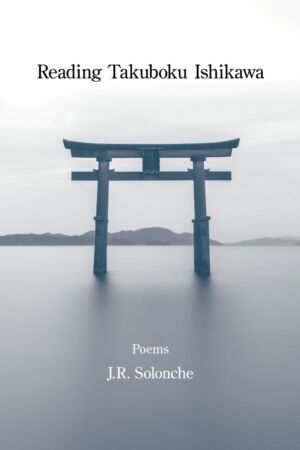
Throughout the collection, readers will notice the influence of Eastern philosophy, particularly Zen Buddhism and Chinese poetry. Solonche’s recurring character Zhao Li, a fictional Chinese poet, appears in multiple poems that explore themes of acceptance, impermanence, and the relationship between art and life. These poems demonstrate Solonche’s ability to channel different cultural perspectives while maintaining his distinctive voice.
Contemporary Concerns
While rooted in timeless themes, many poems address distinctly contemporary issues. His observations about technology, environmental change, and social media reveal a poet fully engaged with the modern world while maintaining perspective on what truly matters. The poem “Manhattan” exemplifies this balance, where ancient concerns about human settlement meet modern urban realities.
Literary Craftsmanship
Language and Imagery
Solonche’s language choices reveal a poet who understands that every word in a short poem must justify its presence. His imagery consistently surprises while remaining grounded in observable reality. When he describes goldfinches scattered around feeders as looking like “the sun was in a head-on collision with last night and shattered,” the metaphor feels both playful and precisely accurate.
Structure and Form
While most poems in the collection are free verse, Solonche demonstrates mastery of various forms, including occasional formal structures and prose poems. His understanding of line breaks and stanza organization creates poems that read aloud beautifully, with natural pauses that enhance rather than interrupt meaning.
A Poet in Dialogue with Tradition
Solonche’s work places him in conversation with numerous literary traditions and individual poets. His poems reference and respond to figures from Emily Dickinson to William Carlos Williams, from ancient Chinese poets to contemporary voices like Ted Kooser. These references never feel academic or showy; instead, they demonstrate a poet who sees himself as part of an ongoing conversation about human experience and artistic expression.
His occasional “found poems” and pieces “overheard” or based on specific prompts show a poet alert to poetry’s presence in everyday language and situations. This inclusive approach to source material reflects a democratic sensibility that views all of human experience as potentially meaningful.
Impact and Significance
Collected Short Poems by J R Solonche represents more than a mere gathering of previously published work; it creates a coherent artistic statement about the possibility of finding meaning in brevity and profundity in simplicity. In an era when attention spans shrink and complexity often overwhelms, Solonche offers poems that can be read quickly but reward extended contemplation.
The collection’s greatest achievement may be its demonstration that accessible poetry need not be simple-minded poetry. Solonche proves that clarity and depth can coexist, that humor and seriousness can enhance rather than cancel each other, and that contemporary poetry can speak to general readers without sacrificing artistic integrity.
Similar Explorations in Contemporary Poetry
Readers who appreciate Solonche’s approach might find similar pleasures in the work of contemporary poets who share his commitment to accessibility and precision. Ted Kooser’s collections offer comparable attention to ordinary moments transformed by careful observation. Billy Collins’ poetry shares Solonche’s conversational tone and gentle humor, while Mary Oliver’s nature-focused work demonstrates similar ability to find the sacred in daily experience.
For those interested in compressed forms, Robert Hass and Jane Hirshfield offer sophisticated approaches to brief poems that reward careful reading. The influence of classical Chinese poetry that appears throughout Solonche’s work might lead readers to explore translations by Kenneth Rexroth or contemporary poets like Sam Hamill who work within similar traditions.
A Lasting Achievement
Collected Short Poems establishes J R Solonche as a significant voice in contemporary American poetry. His ability to compress large experiences into small spaces, to find humor without losing gravity, and to speak clearly about complex matters marks him as a poet whose work will reward readers across different backgrounds and levels of literary experience. This collection serves both as an excellent introduction to Solonche’s work and as a substantial artistic statement that confirms his place among the finest practitioners of the short poem in contemporary literature.
The book’s organization allows for both sustained reading and random browsing, making it an ideal companion for readers seeking poetry that illuminates rather than obscures, that invites rather than intimidates, and that discovers rather than merely displays. In these qualities, Solonche has created a collection that honors both the ancient traditions of compressed poetry and the contemporary need for art that speaks directly to human experience.