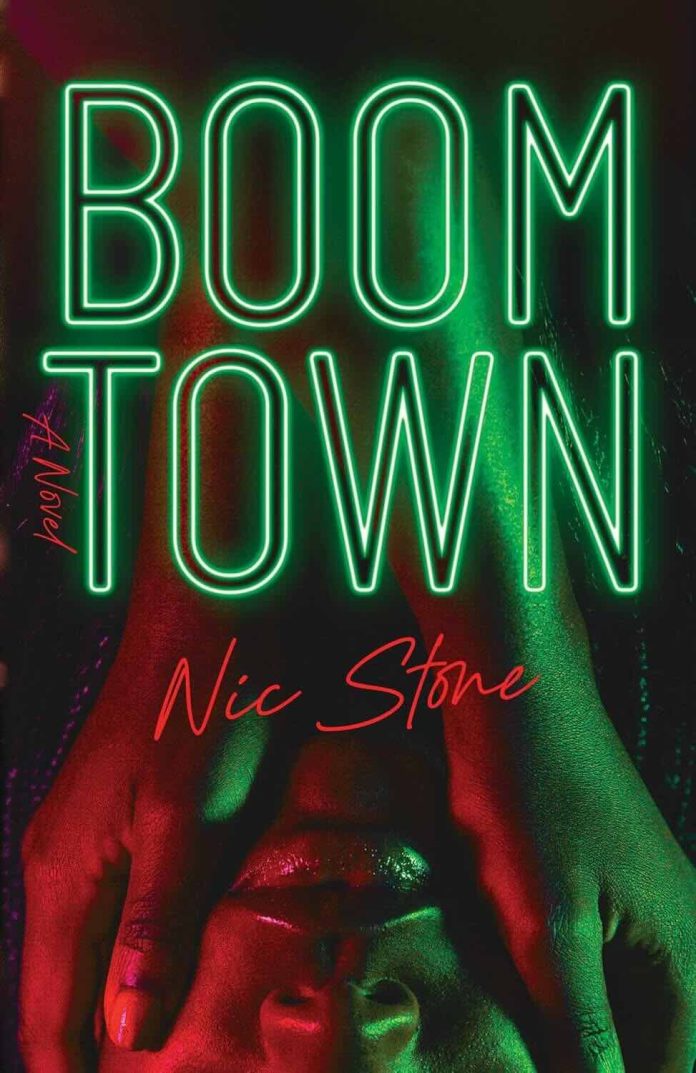
Nic Stone’s adult debut, Boom Town, is a masterfully woven thriller that transforms Atlanta’s strip club scene into a haunting exploration of power, predation, and sisterhood. While the narrative occasionally stumbles under the weight of its ambitious scope, Stone delivers a gripping tale that respects both its characters and its setting with unflinching honesty.
A Bold Departure into Adult Territory
Nic Stone, best known for her groundbreaking young adult novel “Dear Martin,” ventures into adult fiction with “Boom Town,” and the transition proves both jarring and electrifying. This isn’t merely an author expanding her repertoire—it’s a complete reinvention that showcases Stone’s versatility as a storyteller. Where “Dear Martin” tackled racial injustice through a teenager’s lens, “Boom Town” examines exploitation and survival through the experiences of adult women navigating a world that commodifies their bodies while dismissing their humanity.
The author’s signature style—raw authenticity paired with social consciousness—translates seamlessly into this darker territory. Stone writes with the same unflinching honesty that made her YA work so powerful, but here she’s unshackled from the constraints of writing for younger audiences. The result is a novel that feels both familiar and startlingly new.
The Heart of the Mystery
At its core, “Boom Town” is the story of Micah “Lyriq” Johanssen, a former headliner turned dance manager at Atlanta’s most notorious strip club. When new dancer Damaris “Charm” Wilburn vanishes without explanation, Lyriq’s instincts scream danger—especially since her former partner and lover Felice “Lucky” Carothers disappeared under eerily similar circumstances.
What begins as a simple missing person investigation evolves into something far more sinister. Stone expertly peels back layers of deception, revealing a web of privilege, power, and predation that extends far beyond the neon-lit walls of Boom Town. The mystery isn’t just about where these women have gone—it’s about why society allows certain people to disappear without consequence.
Character Portraits That Breathe
Stone’s greatest strength lies in her character development. Lyriq emerges as a complex protagonist whose fierce protectiveness stems from her own traumatic past. She’s neither victim nor savior but something more nuanced—a survivor using her experience to shield others while wrestling with her own demons. Her relationship with the missing women feels authentic, built on genuine care rather than plot convenience.
The supporting cast is equally well-realized. Dejuan Taylor, Charm’s concerned neighbor, brings an earnest masculinity that contrasts sharply with the toxic men who orbit the club. Thomas McIntyre, the antagonist, is rendered with chilling believability—a predator who weaponizes his privilege and connections to hunt vulnerable women.
Even the club itself becomes a character, with Stone painting Boom Town not as a den of iniquity but as a complex workplace where women navigate economics, ambition, and survival. The author refuses to romanticize or demonize sex work, instead presenting it as one option among many in a world that offers women limited choices.
Narrative Structure: Bold Choices, Mixed Results
Stone employs a multi-perspective narrative that jumps between timelines, incorporating diary entries, text messages, and shifting POVs. This ambitious structure allows readers to piece together the mystery alongside the characters, creating genuine suspense as revelations emerge.
However, this complexity occasionally works against the novel. Certain perspective shifts feel jarring, and some timeline jumps leave readers momentarily disoriented. The diary entries from Lucky, while providing crucial backstory, sometimes slow the momentum when tension should be building.
The pacing suffers most in the middle third, where Stone seems torn between advancing the plot and exploring the rich world she’s created. While these character moments are individually compelling, they occasionally derail the thriller elements that drive the story forward.
Themes That Cut Deep
Stone tackles heavy themes with remarkable sensitivity. The novel explores:
- Power dynamics and exploitation: How predators use institutional authority to silence victims
- Intersectionality: The unique vulnerabilities faced by Black women in precarious circumstances
- Chosen family: The bonds formed between women protecting each other in hostile environments
- Economic necessity: How limited options force difficult choices
- Justice vs. legal system: The gap between what’s right and what’s enforceable
These themes never feel heavy-handed or preachy. Instead, they emerge naturally from character actions and story events, making the social commentary feel organic rather than imposed.
Writing Style: Stone’s Evolution
Stone’s prose has matured significantly since her YA work. Her dialogue crackles with authenticity, particularly in scenes set within Boom Town. She captures the rhythms of Atlanta speech without relying on caricature, and her descriptions of the club environment feel lived-in rather than researched.
The author demonstrates remarkable skill in writing intimate scenes without exploitation. Whether depicting the dancers’ performances or the violence that threatens them, Stone maintains respect for her characters’ dignity while refusing to sanitize their experiences.
Some passages showcase Stone’s poetic sensibilities:
“The neon lights cut on: BOOM TOWN in glowing green with the shape of a woman holding a pole between the two words.”
These moments of beauty amid darkness demonstrate Stone’s range as a stylist.
Areas for Improvement
Despite its many strengths, “Boom Town” isn’t without flaws. The resolution feels slightly rushed, with certain plot threads tied up too neatly after chapters of complex buildup. Some readers may find the ending’s optimism unearned given the novel’s dark journey.
Additionally, Stone occasionally struggles with show versus tell, particularly when explaining character motivations. While her dialogue is consistently strong, some exposition feels heavy-handed compared to the subtlety displayed elsewhere.
The novel’s ambitious scope sometimes undermines its focus. Stone has created such a rich world that readers may wish for more time with certain characters or situations that receive only brief attention.
Cultural Authenticity and Respect
One of the novel’s greatest achievements is Stone’s respectful portrayal of sex work and the women who choose it. She avoids both the “tragic victim” and “empowered entrepreneur” stereotypes, instead presenting her characters as complex individuals making the best decisions they can with available options.
The Atlanta setting feels authentic, from the specific neighborhoods to the cultural references. Stone clearly understands both the city’s geography and its social dynamics, lending credibility to her story’s foundation.
Comparison to Similar Works
“Boom Town” invites comparison to several recent thrillers exploring similar themes:
Books You Might Enjoy If You Liked “Boom Town”:
- “Luster” by Raven Leilani – Another exploration of Black women navigating complex relationships and power dynamics
- “The Seven Husbands of Evelyn Hugo” by Taylor Jenkins Reid – Stories of women in entertainment industries facing exploitation
- “My Sister, the Serial Killer” by Oyinkan Braithwaite – Sisters protecting each other through dark circumstances
- “Queenie” by Candice Carty-Williams – Complex portrait of a young Black woman making difficult choices
- “Gone Girl” by Gillian Flynn – Psychological thriller with unreliable narrators and dark secrets
Stone’s work stands apart through its focus on community and mutual protection rather than individual survival, offering hope even in its darkest moments.
The Verdict: A Powerful Addition to Contemporary Crime Fiction
“Boom Town” represents a successful evolution for Nic Stone as an author. While not perfect, it demonstrates her ability to tackle adult themes with the same passion and authenticity that marked her YA work. The novel succeeds as both a gripping thriller and a meaningful exploration of how society treats its most vulnerable members.
Stone has created something rare in contemporary fiction: a crime novel that respects both its genre conventions and its social responsibilities. “Boom Town” entertains while enlightening, thrills while educating. For readers seeking mysteries that engage both heart and mind, this represents a worthy addition to the contemporary thriller landscape.
The novel’s flaws—occasional pacing issues and structural complexity—are overshadowed by its considerable strengths: compelling characters, authentic dialogue, and fearless exploration of difficult themes. Stone proves that commercial fiction can tackle serious social issues without sacrificing entertainment value.
- Recommended for: Readers of psychological thrillers, fans of character-driven mysteries, and anyone interested in stories that illuminate social issues through compelling narratives. Best suited for mature readers due to themes of sexual exploitation and violence.
Stone’s venture into adult fiction bodes well for her future work in this space. “Boom Town” establishes her as a versatile author capable of writing across genres while maintaining her distinctive voice and social consciousness.







