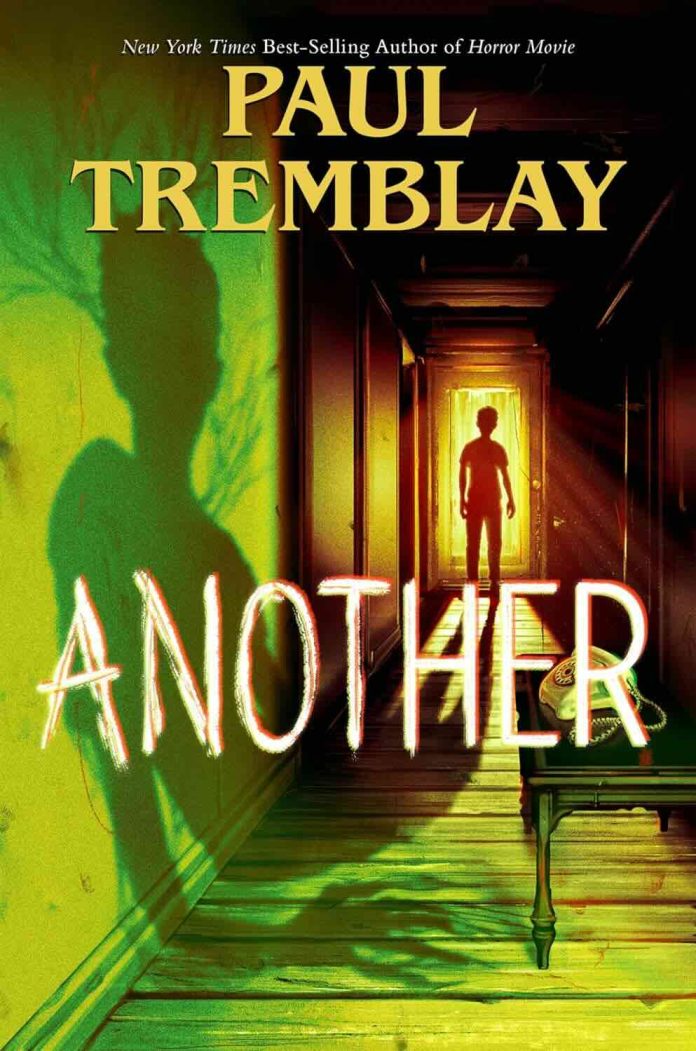
Paul Tremblay, the acclaimed author behind chilling novels like A Head Full of Ghosts, The Cabin at the End of the World, and The Pallbearers Club, makes his middle grade debut with Another—a spine-tingling tale that proves his ability to craft terror transcends age boundaries. Known for his psychological horror that often explores family dynamics under supernatural pressure, Tremblay brings these same strengths to younger readers while addressing uniquely contemporary fears.
The Pandemic’s Perfect Storm
Set against the backdrop of the COVID-19 pandemic, Another follows twelve-year-old Casey Wilson, a middle schooler struggling with isolation, facial tics, and the aftermath of what’s euphemistically called “the Zoom Incident”—a humiliating online classroom moment that went viral among his peers. When his parents announce that a friend is coming for a sleepover, Casey is baffled; he doesn’t have any friends left.
Enter Morel, a clay-skinned, initially mute boy who arrives in a burlap sack carried by a mysterious man. What begins as an odd but welcome friendship slowly transforms into something far more sinister as Casey’s parents become inexplicably enamored with their guest while growing distant from their own son.
Tremblay masterfully captures the disorientation and anxiety of pandemic-era childhood. The hybrid learning model, the masks, the isolation—these elements feel authentic rather than exploitative, providing a recognizable foundation that makes the supernatural elements even more unsettling. Casey’s struggles with executive functioning, facial tics, and social anxiety are portrayed with genuine empathy, avoiding both condescension and oversimplification.
The Horror of Being Replaced
The central conceit of Another by Paul Tremblay taps into a primal childhood fear: what if someone else could be a better version of you? As Morel gradually absorbs Casey’s appearance, voice, and even his parents’ affection, the novel explores themes of identity, belonging, and self-worth with remarkable sophistication.
Tremblay’s depiction of Morel is particularly effective. Initially sympathetic—even pathetic—the clay boy evolves from friend to doppelgänger to predator in a progression that feels both inevitable and shocking. The author avoids making Morel purely evil; instead, he’s a tragic figure trapped in his own desperate need to exist, to be real, to belong somewhere.
The fungal mythology underlying the story adds layers of biological horror that will resonate with readers familiar with concepts like parasitic fungi and mycelial networks. Tremblay weaves these scientific elements naturally into the narrative, creating a plausible supernatural ecosystem that feels grounded in reality.
Artistic Identity as Salvation
One of the novel’s most powerful themes centers on Casey’s artistic abilities. Drawing becomes his anchor to selfhood, the thing that makes him irreplaceably himself. When the mysterious antagonist forbids Casey from drawing, it’s not just a plot device—it’s an assault on his core identity.
The scenes where Casey fights back through art are genuinely moving. His schematic drawings, family portraits, and character sketches serve multiple narrative functions: they’re evidence of his unique perspective, weapons against supernatural influence, and ultimately, the means of his salvation. Tremblay understands that creativity isn’t just about talent—it’s about seeing the world in a way that’s uniquely your own.
Family Dynamics Under Supernatural Pressure
The Wilson family feels authentically lived-in, complete with believable sibling dynamics between Casey and his college-aged sister Ally. Their text exchanges provide both comic relief and emotional anchor points, showcasing a relationship built on genuine affection despite typical teenage dynamics.
Casey’s parents’ gradual transformation under Morel’s influence is particularly disturbing because it begins so subtly. Mom’s work-from-home exhaustion, Dad’s coaching enthusiasm—these details feel real before they become wrong. The horror emerges from the familiar becoming strange, a trademark of Tremblay’s work that translates effectively to younger readers.
Pacing and Atmosphere
Another by Paul Tremblay moves with deliberate pacing that allows tension to build naturally. Tremblay doesn’t rush toward supernatural revelations; instead, he lets unease accumulate through small details: the strange phone, the mysterious dust, Morel’s odd habits and limitations. The author trusts his young readers to pick up on subtle cues, creating a more sophisticated reading experience than typical middle grade horror.
The book’s structure, with its numbered chapters and specific timeline, creates a sense of countdown that heightens tension. Each day of Morel’s visit brings new developments, new losses for Casey, and new questions about what’s really happening.
Areas for Consideration
While Another by Paul Tremblay succeeds on multiple levels, some elements may challenge younger readers. The psychological complexity of Casey’s relationship with Morel—simultaneous friendship, rivalry, and terror—requires careful attention to navigate. Additionally, the pandemic setting, while authentic, may be triggering for readers who experienced similar isolation and anxiety during this period.
The resolution, while satisfying, leaves several questions unanswered about the mysterious antagonist and the broader supernatural ecosystem. Some readers may find this ambiguity frustrating, though it’s consistent with Tremblay’s approach to horror that emphasizes psychological impact over complete explanation.
Tremblay’s Evolution as a Storyteller
Another demonstrates Paul Tremblay’s remarkable ability to adapt his horror sensibilities for younger readers without diminishing their effectiveness. The book maintains genuine scares while avoiding graphic content, proving that psychological horror can be age-appropriate without being neutered.
The novel shares DNA with his adult works—the focus on family under pressure, the blending of supernatural and psychological elements, the exploration of identity and belonging—while introducing themes particularly relevant to middle grade readers: bullying, social anxiety, academic pressure, and the search for authentic friendship.
Contemporary Relevance and Universal Themes
Beyond its pandemic setting, Another by Paul Tremblay addresses timeless concerns about authenticity in an age of social media and digital identity. Casey’s viral humiliation feels unfortunately contemporary, while his struggle to maintain his sense of self against external pressures speaks to universal adolescent experiences.
The book’s treatment of neurodivergence—Casey’s tics, executive functioning challenges, and anxiety—feels respectful and authentic. Tremblay avoids both inspiration porn and tragic narratives, instead presenting these as aspects of Casey’s character that make him who he is, not problems to be solved.
Final Assessment
Another by Paul Tremblay stands as a remarkable achievement in middle grade horror, proving that sophisticated scares and meaningful themes can coexist with age-appropriate content. Tremblay’s respect for his young readers’ intelligence shines through every page, creating a book that will satisfy both middle grade audiences and adult readers seeking quality horror fiction.
The novel succeeds because it understands that the most effective horror often comes from recognizable fears—rejection, replacement, loss of identity—amplified through supernatural means. By grounding these universal anxieties in the specific experience of pandemic-era childhood, Tremblay has created something both timely and timeless.
Similar Reads for Fans of Another
Readers who enjoyed Another by Paul Tremblay might appreciate:
- The House You Pass on the Way by Jacqueline Woodson – for its sensitive treatment of adolescent isolation
- Ghost by Jason Reynolds – for its authentic voice and sports elements
- The Graveyard Book by Neil Gaiman – for its blend of horror and coming-of-age themes
- The Warm Hands Of Ghosts by Katherine Arden – for middle grade horror with folkloric elements
- The Twisted Ones by T. Kingfisher – for adult readers wanting similar fungal horror themes
Another confirms Paul Tremblay as a master of psychological horror capable of crafting terror that transcends age boundaries. This is essential reading for anyone interested in sophisticated horror fiction, regardless of their age.







