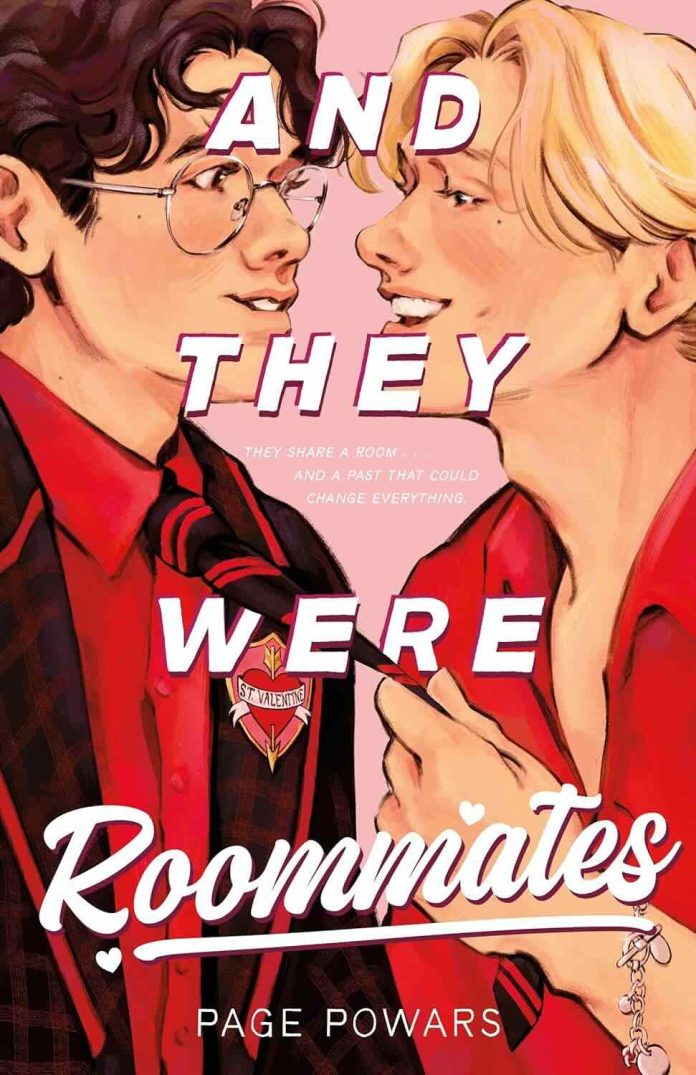
Page Powars delivers a stunning sophomore effort with And They Were Roommates, a novel that manages to be simultaneously hilarious and deeply moving. Following his debut The Borrow a Boyfriend Club, Powars has crafted a second-chance romance that feels both refreshingly authentic and utterly compelling. This isn’t just another boarding school romance—it’s a nuanced exploration of identity, love, and the courage it takes to be yourself in spaces that weren’t designed for you.
A Story That Captures the Complexity of Young Love
The premise might sound familiar—enemies to lovers, boarding school setting, roommate mishap—but Powars transforms these well-worn tropes into something genuinely special. Charlie von Hevringprinz arrives at the elite Valentine Academy for Boys with a carefully constructed plan to remain invisible, only to find himself roomed with Jasper Grimes, the very boy who shattered his heart two years prior at summer camp. The twist? Jasper doesn’t recognize Charlie, who has since transitioned.
What follows is a delicate dance of recognition, memory, and slowly rebuilding trust that Powars handles with remarkable skill. The author manages to balance the inherent tension of Charlie’s secret with genuine moments of connection and growth. Charlie’s internal struggle between wanting to remain hidden and desperately wanting to be seen creates a compelling emotional throughline that drives the entire narrative.
The romance itself unfolds with beautiful patience. Rather than rushing toward the inevitable revelation, Powars allows both characters to rediscover each other naturally. Jasper’s gradual realization isn’t played for dramatic revelation but instead becomes a moment of profound recognition and acceptance. Their relationship feels earned, built on a foundation of shared experiences, mutual respect, and genuine affection that transcends their complicated history.
Characters That Feel Refreshingly Real
Charlie emerges as one of the most authentic teenage protagonists in recent YA literature. His experience as a transgender student at an elite boys’ academy is portrayed with nuance and sensitivity that never feels performative or token. Charlie’s fears about being discovered are balanced against his determination to succeed academically and his growing connections with his classmates. Powars avoids the trap of making Charlie’s identity his only defining characteristic, instead presenting a fully realized teenager dealing with academic pressure, friendship drama, and first love alongside his specific challenges as a trans student.
Jasper could have easily fallen into the “insufferable poet boy” stereotype, but Powars subverts expectations by revealing layers of vulnerability beneath his apparent confidence. His evolution from seemingly self-absorbed artist to someone capable of genuine introspection and growth feels organic rather than contrived. The way Powars handles Jasper’s gradual recognition of Charlie—and his own feelings—demonstrates sophisticated character development that respects both characters’ emotional journeys.
The supporting cast adds richness to the Valentine Academy world without overwhelming the central romance. Xavier’s friendship with Charlie feels genuine, and the STRIP (Student Tutoring Remediation Interdisciplinary Program) members each have distinct personalities that make their scenes memorable. Even minor characters like Luis and Blaze feel like real people rather than plot devices.
A Setting That Becomes a Character
Valentine Academy itself deserves recognition as one of the novel’s strengths. Powars creates a boarding school environment that feels both fantastical and grounded in reality. The gothic architecture, strict traditions, and academic pressure create an atmosphere that enhances rather than overshadows the personal story. The “cockblockade” separating the brother and sister academies becomes both a literal and metaphorical barrier that the characters must navigate.
The author’s attention to detail in creating the school’s culture—from the public grade rankings to the elaborate mixer preparations—demonstrates world-building skills that make the setting feel lived-in and authentic. The various campus locations, from the library stacks to the lakeside gazebo, are described with enough specificity to feel real without becoming overly descriptive.
Writing Style That Balances Humor and Heart
In And They Were Roommates, Powars demonstrates remarkable range in his prose, shifting seamlessly between Charlie’s internal monologue and the broader campus dynamics. The first-person narration allows readers to experience Charlie’s anxiety and excitement intimately, while the author’s natural humor prevents the story from becoming overly heavy despite its serious themes.
The dialogue feels particularly authentic, capturing the way teenagers actually speak without resorting to dated slang or overly formal language. Jasper’s theatrical tendencies and Charlie’s more grounded responses create a dynamic that serves both comedic and romantic purposes. The banter between characters feels natural and contributes to character development rather than existing purely for entertainment.
One of the novel’s greatest strengths lies in how Powars handles the love letter subplot. What could have been a simple plot device instead becomes a meaningful exploration of how we express feelings and connect with others. Charlie’s journey from struggling with poetry to finding his own voice parallels his emotional growth throughout the story.
Themes That Resonate Beyond Romance
While the central romance drives the plot, Powars weaves in themes that give the story additional depth and meaning. The pressure of academic excellence, the complexity of family expectations, and the challenge of finding your place in an established social hierarchy all contribute to a rich thematic landscape.
The book’s exploration of identity goes beyond Charlie’s experience as a transgender student, though that remains central to the story. Each character grapples with questions of authenticity and belonging in their own way. Jasper’s struggle with his artistic identity and his relationship with his famous status mirrors Charlie’s navigation of his academic and social identity.
The theme of communication—or lack thereof—runs throughout the novel. From the literal love letters that drive the plot to the various misunderstandings and revelations between characters, Powars demonstrates how crucial honest communication is to meaningful relationships.
Minor Critiques in an Otherwise Stellar Novel
While And They Were Roommates succeeds on multiple levels, it isn’t without minor weaknesses. The pacing occasionally slows during the middle section, particularly when focusing on academic and STRIP activities. Some readers might find the boarding school setting’s privileges and traditions somewhat removed from their own experiences, though this doesn’t significantly impact the story’s emotional core.
The resolution of certain plot threads, particularly regarding the administrative changes at Valentine Academy, feels somewhat convenient. However, these minor issues don’t detract from the overall success of the novel.
Perfect for Fans of Contemporary LGBTQ+ Romance
Readers who enjoyed Casey McQuiston’s Red, White & Royal Blue or Mason Deaver’s I Wish You All the Best will find much to love in Powars’ latest offering. The book also shares DNA with classics like John Green’s boarding school narratives while carving out its own unique space in LGBTQ+ young adult literature.
Final Verdict: A Must-Read Romance
And They Were Roommates represents everything that contemporary YA romance can and should be: authentic, diverse, emotionally intelligent, and genuinely entertaining. Powars has created a story that honors both the universal experience of first love and the specific challenges faced by LGBTQ+ youth. This is a book that will make readers laugh, cry, and ultimately feel hopeful about love’s ability to transcend barriers and create understanding.
For anyone seeking a romance that combines heart, humor, and meaningful representation, And They Were Roommates delivers in spades. It’s a worthy follow-up to The Borrow a Boyfriend Club and establishes Powars as a voice to watch in LGBTQ+ young adult literature.







