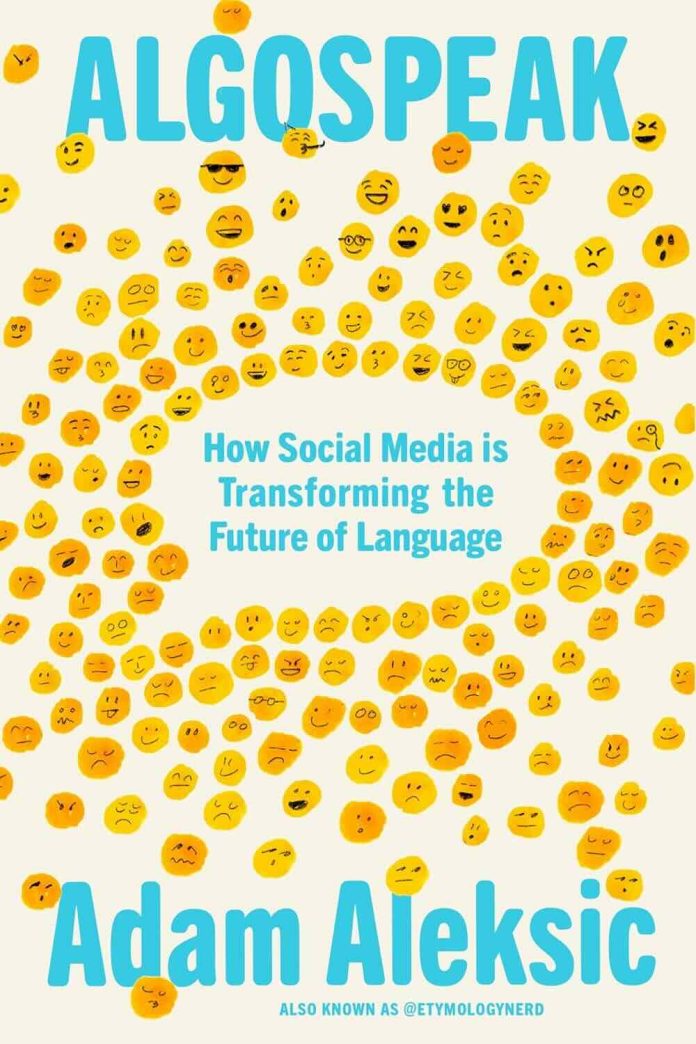
Adam Aleksic’s “Algospeak: How Social Media Is Transforming the Future of Language” arrives at a crucial moment when our daily conversations are increasingly shaped by invisible algorithmic forces. As both a professional linguist and social media influencer known as @etymologynerd, Aleksic brings a unique dual perspective to this fascinating exploration of how algorithms are fundamentally reshaping human language.
The book opens with a striking example that immediately captures the reader’s attention: the controversy surrounding the Museum of Pop Culture’s use of “unalive” instead of “suicide” in a Kurt Cobain exhibit. This single word encapsulates the book’s central thesis – that we’re witnessing an unprecedented linguistic transformation driven by social media algorithms rather than traditional cultural evolution.
The Mechanics of Algorithmic Language Evolution
Aleksic expertly demonstrates how the traditional pathways of language change have been revolutionized by social media platforms. Where linguistic evolution once took decades or centuries, algorithmic amplification now creates viral words in mere days. The author’s analysis of how words like “rizz,” “gyat,” and “skibidi” spread from niche communities to mainstream usage reveals the new mechanics of modern etymology.
The concept of “linguistic Whac-A-Mole” serves as a brilliant metaphor throughout the book. Aleksic shows how content creators constantly develop new euphemisms to evade algorithmic censorship, only to see those replacements eventually flagged and banned, perpetuating an endless cycle of linguistic innovation. This phenomenon extends far beyond simple word substitution, influencing grammar, accent development, and even cultural identity formation.
The Attention Economy’s Linguistic Impact
One of the book’s strongest sections examines how the attention economy has fundamentally altered communication patterns. Aleksic’s personal experience as a content creator adds authenticity to his analysis of how creators modify their speech patterns, develop “influencer accents,” and craft content specifically to maximize algorithmic engagement.
The author’s exploration of hooks, microhooks, and attention-grabbing techniques reveals how platform requirements are reshaping not just how we speak online, but increasingly how we communicate in person. The emergence of phrases like “no because” as discourse markers demonstrates how digital communication strategies migrate into everyday conversation.
Filter Bubbles and Community Formation
Aleksic’s treatment of filter bubbles and community formation represents some of the book’s most insightful analysis. Rather than simply lamenting the creation of echo chambers, he examines how algorithms enable the formation of previously impossible communities. His case studies of fanilects – from Taylor Swift fans to K-pop stans – illustrate how digital platforms allow niche groups to develop sophisticated shared vocabularies at unprecedented scale and speed.
The discussion of how communities like ballroom culture, incels, and various aesthetic movements (“cottagecore,” “dark academia”) develop and spread their linguistic innovations provides a nuanced view of algorithmic influence. Aleksic doesn’t shy away from examining problematic communities, offering a balanced analysis of how dangerous ideologies can spread through seemingly innocuous memes and slang.
Critical Examination of Linguistic Appropriation
The book’s chapter on linguistic appropriation stands as one of its most important contributions. Aleksic traces how African American English consistently serves as a source for viral slang, only to see these innovations stripped of cultural context and commercialized. His analysis of words like “slay,” “tea,” and “serving” moving from ballroom culture to mainstream usage reveals the complex dynamics of cultural extraction in digital spaces.
The author’s examination of how creators like Kayla Newman, who coined “on fleek,” receive no compensation while corporations profit from their linguistic innovations highlights the ethical implications of viral language. This section demonstrates Aleksic’s commitment to examining not just how language changes, but who benefits from those changes.
Strengths and Notable Insights
Aleksic’s background as both academic and practitioner gives the book exceptional credibility. His original surveys of teachers and parents provide valuable empirical evidence for his claims about linguistic change. The book’s global perspective, examining how English algorithmic slang spreads to languages like Spanish and Arabic, offers important insights into digital linguistic imperialism.
The writing style successfully balances academic rigor with accessibility. Aleksic manages to explain complex linguistic concepts without overwhelming general readers, while still providing sufficient depth for those with specialized interests. His use of personal anecdotes from his content creation experience adds authentic color to theoretical discussions.
Areas for Improvement
Despite its many strengths, the book occasionally feels scattered in its focus. Some chapters read more like collections of interesting observations than cohesive arguments. The rapid pace of change Aleksic documents sometimes works against sustained analysis – by his own admission, much of the slang he discusses was already outdated by publication.
The book’s optimistic conclusion, while refreshing, perhaps underestimates the potential negative consequences of algorithmic language control. While Aleksic argues we’re “succeeding as well in love as men do now” regardless of linguistic change, more critical examination of how algorithmic mediation might fundamentally alter human communication patterns would strengthen the analysis.
Global Implications and Future Directions
Aleksic’s discussion of how algorithmic language spreads globally raises important questions about linguistic diversity and cultural preservation. His examination of how young people worldwide adopt English internet slang, often without understanding its origins, highlights the complex relationship between digital connectivity and cultural homogenization.
The book’s treatment of sign language adaptation to digital platforms provides a particularly compelling example of how all forms of human communication must adapt to technological constraints. This analysis suggests broader implications for how digital mediation shapes not just what we say, but how we can express ourselves.
Recommended for Language Enthusiasts and Digital Culture Observers
“Algospeak” by Adam Aleksic will particularly appeal to readers interested in the intersection of technology and humanities. Linguistics students, social media professionals, and anyone curious about how digital platforms shape culture will find valuable insights throughout. The book serves as an excellent introduction to internet linguistics for general readers while offering fresh perspectives for specialists.
Similar Books Worth Exploring
Readers who enjoy “Algospeak” by Adam Aleksic should consider these complementary works:
- “Because Internet” by Gretchen McCulloch – A foundational exploration of internet linguistics
- “The Age of Magical Overthinking” by Amanda Montell – Examines contemporary language and thought patterns
- “Wordslut” by Amanda Montell – Explores the intersection of language, gender, and power
- “Language and the Internet” by David Crystal – Academic foundation for digital linguistics
Final Assessment
“Algospeak” by Adam Aleksic succeeds as both an entertaining read and a serious contribution to linguistic scholarship. Aleksic’s unique position allows him to document changes as they happen rather than merely analyzing them retrospectively. While the book sometimes lacks the depth that longer-term perspective might provide, its immediacy and insider knowledge make it an invaluable snapshot of a crucial moment in linguistic history.
The book ultimately argues that despite algorithmic influence, human creativity and adaptability ensure language remains fundamentally human. Whether one agrees with this optimistic assessment or not, Aleksic has provided an essential framework for understanding how digital platforms are reshaping the most fundamental human capacity – our ability to communicate with one another.







