 1
1 2
2 3
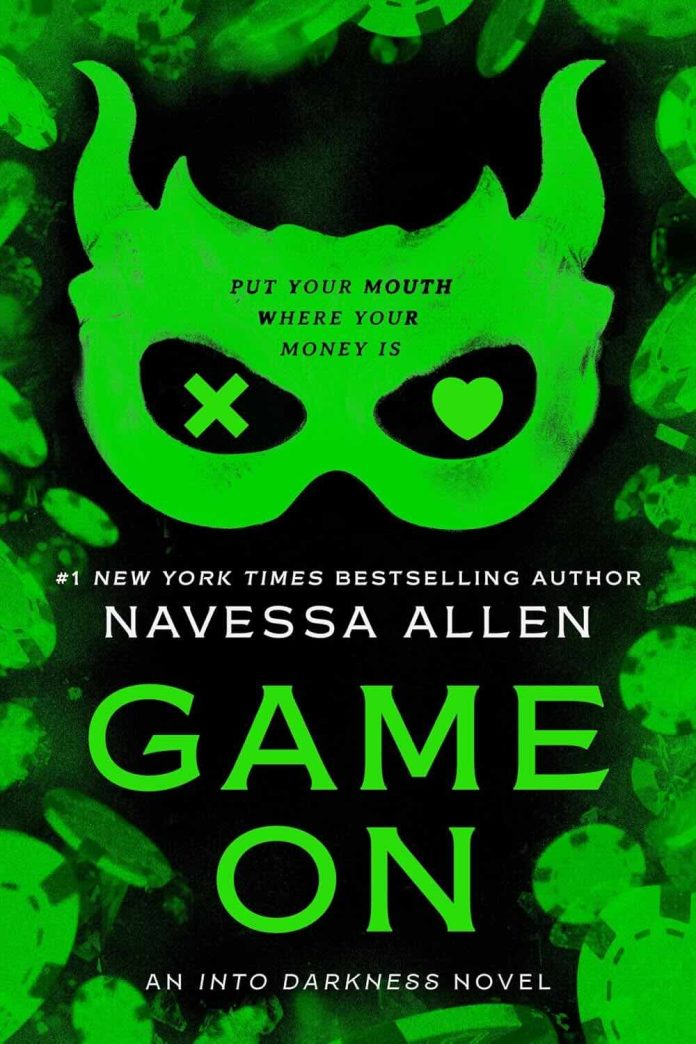
3There is a particular thrill in meeting a hero who has absolutely no business being likable, and Tyler Neumann is exactly that man. He runs illegal gambling operations, blackmails women into fake relationships, and punches people in the kidney before dinner. He is, by his own cheerful admission, the villain. Game On by Navessa Allen is the story of what happens when that villain meets someone who refuses to be a victim — and how badly both of them are rattled by the collision.
The third installment in the No. 1 New York Times bestselling Into Darkness series, following Lights Out and Caught Up, the book arrives with enormous expectations. Allen built her reputation on the dark rom-com formula: morally compromised characters, banter that could strip paint off a wall, and romantic tension calibrated to a slow, excruciating boil. Game On delivers on most of that promise, while also revealing some of the challenges of sustaining the formula into a third outing.
Two Villains, One Very Bad Arrangement
At the heart of Game On by Navessa Allen is a setup that should be ridiculous and yet somehow feels completely earned. Tyler Neumann has spent years building toward a single goal: finding and destroying his estranged father. To infiltrate the man’s inner circle, he needs a door, and that door turns out to be Stella McCormick — neo-traditionalist tattoo artist, chronic gastritis sufferer, and the unimpressed owner of the best death glare in the city.
When Tyler engineers a gambling debt against Stella’s younger brother Blake, he offers her a deal: take on the debt herself in exchange for playing his fake girlfriend, giving him access to her family’s glittering social world. Stella, who has been slowly rebuilding her life after her own catastrophic past, says yes — because what other choice does she have?
What follows is sixty-thousand-odd words of two deeply stubborn, deeply damaged people trying to destroy each other and increasingly failing. Their first meeting, in Stella’s Gothic tattoo parlor at eleven at night, is fizzing with the specific energy of two people who immediately want to both insult and devour each other, and Allen sustains that charge for the entire book. The banter is the engine here: fast, filthy, and frequently hilarious in the darkest possible way.
What Allen Gets Absolutely Right
The dual point of view is the book’s greatest structural strength. Alternating between Tyler and Stella chapter by chapter, Allen gives readers two fully realized interior worlds. Tyler’s voice is cold, strategic, perpetually calculating — and yet the gaps between what he tells himself and what he actually does become wider and more telling as the story progresses. Stella, meanwhile, is a masterclass in a character who is all sharp edges on the outside and something much softer and more complicated within.
Stella’s chronic illness — specifically gastritis, which Allen has shared a diagnosis for — is integrated into the narrative with rare authenticity. This is not a prop. It shapes her relationships, her daily decisions, her eating, her emotional regulation, her anxiety. There are scenes involving Stella’s relationship with food and pain that have real weight, and the author’s note at the book’s opening frames this as deeply personal, which shows on the page.
The supporting cast deserves mention too. Amos, Stella’s foul-mouthed African grey parrot who calls her “Snack Bitch” with the dedication of a tenured professor, steals every scene he is in. Runa, Stella’s complicated friend who is recovering from a life-altering accident connected to Stella’s past, adds genuine emotional texture to what could have been a purely combustive romance. Even the play club Velvet — co-owned with the Mafia-adjacent Junior Trocci and his terrifying girlfriend Lauren — feels like a fully inhabited world rather than a backdrop.
The class commentary embedded throughout Game On by Navessa Allen is also sharper than one might expect from a dark rom-com. Tyler’s hatred of inherited wealth and privilege is not just a character tic; it is the scaffolding of his entire worldview, and the book takes real care to complicate it. Stella is wealthy by birth but self-made in practice, carrying guilt she has not finished processing, paying for damages the law said she did not owe. The collision of their value systems creates friction that goes deeper than the usual enemies-to-lovers formula.
Where the Book Is More Complicated
Game On by Navessa Allen is not a flawless entry in the series, and an honest review requires saying so.
- The pacing in the middle section loses momentum. Once the fake-dating arrangement is established and the social-infiltration plot is underway, there is a stretch where the story circles without quite advancing. The revenge plot, which is genuinely interesting, gets crowded out by romantic tension that could have been more efficiently staged.
- The extended Into Darkness universe can feel like a lot. Readers coming in cold — or even those who read Lights Out and Caught Up some time ago — will encounter a web of characters, references, and ongoing storylines that occasionally interrupt the forward motion of Tyler and Stella’s story. Allen’s universe is clearly a richly populated one, but Game On sometimes feels like it is holding the door open for future books (Snowed In is already in the series lineup) at the cost of full investment in the present one.
- The romantic resolution arrives relatively quickly once the emotional breakthrough comes. Given how much of the book is dedicated to the meticulous building of walls and the careful engineering of antagonism, the shift into something softer happens in a compressed window. It earns its conclusion, but readers who relished the enemies phase may find the balance tips later and faster than ideal.
- The content warnings are substantial. The book’s own list is extensive — kidnapping, violence, power imbalance, child abuse remembered, sexual content including multi-partner scenes — and this is not a criticism of the content itself, but a genuine note for readers who may not be prepared. This is genuinely dark romance, not dark-romance-adjacent.
The Series in Context
For those approaching this as their entry point to Into Darkness, a brief orientation: Lights Out introduced readers to the universe’s moral atmosphere and established the tone Allen works in — dark, comedic, populated by people making genuinely questionable decisions for reasons that always make a fractured kind of sense. Caught Up deepened the world and raised the emotional stakes. Game On is the most plot-dense of the three, carrying the heaviest weight of backstory and layered motivation.
Allen’s other work, including The Kings of Kearny series and The Lunatics and Scandal, demonstrates that she is a consistent voice in the dark romance space, always most effective when she leans into the tonal tightrope between laugh-out-loud absurdity and genuine emotional devastation. This series entry is very much in that tradition.
If You Loved This, Read These Next
Readers who respond to the specific dark-comedy frequency of this book will likely find similar satisfaction in:
- My Dark Romeo by L.J. Shen — another morally grey hero with a revenge agenda who meets a woman who refuses to behave
- Terms and Conditions by Lauren Asher — fake dating, sharp banter, a hero whose motivations are not what they appear
- Punk 57 by Penelope Douglas — brat energy, enemies dynamics, and secrets that reframe everything
- Haunting Adeline by H.D. Carlton — for readers who want to go further into the dark end of the spectrum
- Things We Never Got Over by Lucy Score — if the appeal is primarily the banter and the slow build
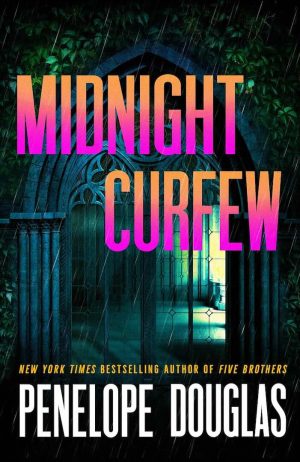
Readers who want dark romance with an actual plot around it should try Midnight Curfew by Penelope Douglas.
Final Assessment
Game On by Navessa Allen is the book for readers who want their romance to have sharp teeth, their hero to be genuinely morally compromised, and their heroine to meet him at exactly that level. Stella McCormick is one of the more fully realized black-cat heroines in recent dark romance — prickly, guarded, carrying real grief and real accountability — and Tyler Neumann is an antagonist-turned-love-interest who earns the reader’s complicated investment slowly and believably. The book’s flaws are real but do not override what works, and what works is the electric, antagonistic, darkly funny energy that Allen has made her signature.
The game, as it turns out, is worth playing.