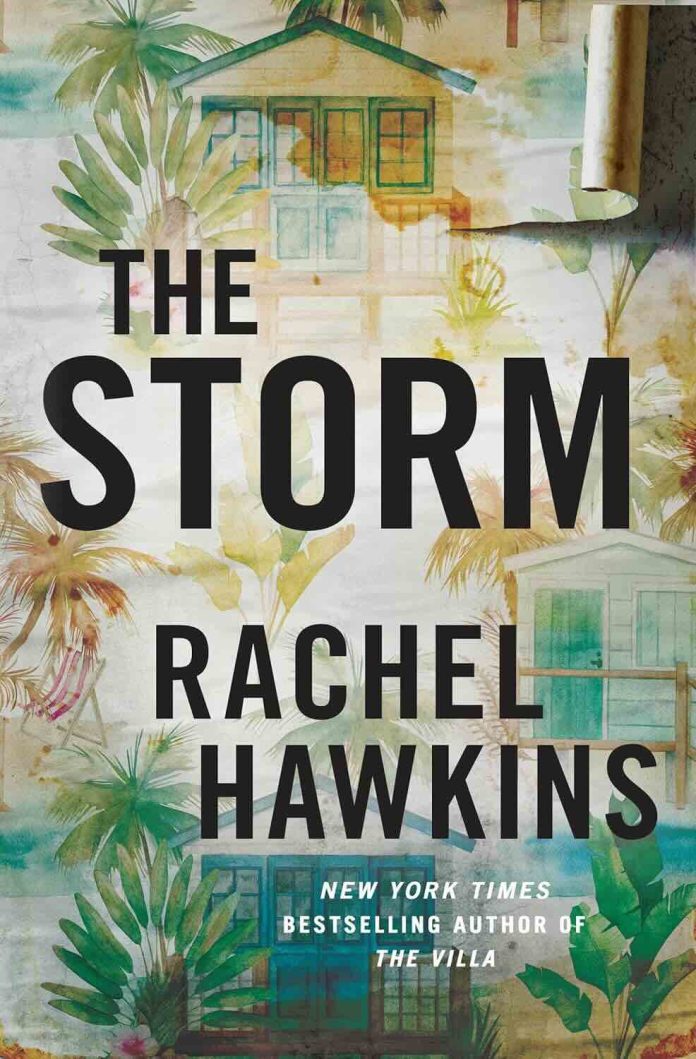
In the humid, storm-battered corner of Alabama’s Gulf Coast, some secrets refuse to stay buried—especially when another hurricane threatens to unearth them. Rachel Hawkins returns to the Southern Gothic territory she’s mastered with The Storm by Rachel Hawkins, a propulsive psychological thriller that weaves together multiple timelines, unreliable narrators, and the devastating power of nature to expose the lies we tell ourselves about the past.
A Tale of Cursed Ground and Buried Truths
Geneva Corliss is barely keeping her family’s historic Rosalie Inn afloat when true crime writer August Fletcher arrives with an intriguing proposition: he wants to research the 1984 death of Landon Fitzroy, the governor’s son who died during Hurricane Marie in circumstances that were never fully explained. More shocking still, Fletcher brings with him Gloria “Lo” Bailey—the woman accused of Fitzroy’s murder over forty years ago, now ready to tell her story. As tropical storm warnings escalate into hurricane predictions, Geneva finds herself trapped in a dangerous echo of the past, where old secrets threaten to destroy everything she’s worked to preserve.
The Storm by Rachel Hawkins distinguishes itself through its intricate narrative architecture. Hawkins employs a sophisticated structure that alternates between Geneva’s present-day perspective and flashback chapters narrated by different women—each named for the hurricanes that shaped St. Medard’s Bay’s violent history: Delphine, Audrey, Velma, Marie, and finally Lizzie. This technique creates a haunting rhythm where we gradually understand how the town’s curse isn’t supernatural but tragically human.
Characters Caught in the Eye of Deception
Geneva emerges as a compelling protagonist precisely because of her ordinariness. She’s not a detective or a journalist—she’s a woman drowning in debt, caring for a mother with early-onset Alzheimer’s, and clinging to a crumbling inheritance. Her exhaustion feels authentic, her decisions understandable even when they veer toward dangerous territory. Geneva’s relationship with the Rosalie Inn transcends simple property ownership; the building becomes a character itself, a pink fortress that has miraculously survived every storm while the people inside it harbor their own destructive secrets.
Lo Bailey defies easy categorization throughout The Storm by Rachel Hawkins. At sixty, she remains devastatingly beautiful, sharp-tongued, and maddeningly enigmatic. Hawkins resists the temptation to make Lo either victim or villain, instead crafting a woman whose survival has required adaptability bordering on shape-shifting. Her friendship with Geneva’s mother Ellen—revealed through fragmented memories and hidden clippings—adds emotional complexity to what could have been a straightforward thriller premise.
August Fletcher represents ambition’s darkest possibilities. As a journalist obsessed with uncovering truth, he embodies the ethical quandaries of true crime storytelling:
- When does investigation become exploitation?
- Can objectivity exist when the researcher has personal stakes in the outcome?
- What price is truth worth when lives hang in the balance?
Supporting characters add texture without overcrowding the narrative. Edie, Geneva’s assistant manager with her purple-streaked hair and fierce loyalty, provides grounding humor before the story takes its darkest turns. The spectral presence of Ellen Chambers Corliss—Geneva’s mother—haunts the narrative, her Alzheimer’s creating a cruel irony where the one person who could explain everything remains locked behind deteriorating memories.
Atmosphere Thick as Southern Humidity
Hawkins excels at creating oppressive atmosphere in The Storm by Rachel Hawkins. St. Medard’s Bay breathes with malevolent life—the constant humidity, the way storms arrive with theatrical violence each afternoon, the monument in town square listing hurricane victims like a ledger of souls claimed by the Gulf. The author captures the peculiar fatalism of coastal communities that rebuild after every disaster, their resilience indistinguishable from stubbornness or perhaps denial.
The Rosalie Inn itself deserves attention as Gothic architecture made manifest. Pink and defiant, surviving where newer structures crumbled, it becomes a vessel for generational trauma. Hawkins layers history into every detail: the photographs of storm damage that stop mysteriously after Hurricane Marie, the porch where violence occurred, the rooms that smell of mildew no matter how thoroughly cleaned. These aren’t just descriptive flourishes—they’re narrative architecture that supports the novel’s thematic weight.
The hurricane preparation sequences demonstrate Hawkins’ attention to procedural detail. Watching Geneva board windows, fill bathtubs with water, and track Tropical Storm Lizzie’s approach creates genuine tension because these preparations feel earned rather than manufactured for suspense.
Themes That Resonate Beyond the Beach
The Storm by Rachel Hawkins interrogates several provocative ideas:
- Legacy and Inheritance: What do we owe to family history? Geneva inherited not just property but obligation, secrets, and the burden of maintaining facades. The novel questions whether some inheritances should be refused.
- Truth and Storytelling: August’s book-in-progress becomes a meta-commentary on true crime’s ethical complexities. Who owns a story? What happens when the pursuit of truth causes more damage than the original crime?
- Women and Survival: The “Witches of St. Medard’s Bay”—Lo, Ellen, and Frieda—form a coven of sorts, their bonds forged through shared trauma and the necessity of protecting each other in a world that views young women as either victims or temptresses, never as fully human.
- Nature’s Indifference: Hurricanes serve as both literal threat and metaphor for forces beyond human control. Yet Hawkins suggests that human cruelty often proves more devastating than any natural disaster.
Prose That Moves Like Storm Surge
Hawkins’ writing style in The Storm by Rachel Hawkins demonstrates her evolution as a literary thriller author. Her prose balances accessibility with sophistication—sentences build tension through rhythm rather than elaborate vocabulary. The first-person narration from multiple perspectives could have felt gimmicky, but Hawkins gives each voice distinct cadence and preoccupations. Geneva’s exhausted pragmatism contrasts sharply with Lo’s theatrical deflections and the younger Ellen’s earnest vulnerability.
Dialogue sparkles with regional authenticity without devolving into caricature. Characters speak in the casual poetry of Southern speech patterns, where politeness masks aggression and what’s unsaid matters as much as actual words. The pacing mirrors hurricane preparation itself—long stretches of mounting dread punctuated by explosive revelation.
Where the Storm Loses Some Power
Despite its considerable strengths, The Storm by Rachel Hawkins occasionally stumbles under the weight of its ambitions. The multiple timeline structure, while generally effective, creates moments of repetition as the same events are revisited from different perspectives. Some readers may find the middle section’s pacing uneven, with Geneva’s present-day investigation grinding against bureaucratic obstacles while the past timeline holds more kinetic energy.
The revelation of Geneva’s parentage, while shocking, relies on coincidences that strain credibility. Similarly, August’s motivations transform so dramatically in the final act that earlier characterization feels undermined. The climactic storm sequence delivers visceral action, but the mechanics of who-did-what-to-whom can get muddled in the chaos—intentionally, perhaps, yet frustratingly so.
Some secondary characters exist primarily as plot functions rather than fully realized people. Edie’s accident, while pivotal, happens off-page in ways that diminish its emotional impact. The Fitzroy family remains largely abstract villains, their political machinations sketched rather than dramatized.
Hawkins’ Place in the Southern Gothic Canon
Readers familiar with Hawkins’ previous work will recognize her evolution. Where The Wife Upstairs modernized Jane Eyre with sharp social commentary, and The Villa and The Heiress explored female ambition’s dangerous territories, The Storm by Rachel Hawkins digs deeper into intergenerational trauma and the stories communities tell themselves. It’s her most structurally ambitious novel, trading the propulsive page-turning of Reckless Girls for something more literary—though no less suspenseful.
The novel shares DNA with Hawkins’ earlier work: morally complex female protagonists, Southern settings dripping with atmosphere, and the persistent question of whether women can ever escape their designated roles as either victims or villains. Yet it feels like a maturation, willing to sit with ambiguity rather than resolving into tidy thriller mechanics.
For Readers Who Crave Stormy Psychological Suspense
If The Storm by Rachel Hawkins captivated you, consider these atmospheric mysteries:
- The Hurricane Season by Lauren K. Denton – Another Gulf Coast setting where storms reveal family secrets
- The Drowning Kind by Jennifer McMahon – Gothic suspense involving water, women, and generational curses
- The Woman in the Lake by Nicola Cornick – Historical mystery where past and present converge around suspicious deaths
- The Girls in the Garden by Lisa Jewell – Multiple timelines exploring what really happened during one fateful event
- The Last Mrs. Parrish by Liv Constantine – Psychological suspense with unreliable narrators and shocking revelations
Final Verdict: A Tempest Worth Weathering
The Storm by Rachel Hawkins succeeds as both page-turning thriller and thoughtful exploration of how violence—both human and natural—shapes communities across generations. While not perfect, its ambitions and atmospheric power make occasional structural wobbles forgivable. Hawkins has crafted a novel that lingers like humidity after rain, its questions about truth, survival, and the stories we tell ourselves remaining long after the final page.
For readers willing to embrace its Gothic sensibilities and patient with its deliberate pacing, this storm delivers both entertainment and substance. Hawkins proves herself adept at the difficult balance between commercial thriller and literary fiction, creating a work that satisfies on multiple levels. The Rosalie Inn may survive Hurricane Lizzie, but readers might find themselves equally battered—and grateful for the experience.