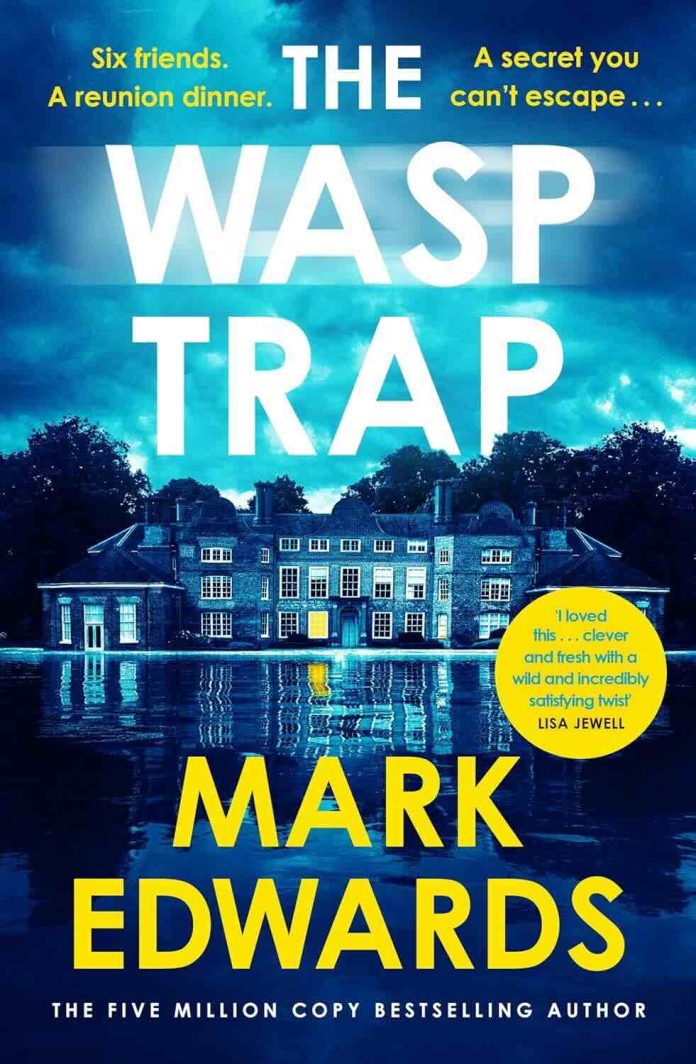
Mark Edwards has delivered his most ambitious psychological thriller yet with “The Wasp Trap,” a novel that skillfully weaves together past trauma and present danger in a narrative that feels both intimately personal and explosively dramatic. The story operates on multiple timelines, anchored by the premise that sometimes the most dangerous secrets are the ones we bury deepest.
The novel opens with Will receiving an unexpected dinner invitation from old colleagues he hasn’t seen in twenty-five years. What begins as a nostalgic reunion quickly transforms into something far more sinister when Will realizes that this gathering is orchestrated by forces seeking to uncover a deadly secret from their shared past working at an internet dating startup in 1999.
Dual Timeline Mastery
Edwards demonstrates considerable skill in managing his dual timeline structure. The 1999 sections transport readers to the dawn of the internet age, capturing the optimism and naivety of young graduates convinced they’re about to revolutionize online dating. Working at Thornwood House under the enigmatic psychology professor Sebastian, the group includes aspiring writer Will, brilliant programmer Lily, artist Sophie, and several others whose idealism blinds them to the darkness brewing beneath their summer project.
The contemporary timeline follows Will’s return to face the consequences of that fateful summer. Edwards excels at building tension through the dinner party setting, using the claustrophobic atmosphere of the elegant Notting Hill house to create an increasingly oppressive mood. The juxtaposition between the promise of the past and the menace of the present creates a compelling narrative tension that drives the story forward.
Character Development That Serves the Plot
Edwards crafts his characters with particular attention to how time has changed them. Will, now a struggling writer, carries the weight of unfulfilled potential and romantic regret. His relationship with Sophie, barely explored in their youth, becomes central to both timelines. Lily has evolved from a brilliant but naive student into someone who understands the dangerous applications of her psychological insights.
The antagonists – particularly the trio of Dominic, Amber, and Callum – represent different forms of corruption and violence. Edwards is especially effective in revealing Dominic’s transformation from Sebastian’s nephew into something far more twisted, his years of psychological experimentation having warped him beyond recognition.
Key Strengths in Character Work:
- Authentic aging: Characters feel genuinely changed by twenty-five years
- Psychological complexity: Each character harbors believable secrets and motivations
- Relationship dynamics: The history between characters feels lived-in and real
The Psychology of Deception
Perhaps the most fascinating aspect of “The Wasp Trap” is Edwards’ exploration of psychological testing and the nature of psychopathy. Lily’s creation of a psychopath detection test becomes both a plot device and a thematic centerpiece. The novel questions whether we can truly identify evil, and what happens when such identification becomes a weapon.
The “Wasp Trap” of the title refers to both literal and metaphorical snares – the device used to catch the insects, and the way secrets trap people in cycles of violence and deception. Edwards uses this metaphor effectively throughout, showing how each character becomes both predator and prey in different circumstances.
Technical Craft and Pacing
Edwards demonstrates remarkable control over his pacing, alternating between the slow-burn revelation of past events and the immediate danger of the dinner party. The home invasion elements are handled with particular skill, avoiding the clichés of the genre while maintaining genuine menace.
The dialogue feels natural and period-appropriate in both timelines. The 1999 sections capture the tech-optimistic language of the era without feeling forced, while the contemporary dialogue reflects the weight of accumulated experience and regret.
Areas for Critical Consideration
While “The Wasp Trap” succeeds admirably as a thriller, some elements feel slightly overengineered. The revelation of certain secrets, particularly around Georgina’s actions, occasionally strains credibility in service of maintaining surprise. The elaborate nature of Dominic’s revenge scheme, while dramatically satisfying, sometimes feels more complex than necessary.
The novel’s exploration of psychopathy, while fascinating, occasionally veers into exposition-heavy territory. Edwards clearly did extensive research into psychological testing and personality disorders, but this knowledge sometimes overwhelms the narrative flow.
Atmosphere and Setting
Edwards excels in his atmospheric writing, particularly in his descriptions of both Thornwood House in its 1999 heyday and the claustrophobic dinner party setting. The contrast between the sun-drenched optimism of the summer of ’99 and the dark, threatening atmosphere of the contemporary sections effectively mirrors the characters’ emotional journeys.
The author’s background in writing about ordinary people facing extraordinary threats serves him well here. The domestic setting of a dinner party becomes genuinely frightening through his careful accumulation of detail and mounting tension.
Comparison to Edwards’ Previous Work
Readers familiar with Edwards’ earlier novels like “The Retreat” and “Keep Her Secret” will recognize his signature blend of domestic settings and psychological menace. However, “The Wasp Trap” represents a more ambitious structural undertaking than his previous work, with its dual timeline and larger cast of characters.
The novel shares DNA with his earlier exploration of toxic relationships and buried secrets, but the addition of the tech startup setting gives it a contemporary relevance that feels fresh. Edwards has clearly evolved as a writer, showing greater confidence in handling complex plotting and multiple perspectives.
Similar Reads and Recommendations
Readers who enjoy “The Wasp Trap” might appreciate:
- “The Silent Patient” by Alex Michaelides – for psychological complexity
- “Behind Closed Doors” by B.A. Paris – for domestic psychological terror
- “The Guest List” by Lucy Foley – for reunion-gone-wrong dynamics
- “The Hunting Party” by Lucy Foley – for isolated group dynamics
- “Rock Paper Scissors” by Alice Feeney – for unreliable narrators and psychological games
Final Verdict
“The Wasp Trap” succeeds as both a page-turning thriller and a meditation on how past actions echo through time. Edwards has crafted a novel that works on multiple levels – as a straight-forward home invasion thriller, as a psychological study of trauma and guilt, and as a nostalgic look at the optimism of the late 1990s tech boom.
While some plot elements strain credibility and the psychological exposition occasionally overwhelms the narrative, these are minor flaws in an otherwise expertly constructed thriller. Edwards has created his most ambitious and successful novel to date, one that will satisfy longtime fans while attracting new readers to his particular brand of domestic psychological suspense.
The novel’s exploration of how technology can be used to understand and manipulate human behavior feels particularly relevant in our current digital age, making “The Wasp Trap” not just an entertaining thriller but also a thought-provoking examination of privacy, manipulation, and the price of our increasingly connected world.
For readers seeking intelligent psychological suspense with well-developed characters and genuine surprises, “The Wasp Trap” delivers on all fronts. Edwards has once again proven his mastery at turning ordinary settings into extraordinary nightmares, creating a reading experience that lingers long after the final page.







