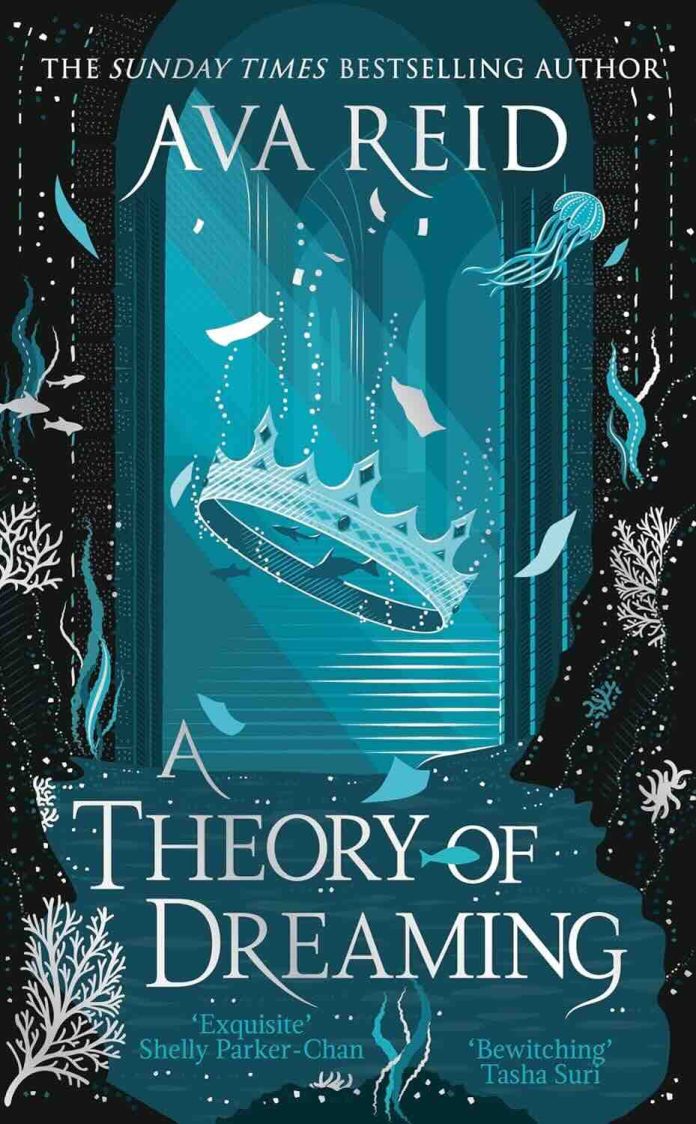
Ava Reid’s A Theory of Dreaming serves as both a breathtaking conclusion to the Study in Drowning duology and a profound meditation on the price of dreams fulfilled. This sequel plunges readers back into the lush, waterlogged world of Llyr, where academic ambition collides with war, love battles against societal expectations, and the line between dream and reality dissolves like salt in seawater.
The Weight of Victory: When Dreams Become Burdens
The novel opens in the aftermath of Effy and Preston’s triumph over the Fairy King and their exposure of Emrys Myrddin’s literary fraud. Yet Reid masterfully subverts the traditional fantasy resolution—victory brings not peace, but new torments. Effy, now the first woman enrolled at the literature college, finds herself trapped in a fishbowl existence where every stumble is scrutinized, every word dissected for failure.
Reid’s exploration of imposter syndrome feels particularly resonant in our current cultural moment. Effy’s internal monologue crackles with self-doubt that many readers will recognize: the fear that success is undeserved, that exposure as a fraud is inevitable. When she struggles with Professor Tinmew’s formalist approach to literature—the clinical dissection of meter and scansion—it becomes a metaphor for how academia can drain the life from the very thing you love most.
The author’s prose during these sequences adopts Effy’s fractured perspective, sentences becoming shorter and more breathless as anxiety mounts. Reid writes with particular sensitivity about the way external pressure can make even familiar spaces feel hostile and alienating.
Preston’s Descent into Darkness
Where the first novel positioned Preston as the rational counterbalance to Effy’s emotional intensity, A Theory of Dreaming systematically dismantles this dynamic. His gradual transformation from skeptical scholar to a young man consumed by protective rage represents some of Reid’s finest character work.
The author’s handling of Preston’s dreams—visions of an underwater palace where he reigns as king—serves multiple narrative functions. On one level, these sequences provide stunning gothic imagery that recalls the best of Victorian fairy tales. The descriptions of the sunken palace, with its marble statues and green-fire torches, are rendered with such tactile detail that readers can almost feel the cold water and hear the distant tolling of bells.
More importantly, these dreams reveal Preston’s deepest desires and fears. His underwater kingdom isn’t just fantasy—it’s a manifestation of his desperate need to create a space where he can protect Effy from a world determined to destroy her. The recurring image of Effy as a sleeping beauty in a glass coffin becomes a powerful symbol of how love can become possessive, protective instincts can become constraining.
A War-Torn World Reflected
Reid uses the escalating conflict between Llyr and Argant as more than mere backdrop—it becomes a mirror for her characters’ internal struggles. The university’s increasing restrictions, the loyalty pledges, the censorship of dissenting voices—all reflect the way trauma and fear can make individuals retreat into rigid thinking.
The political subplot, involving Lord Benedict Byron Southey and the Baron of Margetson’s attempted corruption of the university, feels particularly relevant. Reid doesn’t shy away from showing how institutions of learning can become battlegrounds for competing ideologies, where truth becomes secondary to power.
Preston’s experiences as an Argantian teaching assistant facing xenophobic harassment from students like Southey add layers of complexity to the war narrative. Reid handles these scenes with careful restraint, showing rather than telling how prejudice operates in academic settings.
The Architecture of Mental Health
Perhaps the novel’s most ambitious element is its portrayal of Effy’s deteriorating mental health. Reid crafts a narrative that mirrors the experience of depression with striking accuracy—the way motivation drains away like water from a broken vessel, how simple tasks become insurmountable obstacles.
The sequences where Effy lies motionless in bed, unable to respond to Preston’s increasingly desperate attempts to reach her, are written with unflinching honesty. Reid avoids both romanticizing mental illness and reducing it to simple plot mechanics. Instead, she shows how depression affects not just the individual but their loved ones, how it can make the sufferer feel simultaneously hypervisible and completely unseen.
The author’s decision to interweave Effy’s struggles with Angharad’s posthumously discovered diaries creates a powerful dialogue between past and present. Both women face similar challenges—artistic ambition in a world hostile to female creativity, the pressure to conform, the temptation to retreat into fantasy rather than face harsh reality.
Literary Craftsmanship and Gothic Atmosphere
Reid’s prose maintains the same dream-like quality that made the first novel so distinctive. Her sentences often mirror the tidal rhythms of the sea that features so prominently in both books—flowing and ebbing, sometimes crashing with emotional intensity, other times receding into quieter moments of reflection.
The author’s use of recurring motifs—bells, water, statues, flowers—creates a sense of cyclical time that reinforces the novel’s themes about the persistence of dreams and trauma. The image of the winter camellias scattered in Effy’s dream-coffin particularly haunts, suggesting both beauty and decay, love and death intertwined.
Reid’s handling of academic settings deserves special praise. The description of Professor Tinmew’s formalist classroom, the political maneuvering in Dean Fogg’s office, the way students navigate social hierarchies—all ring with authenticity. The author clearly understands the particular cruelties and kindnesses possible within educational institutions.
Romance in the Shadow of War
The central romance between Effy and Preston evolves significantly in this sequel. Where their first-book relationship was built on intellectual partnership and mutual discovery, here they must navigate the more complex terrain of loving someone through crisis.
Reid’s portrayal of their relationship feels mature and honest. She shows how trauma can create distance even between people who love each other deeply, how the desire to protect can sometimes become another form of harm. Preston’s increasing desperation to “save” Effy mirrors problematic patterns in many relationships, where one partner attempts to bear responsibility for the other’s wellbeing.
The proposal scene, set against the backdrop of war and personal crisis, manages to be both romantic and melancholy. Reid understands that love doesn’t solve problems—it simply gives us reason to keep fighting through them.
Critical Considerations
While A Theory of Dreaming succeeds as both Gothic romance and psychological character study, it occasionally struggles under the weight of its own ambitions. The political subplot, while thematically relevant, sometimes feels underdeveloped compared to the richly detailed personal storylines.
Reid’s pacing can be uneven—the middle section, where both protagonists are largely isolated from each other, occasionally feels static despite the internal turbulence both characters experience. Some readers may find the dream sequences, however beautifully written, repetitive in their imagery and symbolism.
The resolution, while satisfying on an emotional level, leaves some plot threads feeling rushed. The peace treaty that ends the war arrives with convenient timing, and certain character arcs—particularly Master Gosse’s storyline—conclude without the depth they deserve.
Themes That Resonate
The novel’s exploration of dreams versus reality extends beyond its fantasy elements to examine broader questions about ambition, identity, and belonging. Reid asks whether we can ever truly escape our past traumas, whether dreams fulfilled can ever match dreams imagined, whether love requires the willingness to let go as much as the desire to hold on.
The recurring motif of the Sleeper Museum—literal heroes preserved in death—becomes a metaphor for how cultures create myths to avoid confronting uncomfortable truths. The destruction of the museum during the war represents not just physical damage but the shattering of national self-image.
Reid’s handling of gender dynamics deserves particular recognition. Effy’s experiences as the first woman in the literature college reflect real historical and contemporary struggles, while avoiding heavy-handed messaging. The subtle ways other students and faculty undermine her confidence feel authentically observed rather than politically constructed.
A Worthy Conclusion
Despite its occasional structural issues, A Theory of Dreaming succeeds as a emotionally satisfying conclusion to the duology. Reid manages to resolve her central conflicts while avoiding overly neat endings—the characters grow and change, but they carry their scars forward rather than being magically healed.
The final image of Effy and Preston standing together at his father’s grave, ready to begin their married life, feels earned rather than imposed. They’ve both been tested by circumstances that revealed their deepest flaws and greatest strengths, and their love has survived the crucible.
Reid’s achievement lies in creating a fantasy that feels grounded in emotional truth. Her Gothic atmosphere never overshadows the very human struggles at the story’s heart, and her academic setting provides rich material for exploring themes of knowledge, power, and authenticity.
Final Verdict
A Theory of Dreaming confirms Ava Reid’s position as a distinctive voice in contemporary fantasy literature. While it may not reach the soaring heights of its predecessor in terms of pure wonder and discovery, it offers something equally valuable: the hard-won wisdom that comes from surviving your dreams coming true.
Readers who connected with Effy and Preston’s journey will find closure and satisfaction, even as they mourn the end of their time in Reid’s richly imagined world. The novel succeeds both as Gothic romance and as serious exploration of trauma, ambition, and the complex negotiations required for love to survive in an imperfect world.
For those new to Reid’s work, starting with A Study in Drowning remains essential—this sequel builds so directly on the first novel’s foundations that much of its emotional impact depends on familiarity with the characters’ earlier struggles. But for readers who’ve already fallen under the spell of Reid’s waterlogged, dream-haunted Llyr, A Theory of Dreaming provides a worthy and moving farewell.
Similar Books to Explore
If you enjoyed A Theory of Dreaming, consider these atmospheric reads:
- The Priory of the Orange Tree by Samantha Shannon – Epic fantasy with complex characters and political intrigue
- The Seven Husbands of Evelyn Hugo by Taylor Jenkins Reid – Dual timeline narrative with academic investigation
- The Invisible Life of Addie LaRue by V.E. Schwab – Gothic atmosphere with themes of memory and identity
- Mexican Gothic by Silvia Moreno-Garcia – Academic gothic with unreliable narration
- The Ten Thousand Doors of January by Alix E. Harrow – Portal fantasy with academic elements and beautiful prose
- The Starless Sea by Erin Morgenstern – Dream-like narrative structure with libraries and stories-within-stories
- The Death of Jane Lawrence by Caitlin Starling – Gothic horror with questions about reality and perception
We have reviewed If Looks Could Kill by Julie Berry too, if another young adult novel is what you are after.
Other Works by Ava Reid
Reid’s other novels showcase her versatility within dark fantasy:
- The Wolf and the Woodsman – Hungarian-inspired fantasy exploring faith and identity
- Juniper & Thorn – A dark retelling blending Slavic folklore with gothic horror
- Lady Macbeth – A feminist reimagining of the Scottish queen’s story
- Fable for the End of the World – Post-apocalyptic fantasy examining survival and hope
Each demonstrates Reid’s talent for combining beautiful prose with unflinching examinations of trauma, power, and the stories we tell ourselves to survive.







