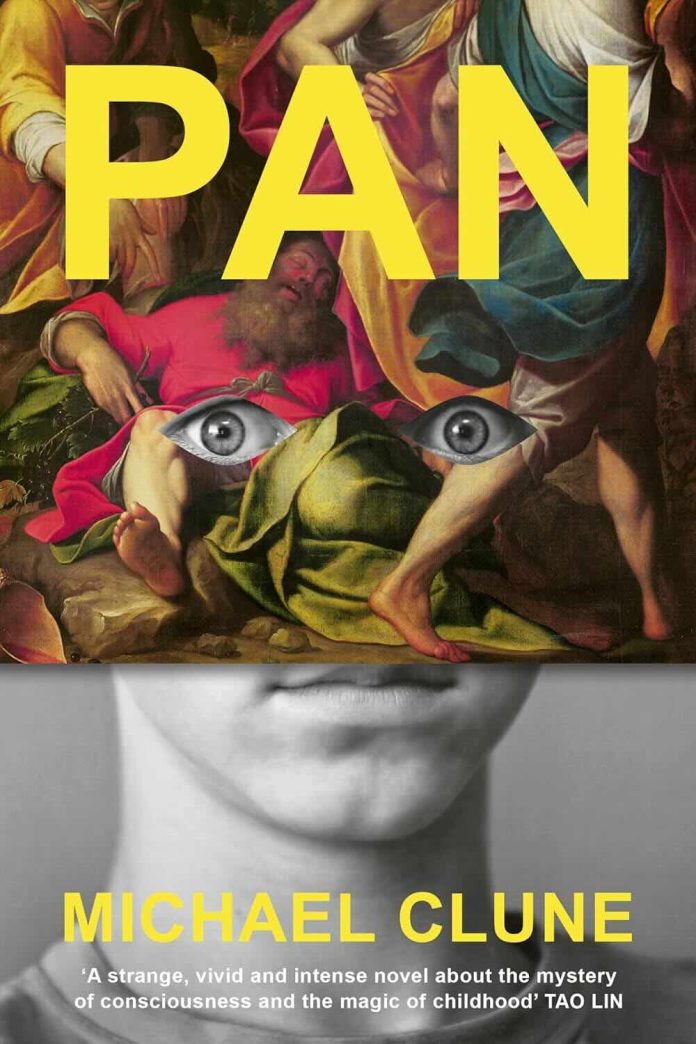
Michael Clune’s debut novel Pan emerges as a startling exploration of adolescent consciousness teetering on the precipice between mental illness and mystical revelation. Through fifteen-year-old Nicholas’s harrowing journey with panic attacks, Clune crafts a narrative that refuses easy categorization, existing somewhere between psychological realism and supernatural horror. The author, known for his acclaimed memoir White Out: The Secret Life of Heroin, brings his unflinching examination of altered consciousness to fiction with remarkable results.
The novel opens with Nicholas experiencing his first panic attack in geometry class, a moment rendered with such visceral precision that readers feel the terror of suddenly perceiving one’s own hands as alien objects. This initial breakdown sets in motion a cascade of increasingly intense episodes that Nicholas initially attempts to manage through what he calls the “First Church of Pan” – a pragmatic system of paper bags and breathing exercises recommended by his doctor.
A Suburban Mythology of Isolation
Clune demonstrates exceptional skill in creating atmosphere, particularly in his depiction of Chariot Courts, the sterile subdivision where Nicholas lives with his father. The development’s wrought-iron gate that never opens becomes a powerful symbol of false security and manufactured community. The author’s background as a literary scholar is evident in how he transforms mundane suburban details into elements of gothic dread.
The narrative gains momentum when Nicholas encounters Ian, a charismatic college dropout who presents an alternative theory for panic attacks. Ian suggests that panic isn’t mental illness but rather the presence of the Greek god Pan attempting to inhabit certain individuals. This premise could easily become ridiculous, but Clune handles it with surprising gravity, allowing readers to understand why a desperate teenager might embrace such an explanation.
The Barn: A Theater of Dangerous Transcendence
The mysterious barn where Ian conducts his rituals becomes the novel’s most memorable setting. Clune’s descriptions of this space blend the sacred and profane, creating an environment where LSD trips and ancient mythology intersect with devastating consequences. The barn sequences showcase the author’s ability to capture the intoxicating appeal of belonging to something larger than oneself, while simultaneously revealing the predatory nature of those who exploit such yearnings.
Ian emerges as one of the more complex antagonists in recent fiction. Neither purely evil nor genuinely enlightened, he represents the dangerous allure of someone who offers meaning to those desperate for understanding. His relationship with Nicholas and Sarah forms the novel’s most troubling dynamic, as Clune explores how mental illness can make individuals vulnerable to manipulation disguised as spiritual awakening.
Literary Influences and Intertextual Richness
Clune weaves references to Oscar Wilde’s Salome, Charles Baudelaire’s poetry, and Bach’s orchestral suites throughout the narrative, creating a rich intertextual landscape. These aren’t mere name-drops but integral elements that Nicholas uses to understand his condition. The protagonist’s discovery of Wilde’s play becomes a revelation about the possibility of consciousness existing outside the body, a theme that resonates throughout the novel.
The author’s treatment of literature as both refuge and revelation demonstrates his academic expertise while remaining accessible to general readers. Nicholas’s attempts to create his own writing as a form of therapy feel authentic, capturing the desperate creativity of someone trying to think their way out of mental illness.
Family Fractures and Suburban Alienation
Perhaps the novel’s most insightful element is its exploration of how family dissolution contributes to Nicholas’s condition. Clune suggests that panic attacks might stem not just from chemical imbalances but from the fundamental disruption of belonging. The author presents the divorce of Nicholas’s parents not as a simple plot point but as a cosmic rupture that leaves the teenager unmoored from traditional sources of meaning.
The contrast between Nicholas’s father’s sterile townhouse and his mother’s wind-ravaged property provides a geography of instability. Clune’s descriptions of the highway sounds bleeding through the mother’s house create an unsettling sense of permanent exposure to the chaos of modern life.
Strengths That Illuminate the Human Condition
Psychological Authenticity
Clune’s portrayal of panic attacks demonstrates remarkable accuracy, capturing both the physical sensations and the existential terror that accompanies them. His eighteen-point list of panic symptoms feels clinically precise while remaining emotionally resonant.
Atmospheric Mastery
The author excels at creating spaces that feel psychologically charged. From the fluorescent-lit hardware store where Nicholas works to the candlelit barn, each setting becomes a character in its own right.
Complex Character Relationships
The friendship between Nicholas and Ty provides genuine emotional weight, particularly as their different backgrounds lead them toward divergent responses to trauma and instability.
Areas Where the Vision Falters
Pacing Inconsistencies
The novel’s middle section occasionally loses momentum as Clune becomes overly invested in Nicholas’s philosophical investigations. Some passages read more like academic essays than narrative fiction.
Resolution Challenges
The novel’s conclusion, while thematically appropriate, may leave some readers feeling unsatisfied. Clune’s commitment to ambiguity sometimes obscures rather than illuminates.
Character Development Limitations
Secondary characters, particularly the female figures, sometimes feel more like symbols than fully realized individuals. Sarah’s motivations remain frustratingly opaque throughout much of the narrative.
Literary Context and Comparable Works
Pan by Michael Clune occupies a unique position in contemporary literature, combining the psychological realism of authors like Donna Tartt with the suburban gothic sensibilities of Jeffrey Eugenides. Readers who appreciated The Secret History or The Virgin Suicides will find familiar themes here, though Clune’s approach feels more grounded in actual teenage experience.
The novel also resonates with works like Special Topics in Calamity Physics by Marisha Pessl and The Goldfinch by Donna Tartt, particularly in its exploration of how young people construct meaning from cultural artifacts and dangerous relationships.
A Distinctive Voice in American Fiction
Clune’s transition from memoir to fiction proves remarkably successful, bringing the same unflinching honesty that characterized White Out to a broader canvas. His academic background enriches rather than encumbers the narrative, creating a novel that operates on multiple levels without sacrificing emotional authenticity.
Pan by Michael Clune succeeds as both a coming-of-age story and a meditation on the nature of consciousness itself. While it may not provide easy answers about mental illness or spiritual experience, it offers something more valuable: a genuine exploration of what it means to be human when the boundaries between self and world begin to dissolve.
Similar Books Worth Exploring
- The Secret History by Donna Tartt
- Darkly by Marisha Pessl
- The Virgin Suicides by Jeffrey Eugenides
- My Education by Susan Choi
- The Mysteries of Pittsburgh by Michael Chabon
In Pan, Michael Clune has crafted a novel that respects both the reality of mental illness and the human need for transcendence, creating a work that will likely endure as a significant achievement in contemporary American fiction.