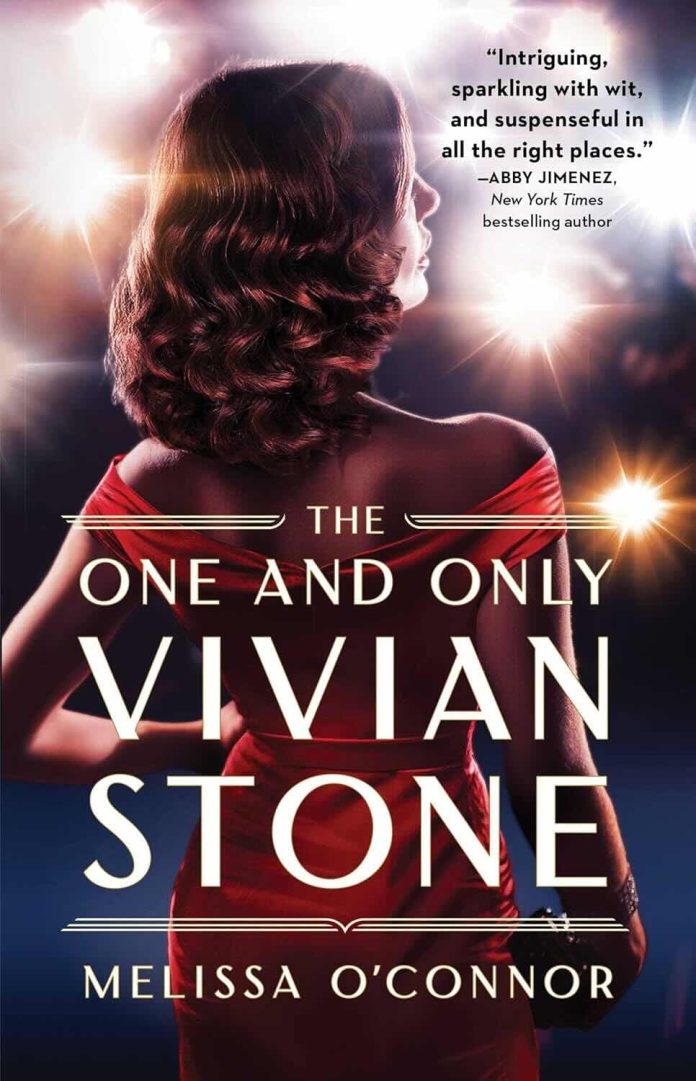
Melissa O’Connor’s debut novel, The One and Only Vivian Stone, arrives like a perfectly preserved time capsule from Hollywood’s Golden Age, wrapped in contemporary heartache and tied with the ribbon of family secrets. This enchanting dual-timeline narrative weaves together the lives of two women separated by decades but united by their struggles with love, ambition, and the courage to start over.
The story begins when thirty-something Margot DuBois discovers eight mysterious cassette tapes in her late grandmother’s attic while preparing to sell the family home in Long Beach. Unable to repair the damaged tape player herself, she reluctantly calls upon Leo—her first love and first epic heartbreak—for help. Their agreement is simple: he’ll fix the player if he can listen to what’s recorded. What they discover changes everything they thought they knew about Margot’s family history.
The voice on the tapes belongs to comedic television legend Vivian Stone, recounting her tumultuous journey from small-town Long Island dreamer to Hollywood star. As Margot and Leo become increasingly captivated by Vivian’s story of forbidden love, professional struggles, and personal sacrifice, they find themselves confronting their own unresolved feelings and questioning the choices that led them apart.
Character Development That Resonates Across Generations
O’Connor demonstrates remarkable skill in crafting two distinct yet interconnected female protagonists who feel authentically human in their flaws and aspirations. Vivian Stone emerges as a complex figure—ambitious and vulnerable, strong-willed yet emotionally fragile. Her transformation from Vivian Mackenzie, the determined young woman with a slight Long Island accent, to the polished television personality Vivian Stone, feels both inevitable and heartbreaking.
The author’s portrayal of Vivian’s relationships with the two men who define her romantic life—Hugh Fox and Kit Pierce—showcases her understanding of love’s different forms. Her connection with Hugh Fox represents that all-consuming, destined love that defies logic, while her marriage to Kit Pierce embodies the conscious choice to love someone who needs healing. These relationships avoid the typical love triangle trappings by focusing on emotional authenticity rather than manufactured drama.
Margot’s character arc proves equally compelling as she evolves from a woman hiding from her dreams to someone willing to take risks again. Her journey parallels Vivian’s in meaningful ways—both women struggle with creative ambition, both have experienced romantic disappointment, and both must learn when to fight and when to let go. The gradual revelation that Margot’s grandmother Ginger was once a sex worker who had an affair with Kit Pierce adds layers of complexity to the family dynamics without feeling sensationalized.
Leo serves as more than just a romantic interest; he represents the possibility of second chances and the idea that timing, while important, shouldn’t be the only factor in determining a relationship’s worth. His patience and genuine care for Margot feel refreshingly mature, avoiding the typical miscommunication-driven plot devices that plague many romance novels.
Historical Authenticity Meets Contemporary Relevance
One of the novel’s greatest strengths lies in O’Connor’s meticulous research into Hollywood’s Golden Age. The depiction of the studio system’s control over actors’ personal and professional lives feels both historically accurate and deeply unsettling. Vivian’s experiences with misogynistic executives, forced career decisions, and the pressure to maintain a perfect public image resonate strongly with contemporary discussions about power dynamics in the entertainment industry.
The author handles sensitive topics like addiction, mental health, and sexual exploitation with remarkable nuance. Kit’s struggle with alcoholism is portrayed with genuine empathy, showing both the disease’s impact on relationships and the complexity of loving someone battling addiction. The revelation that Ginger worked as a sex worker is handled with dignity, avoiding both judgment and glorification while acknowledging the economic realities that drove such choices.
The inclusion of authentic-feeling newspaper clippings and magazine articles throughout Vivian’s timeline adds a layer of verisimilitude that grounds the story in its historical period. These documents serve as more than mere flavor text; they reveal how public perception often differs from private reality and how women’s stories are frequently distorted by male-dominated media narratives.
Narrative Structure and Pacing
O’Connor employs the dual-timeline structure with impressive dexterity, avoiding the common pitfall of making one timeline significantly less engaging than the other. The cassette tape device serves as more than a mere plot mechanism; it becomes a metaphor for the ways stories are preserved, transmitted, and ultimately understood by subsequent generations.
The pacing builds naturally as both storylines develop, with revelations timed to maximum emotional impact. The discovery that Vivian is still alive and Margot’s subsequent meeting with her provides a satisfying bridge between past and present that feels earned rather than contrived. The final revelation about Ginger’s connection to Kit Pierce and Vivian’s attempts at reconciliation adds emotional weight without overwhelming the narrative.
However, the novel occasionally suffers from convenient coincidences that strain credibility. The fact that Leo happens to be skilled at repairing vintage electronics feels somewhat forced, and certain discoveries occur with perhaps too much serendipity. These minor issues don’t derail the story but do occasionally remind readers they’re reading a carefully constructed narrative rather than witnessing organic events.
Writing Style and Voice
O’Connor demonstrates a confident voice that adapts skillfully to both time periods without feeling forced or artificially period-appropriate. Vivian’s sections capture the glamour and artifice of Golden Age Hollywood while maintaining emotional authenticity, while Margot’s contemporary chapters feel immediate and relatable without resorting to overly casual modern vernacular.
The author excels at creating intimate moments that reveal character depth. Vivian’s relationship with her letters to Hugh, which she writes but never sends, provides insight into her emotional state while advancing the plot. Similarly, Margot’s gradual return to writing serves as both character development and thematic reinforcement of the novel’s central message about pursuing dreams despite fear of failure.
The dialogue feels natural and period-appropriate without being overly stylized. O’Connor avoids the trap of making historical characters speak in an artificially formal manner while ensuring their language patterns feel authentic to their era and social circumstances.
Thematic Depth and Emotional Resonance
The novel explores several interconnected themes with impressive depth. The idea that it’s never too late to start over permeates both storylines, with Vivian’s late-life attempt to make amends paralleling Margot’s decision to return to writing and take risks in love. The concept of chosen family versus biological family emerges through multiple generations, from Vivian’s relationship with Ruth to Margot’s bond with her grandmother.
The examination of how women’s stories are often shaped by the men in their lives—and how they can reclaim agency over their narratives—feels particularly relevant. Both Vivian and Margot must learn to pursue their dreams independent of romantic relationships while still remaining open to love when it appears in healthier forms.
The novel’s treatment of grief proves especially nuanced, showing how loss can paralyze but also motivate change. Margot’s processing of her grandmother’s death occurs alongside her discovery of family secrets, creating a complex emotional landscape that reflects the reality of how we often learn the most about people after they’re gone.
Minor Criticisms and Areas for Improvement
While The One and Only Vivian Stone succeeds on multiple levels, it’s not without minor flaws. Some plot points resolve perhaps too neatly—Margot’s ability to keep her grandmother’s house and work remotely feels somewhat convenient, though it serves the story’s emotional needs. The novel occasionally relies on exposition-heavy dialogue to convey historical information, though O’Connor generally integrates background material skillfully.
The contemporary timeline sometimes feels less vivid than the historical sections, possibly because Vivian’s Hollywood world offers more inherently dramatic material than Margot’s modern struggles. However, this imbalance doesn’t significantly detract from the overall reading experience, and many readers may find Margot’s quieter journey equally compelling.
Comparisons and Literary Context
O’Connor’s novel invites natural comparisons to Taylor Jenkins Reid’s The Seven Husbands of Evelyn Hugo, and while both books explore the hidden lives of Hollywood legends, The One and Only Vivian Stone distinguishes itself through its emphasis on intergenerational connection and the power of family stories. Where Reid’s novel focuses primarily on the Hollywood legend herself, O’Connor gives equal weight to the contemporary characters discovering the past.
The book also recalls the multi-generational family sagas of authors like Kristin Hannah, particularly in its exploration of how family secrets shape multiple generations. The dual-timeline structure and themes of women supporting women echo novels like Kate Morton’s works, though O’Connor’s voice remains distinctly her own.
Verdict and Recommendation
The One and Only Vivian Stone announces Melissa O’Connor as a writer to watch, delivering a debut that feels both polished and emotionally authentic. The novel succeeds in creating two compelling love stories while exploring deeper themes about ambition, family, and the courage required to live authentically.
This book will particularly appeal to readers who enjoyed The Seven Husbands of Evelyn Hugo, The Midnight Library, or Beach Read. It offers the perfect blend of historical fiction and contemporary romance, with enough depth to satisfy literary fiction readers and enough heart to please commercial fiction fans.
For readers seeking a story that honors both the glamour of Hollywood’s golden age and the complexities of modern relationships, The One and Only Vivian Stone delivers emotional satisfaction without sacrificing intellectual substance. It’s a novel that reminds us that the best stories—like the best relationships—are worth waiting for, worth fighting for, and worth starting over for, no matter how many times we’ve been disappointed before.
Similar Books You Might Enjoy
If you loved The One and Only Vivian Stone, consider these similar titles:
- The Seven Husbands of Evelyn Hugo by Taylor Jenkins Reid – Another Hollywood legend reveals her secrets
- Beach Read by Emily Henry – Contemporary romance with writers rediscovering their passion
- The Midnight Library by Matt Haig – Explores themes of second chances and alternate life paths
- The Guest List by Lucy Foley – Multi-timeline structure with family secrets
- The Invisible Bridge by Julie Orringer – Dual timeline connecting past and present across generations
- The Alice Network by Kate Quinn – Strong women across different time periods united by secrets
- The Book of Lost Names by Kristin Harmel – Historical fiction with contemporary connections
- The Huntress by Kate Quinn – Multiple timelines revealing hidden histories
The One and Only Vivian Stone is a remarkable debut that proves some stories are worth the wait—both for the characters within its pages and for readers seeking their next unforgettable book.
For another historical fiction, try Lady Tremaine by Rachel Hochhauser.







