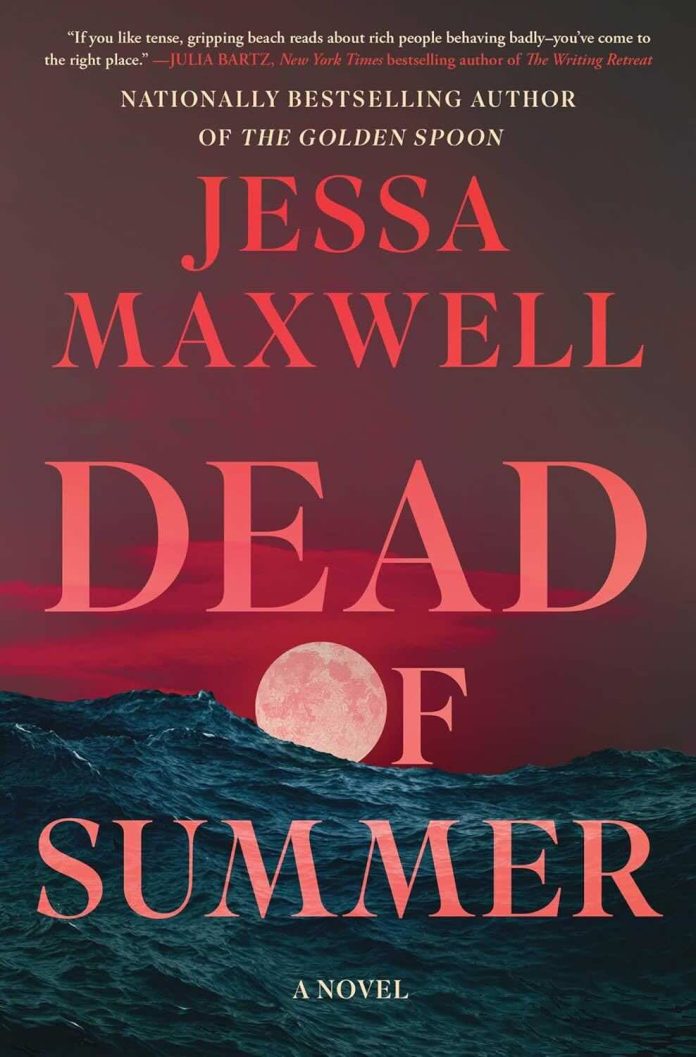
Jessa Maxwell’s third novel, Dead of Summer, proves that sometimes the most dangerous predators wear designer clothes and summer whites. Following her previous works The Golden Spoon and I Need You to Read This, Maxwell once again demonstrates her keen ability to dissect the dark underbelly of privilege while weaving a compelling mystery that keeps readers guessing until the final pages.
Set on the fictional Hadley Island, an exclusive New England enclave where old money meets older secrets, the story unfolds through multiple perspectives that slowly reveal a web of corruption, betrayal, and long-buried truths. Maxwell’s narrative structure mirrors the island itself—beautiful on the surface, but concealing dangerous depths beneath.
Character Dynamics: A Masterclass in Psychological Complexity
The Reluctant Return
Orla O’Connor serves as our primary lens into this world of inherited guilt and suppressed memories. Her return to Hadley Island after a decade away immediately establishes the central tension of the novel. Maxwell skillfully portrays Orla’s internal struggle between her desire to escape the past and her inability to fully move forward without confronting it. The author’s exploration of survivor’s guilt feels particularly authentic, as Orla grapples with having built a career on her deceased friend’s artwork while carrying the weight of her betrayal.
The relationship between Orla and her missing best friend Alice forms the emotional core of the story. Through flashbacks and memories, Maxwell recreates the intensity of teenage friendship with all its loyalty, jealousy, and unspoken competitions. The revelation that Alice has been alive all along, living under an assumed identity as Elena/Faith’s best friend, demonstrates Maxwell’s ability to craft genuinely surprising plot twists that feel both shocking and inevitable in retrospect.
The Predatory Elite
David Clarke emerges as a particularly compelling antagonist because Maxwell refuses to make him a simple villain. His character represents the toxic legacy of inherited privilege—a man who might have chosen differently but instead becomes complicit in perpetuating his father’s crimes. The author’s portrayal of Georey Clarke is more straightforward in its condemnation, presenting him as the embodiment of wealth’s ability to corrupt and silence.
Henry Wright, the island’s scapegoat, provides perhaps the most nuanced character study in the novel. His isolation on “the Rock” serves as both literal and metaphorical representation of how society treats those it deems expendable. Maxwell’s depiction of his lonely vigil, watching the island through his telescope, transforms what could have been creepy behavior into something deeply sympathetic—a man desperate for human connection while trapped by circumstances beyond his control.
Atmospheric Mastery and Setting as Character
Maxwell transforms Hadley Island into a character in its own right, using the isolation and claustrophobic nature of island life to heighten the story’s tension. The contrast between the manicured lawns of the Clarke estate and the rotting decay of Alice’s abandoned home creates a powerful visual metaphor for how wealth can mask corruption while ordinary lives are left to deteriorate.
The author’s description of the island’s seasonal transformation—from winter desolation to summer opulence—mirrors the cyclical nature of the abuse that has been occurring for years. The Fourth of July party sequence represents the pinnacle of Maxwell’s atmospheric writing, where the celebration of American ideals becomes a backdrop for the revelation of the nation’s darkest impulses.
The Rock, Henry’s isolated dwelling, functions as both sanctuary and prison, embodying the novel’s themes about how trauma can both protect and destroy. Maxwell’s detailed descriptions of Henry’s daily routines and his meticulous logbooks create a sense of obsessive order that masks deeper chaos—a reflection of how all the characters attempt to maintain control in the face of overwhelming circumstances.
Thematic Depth: Power, Privilege, and Predation
The Machinery of Silence
One of Maxwell’s greatest achievements in Dead of Summer is her unflinching examination of how wealth and power create systems that protect predators while silencing victims. The NDAs that Georey Clarke forces Alice and others to sign represent more than legal documents—they symbolize how institutional power can weaponize silence itself.
The author explores how complicity operates at multiple levels, from David’s active participation in his father’s crimes to Orla’s passive acceptance of a narrative that protects the guilty. Even well-meaning characters like Henry become trapped in webs of suspicion and assumption that serve the interests of those with the most to lose.
The Price of Survival
Maxwell’s treatment of survival guilt and trauma feels particularly sophisticated. Alice’s transformation into Elena, and her ability to build a new life while maintaining connection to her past through Faith, demonstrates the author’s understanding of how victims navigate their recovery. The revelation that Alice has been orchestrating events from the shadows to protect other potential victims adds layers of complexity to her character that elevate her beyond simple victim status.
Technical Craft and Narrative Structure
Maxwell employs a multi-perspective narrative that could easily become confusing, but her clear character voices and careful pacing keep readers anchored. Each perspective adds essential pieces to the puzzle while maintaining distinct emotional rhythms. The shifts between present action and flashbacks feel organic rather than manipulative, serving the story’s themes rather than just plot mechanics.
The author’s prose style strikes an effective balance between literary sophistication and thriller pacing. Her descriptions are evocative without being overwrought, and her dialogue captures the distinct speech patterns of different social classes without resorting to caricature.
Critical Considerations and Minor Shortcomings
While Dead of Summer succeeds on most levels, some plot elements strain credibility. The revelation that Elena has been Faith all along requires significant suspension of disbelief, particularly regarding the logistics of maintaining such an elaborate deception. Additionally, the convenience of David and Orla’s deaths in the house collapse feels somewhat contrived, though it serves the thematic purpose of suggesting that some forms of justice operate outside legal systems.
The novel’s treatment of law enforcement feels occasionally simplistic, with the police portrayed as either corrupt or ineffectual without much middle ground. Given the complexity Maxwell brings to other power structures in the novel, this binary approach to authority feels like a missed opportunity for deeper exploration.
Literary Context and Comparisons
Dead of Summer fits squarely within the tradition of “domestic noir” that has flourished in recent years, sharing DNA with works like Gillian Flynn’s Sharp Objects and Laura Lippman’s Murder Takes a Vacation. Like these novels, Maxwell uses crime as a lens to examine broader social issues, particularly the ways that power and privilege shape whose stories get told and believed.
The island setting invites comparison to classics like Agatha Christie’s And Then There Were None, but Maxwell’s contemporary sensibilities and focus on systemic abuse create something distinctly modern. The novel also echoes themes found in Jennifer Kent’s film The Nightingale in its exploration of how violence against women gets normalized and protected by existing power structures.
Verdict: A Chilling Success with Lasting Impact
Dead of Summer represents Maxwell’s strongest work to date, combining the social commentary of her previous novels with more sophisticated plotting and character development. While some plot mechanics may feel forced, the novel’s thematic ambitions and atmospheric achievements make it a worthy addition to the contemporary thriller canon.
Maxwell’s ability to transform what could have been a simple mystery into a broader indictment of how society protects predators while abandoning victims demonstrates significant literary growth. The novel works both as entertainment and as social criticism, a combination that elevates it above many of its genre contemporaries.
For readers seeking intelligent thrillers that grapple with contemporary issues while delivering genuine suspense, Dead of Summer offers both satisfaction and substance. Maxwell has crafted a novel that will linger in readers’ minds long after the final page, not just for its plot twists but for its unflinching examination of the costs of silence and the courage required to speak truth to power.
Similar Reads Worth Exploring
For those who enjoyed Dead of Summer, consider these compelling alternatives:
- The Thursday Murder Club series by Richard Osman – For readers who appreciate multiple perspectives and community secrets
- Big Little Lies by Liane Moriarty – Explores similar themes of privilege, domestic violence, and women protecting each other
- The Silent Patient by Alex Michaelides – Features unreliable narrators and psychological manipulation
- Little Fires Everywhere by Celeste Ng – Examines class dynamics and hidden family secrets
- The Woman in Cabin 10 by Ruth Ware – Combines isolated settings with unreliable witnesses
- Sharp Objects by Gillian Flynn – Dark exploration of small-town secrets and family trauma







