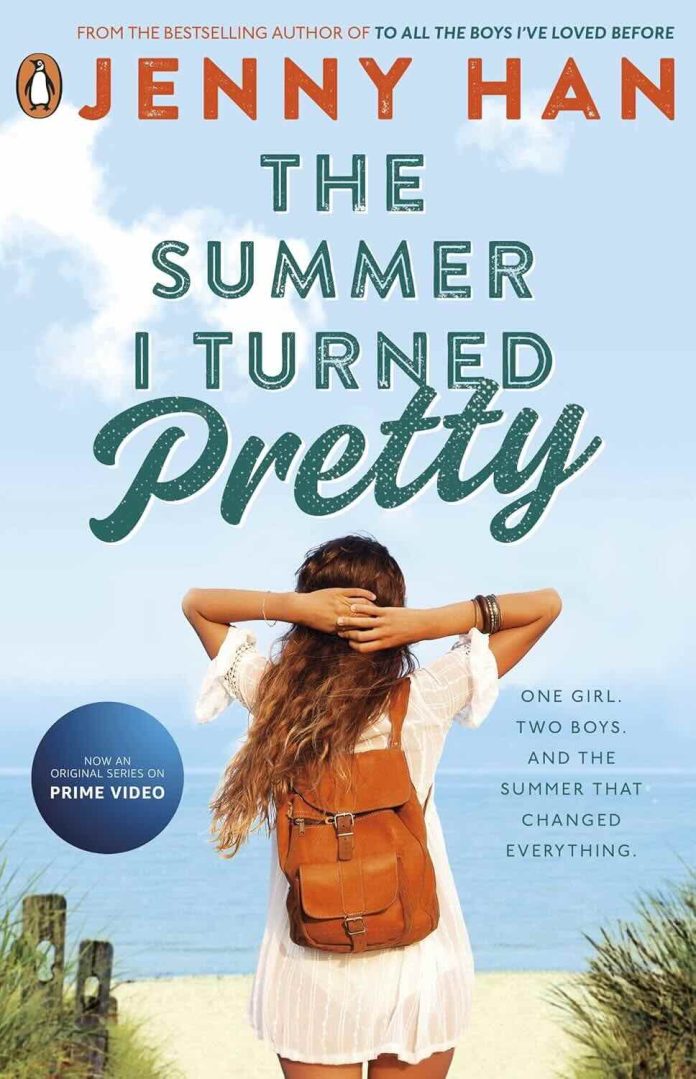
Jenny Han’s debut novel The Summer I Turned Pretty captures the bittersweet essence of adolescence through sixteen-year-old Isabel “Belly” Conklin’s transformative summer at the Fisher family beach house in Cousins Beach. This coming-of-age romance, which launched Han’s beloved Summer series, explores the delicate territory between childhood and adulthood, where first love blooms against the backdrop of family secrets and inevitable change.
The novel serves as the foundation for what would become a trilogy, followed by It’s Not Summer Without You (2010) and We’ll Always Have Summer (2011), each deepening the emotional complexity of Belly’s relationships with the Fisher brothers and exploring how love evolves through loss and growth.
The Heart of Cousins Beach
Han constructs her narrative around the rhythm of summers, where Belly has spent every June through August since childhood at the beach house owned by Susannah Fisher, her mother’s best friend. The setup feels both familiar and fresh—a coming-of-age story anchored by the reliable return to a beloved place, yet complicated by the shifting dynamics of growing up.
The author’s prose mirrors the languid pace of summer days, moving between present-day events and flashbacks that reveal the depth of Belly’s history with the Fisher boys. Conrad, the brooding older brother who has captured Belly’s heart since childhood, represents the unattainable object of desire that so many teenage readers will recognize. Jeremiah, the sunny, accessible younger brother, offers comfort and genuine friendship that gradually reveals itself as something deeper.
Han’s decision to structure the novel around this love triangle could have felt predictable, but she elevates the material by grounding it in authentic family relationships and the very real specter of loss that hangs over the summer. The revelation of Susannah’s cancer diagnosis transforms what could have been a light summer romance into something more profound and emotionally resonant.
Character Development and Emotional Authenticity
Belly emerges as a narrator who feels genuinely sixteen—sometimes mature beyond her years, other times frustratingly naive. Her obsession with Conrad spans years of unrequited longing, and Han captures both the intensity and the slightly embarrassing nature of first love with remarkable precision. The author doesn’t shy away from Belly’s less appealing moments: her jealousy, her occasional selfishness, or her tendency to dramatize situations.
The supporting characters, particularly the adults, feel fully realized rather than merely functional. Laurel, Belly’s mother, represents pragmatic strength, while Susannah embodies the kind of maternal warmth that makes her illness feel like a personal loss to readers. The contrast between these two women—best friends with vastly different approaches to life—adds layers to the family dynamics that drive the plot.
Conrad’s characterization proves more challenging to evaluate. His brooding mystery serves the romantic plot effectively, but his emotional unavailability sometimes borders on frustrating rather than compelling. Jeremiah, by contrast, emerges as perhaps the most genuinely appealing character—kind, funny, and emotionally present in ways that make Belly’s eventual romantic confusion understandable.
The Weight of Nostalgia and Change
What distinguishes The Summer I Turned Pretty from other young adult romances is Han’s sophisticated handling of time and memory. The novel recognizes that growing up means losing certain kinds of innocence, and that first love often coincides with first experiences of real loss. Susannah’s illness serves as more than plot device—it represents the end of childhood’s perceived permanence.
The beach house itself functions almost as a character, representing stability and tradition in a world where everything else seems to be shifting. Han’s descriptions of the house, the rituals of summer arrivals and departures, and the specific traditions that bind these families together create a sense of place that feels both specific and universal.
The author’s treatment of class differences adds subtle complexity to the relationships. The Fisher family’s wealth creates dynamics that Belly doesn’t always fully understand, and Han weaves these economic realities into the story without making them the central focus.
Strengths and Literary Merit
Han’s greatest strength lies in her ability to capture the emotional truth of adolescence without condescending to her readers or oversimplifying the complexities of family relationships. Her prose style feels effortless and natural, moving seamlessly between humor and heartbreak. The dialogue, particularly between Belly and Jeremiah, crackles with authentic sibling-like banter that makes their eventual romantic tension feel earned rather than forced.
The novel’s structure, alternating between present action and flashbacks, allows Han to build both romantic tension and emotional depth simultaneously. Readers understand the weight of Belly’s feelings for Conrad because they’ve witnessed years of small moments that built her devotion. Similarly, the gradual revelation of Susannah’s illness gains power through the contrast with happier memories.
The author’s handling of the love triangle deserves particular praise. Rather than simply pitting two boys against each other for the heroine’s attention, Han creates a situation where both relationships feel meaningful and valid. The romantic resolution doesn’t feel predetermined, which keeps readers genuinely invested in the outcome.
Areas for Critical Consideration
While The Summer I Turned Pretty succeeds in many areas, it occasionally falls into familiar young adult romance patterns that feel less fresh than other elements of the story. Belly’s fixation on Conrad sometimes reads as more obsessive than romantic, particularly given his consistent emotional unavailability. The novel could benefit from more critical examination of this dynamic, as Conrad’s behavior toward Belly borders on manipulative at times.
The pacing occasionally feels uneven, with some flashback sequences disrupting the forward momentum of the present-day narrative. While these memories provide important context, their placement doesn’t always feel seamlessly integrated into the larger story structure.
Additionally, some secondary characters feel underutilized. Belly’s friend Taylor appears primarily to create conflict rather than to serve as a fully realized person, and her visit to the beach house feels more like a plot device than a natural extension of Belly’s life.
Cultural Impact and Series Context
Understanding The Summer I Turned Pretty requires acknowledging its place as the opening volume of a trilogy. Many of the novel’s apparent weaknesses—particularly regarding Conrad’s characterization and the resolution of the love triangle—find more complete development in the subsequent books. It’s Not Summer Without You and We’ll Always Have Summer deepen the emotional stakes and provide more satisfying character growth for all involved.
The series has gained renewed attention through its recent television adaptation, introducing Han’s work to new audiences and confirming the enduring appeal of these characters and relationships. The books’ exploration of first love, family loyalty, and the transition from adolescence to adulthood continues to resonate with readers across different generations.
Recommended Reading for Similar Experiences
Readers who connect with The Summer I Turned Pretty might enjoy:
- Eleanor & Park by Rainbow Rowell – for authentic teenage voices and complex family dynamics
- The Female of the Species by Mindy McGinnis – for emotionally complex young adult narratives
- We Were Liars by E. Lockhart – for summer settings and family secrets
- Since You’ve Been Gone by Morgan Matson – for coming-of-age themes and summer transformation
- Jenny Han’s To All the Boys I’ve Loved Before series – for the author’s signature style and romantic storytelling
Final Thoughts
The Summer I Turned Pretty succeeds as both an engaging standalone romance and the compelling beginning of a larger story. Han’s ability to ground romantic drama in authentic family relationships and genuine emotional stakes elevates the material beyond typical genre expectations. While the novel occasionally relies on familiar young adult romance tropes, its emotional honesty and genuine sense of place make it a worthwhile reading experience.
The book works particularly well for readers seeking nostalgia for their own summer experiences or those interested in stories that take both teenage emotions and family relationships seriously. Han’s writing demonstrates respect for her young adult audience while crafting a story that adult readers can appreciate for its emotional sophistication and narrative craft.
As the foundation for what would become a beloved trilogy, The Summer I Turned Pretty establishes characters and relationships worth following through their continued growth and eventual resolution. It represents a strong debut that promised—and ultimately delivered—more complex emotional territory in the volumes that followed.
You might also like: For the rest of Han’s work and the order to read it in, see Jenny Han Books.







