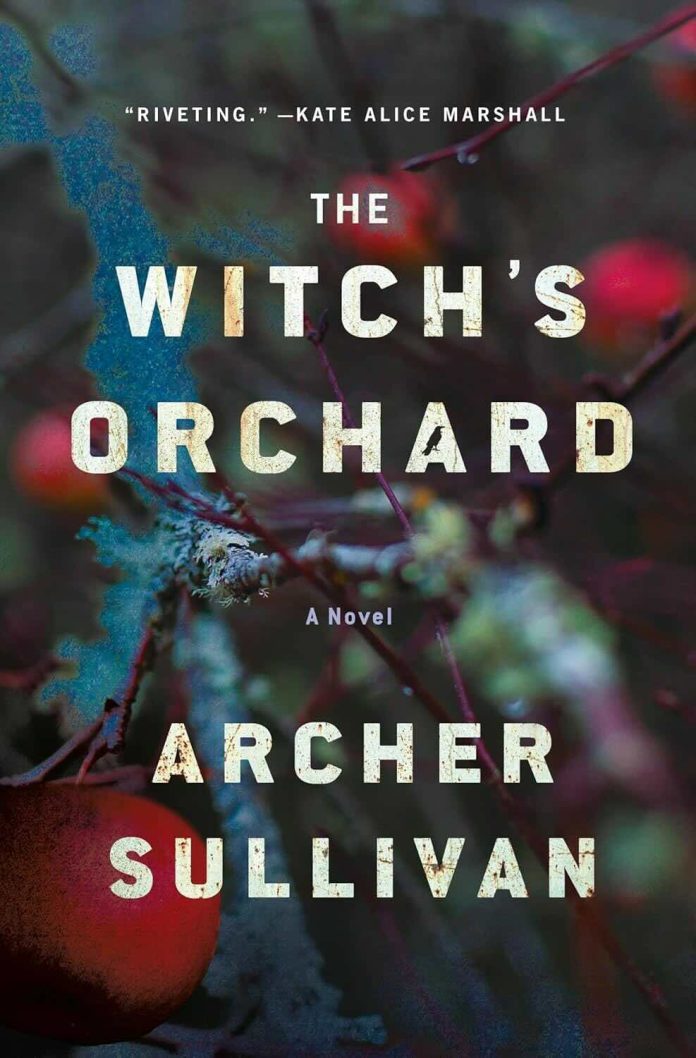
Archer Sullivan’s debut novel The Witch’s Orchard emerges from the mist-shrouded hollows of Appalachia like an ancient song carried on mountain wind—haunting, atmospheric, and impossible to forget. This is a mystery that understands the weight of secrets buried deep in mountain soil and the way old stories can shape new tragedies.
When the Past Refuses to Stay Buried
Ten years have passed since three little girls vanished from the mountain town of Quartz Creek, North Carolina. While one was mysteriously returned, Jessica Hoyle and Molly Andrews were never seen again—until now. When Molly’s remains are discovered, her brother Max Andrews seeks out private investigator Annie Gore, believing her Appalachian roots will help her navigate the complex web of mountain culture that has kept these secrets locked away.
Sullivan crafts a narrative that respects both the intelligence of mountain communities and the very real insularity that can protect dangerous truths. Annie Gore, a former Air Force special investigator turned private eye, carries her own scars from an Appalachian childhood she escaped years ago. Her return to these familiar yet foreign mountains becomes as much a journey of personal reckoning as professional investigation.
The Power of Place as Character
Sullivan’s greatest achievement lies in her masterful rendering of the North Carolina mountains as a living, breathing character. The landscape pulses with an almost supernatural awareness—ancient stone circles that echo with whispered secrets, apple orchards that seem to exist outside of time, and forests where folklore and reality blur into something far more unsettling than either alone.
The author’s ninth-generation Appalachian heritage shines through every carefully chosen detail. From the way morning mist clings to hollers to the particular cadence of mountain speech, Sullivan avoids both romanticization and stereotype. Her Appalachia is complex—beautiful and harsh, protective and dangerous, where tradition can be both sanctuary and prison.
The recurring motif of applehead dolls—those shriveled, ancient-looking folk crafts—becomes genuinely disturbing in Sullivan’s hands. What begins as quaint mountain tradition transforms into something far more sinister, a perfect metaphor for how innocent traditions can mask darker truths.
Annie Gore: A Protagonist Worth Following
Annie Gore stands as one of the most compelling protagonists to emerge in recent mystery fiction. Her background as a military investigator provides her with both the skills and the cynicism necessary for the job, while her mountain roots give her access to a community that would otherwise remain closed to outsiders.
Sullivan wisely avoids making Annie either too damaged or too competent. She’s vulnerable without being weak, experienced without being omniscient. Her relationship with her beautiful amber Datsun 260Z, affectionately called Honey, provides moments of warmth that balance the novel’s darker elements. The car becomes almost a companion, a reliable constant in a world where nothing else can be trusted.
The supporting cast proves equally well-developed. Max Andrews emerges as more than just a grieving brother—his quiet determination and underlying steel make him a formidable presence despite his youth. Sheriff Cole Jacobs carries the weight of a community’s expectations and his own family’s tragedy with convincing complexity.
The Mystery That Grips and Doesn’t Let Go
Sullivan structures her plot with the patience of a master storyteller. Rather than rushing toward revelation, she allows the mystery to unfold like morning glory vines—slowly, deliberately, with each new discovery leading to darker questions.
The legend of the Quartz Creek Witch serves as more than mere atmospheric detail. Sullivan uses the folklore to explore themes of female power, desperation, and the ways communities create monsters to explain the inexplicable. The revelation that Deena Drake, the town’s wealthy widow, has been keeping the missing girls captive while her “daughter” Jessica orchestrates the kidnappings provides a chilling inversion of the traditional witch narrative.
Key strengths include:
- Atmospheric writing that makes the mountains feel alive and threatening
- Complex character development that avoids easy stereotypes
- A mystery structure that rewards careful readers while surprising them
- Authentic dialogue that captures mountain speech without caricature
- Themes that resonate beyond the genre—family, belonging, the weight of secrets
Where the Story Stumbles Slightly
While The Witch’s Orchard succeeds brilliantly in most areas, it occasionally suffers from pacing issues in its middle third. The investigation sometimes feels repetitive as Annie interviews various townspeople, and certain revelations about Susan McKinney’s herbal knowledge feel underdeveloped given their importance to the plot’s resolution.
The romance subplot with Deputy AJ Murphy, while handled with restraint, feels somewhat obligatory rather than organic to the story. Sullivan’s focus remains rightfully on the mystery and Annie’s personal journey, but the romantic elements lack the depth of her other character work.
Some readers may find the resolution of Jessica’s psychological state—her transformation from victim to perpetrator—somewhat rushed. The complexity of her trauma and its manifestations deserved perhaps deeper exploration, though Sullivan handles the difficult subject matter with appropriate sensitivity.
Literary Craftsmanship and Genre Mastery
Sullivan writes with the confidence of a seasoned author, crafting sentences that serve both atmosphere and plot advancement. Her prose style echoes the rhythms of mountain speech without falling into affected folkiness. When Annie reflects on her past, Sullivan’s language becomes more introspective; when describing action sequences, it grows taut and urgent.
The author demonstrates impressive restraint in her use of mountain folklore. Rather than overwhelming the narrative with supernatural elements, she allows the possibility of magic to hover at the edges, making the very real human evil all the more disturbing by contrast.
The Verdict: A Stunning Debut
The Witch’s Orchard announces the arrival of a significant new voice in mystery fiction. Sullivan has crafted a novel that honors its Appalachian setting while delivering a genuinely surprising and emotionally satisfying mystery. This is crime fiction with literary aspirations that actually achieves them.
The Witch’s Orchard succeeds as both a compelling page-turner and a thoughtful exploration of how place shapes people, how secrets fester across generations, and how the stories we tell ourselves can become the truths that destroy us. Sullivan’s Appalachia feels authentic because it’s complex—neither idealized nor demonized, but presented as a place where beauty and darkness coexist in ways that outsiders rarely understand.
For Readers Who Enjoyed
Similar atmospheric mysteries:
- Winter’s Bone by Daniel Woodrell
- The Chill by Scott Carson
- My Sister, the Serial Killer by Oyinkan Braithwaite
- In the Woods by Tana French
- The Boar Pen by Jaime Clarke
Readers seeking mountain gothic:
- Wilder Girls by Rory Power
- Mexican Gothic by Silvia Moreno-Garcia
- The Seven Husbands of Evelyn Hugo by Taylor Jenkins Reid
The Witch’s Orchard establishes Annie Gore as a character worth following through future investigations, and Sullivan as an author capable of great things. This debut novel proves that the best mysteries aren’t just about solving crimes—they’re about understanding the human heart in all its twisted complexity.
Bottom Line: The Witch’s Orchard is a haunting, beautifully written debut that combines atmospheric storytelling with genuine mystery craftsmanship. Sullivan has given us both a compelling detective and a vivid sense of place that will linger in readers’ minds long after the final page. Highly recommended for fans of literary mysteries and anyone who appreciates fiction that honors the complexity of rural America.







