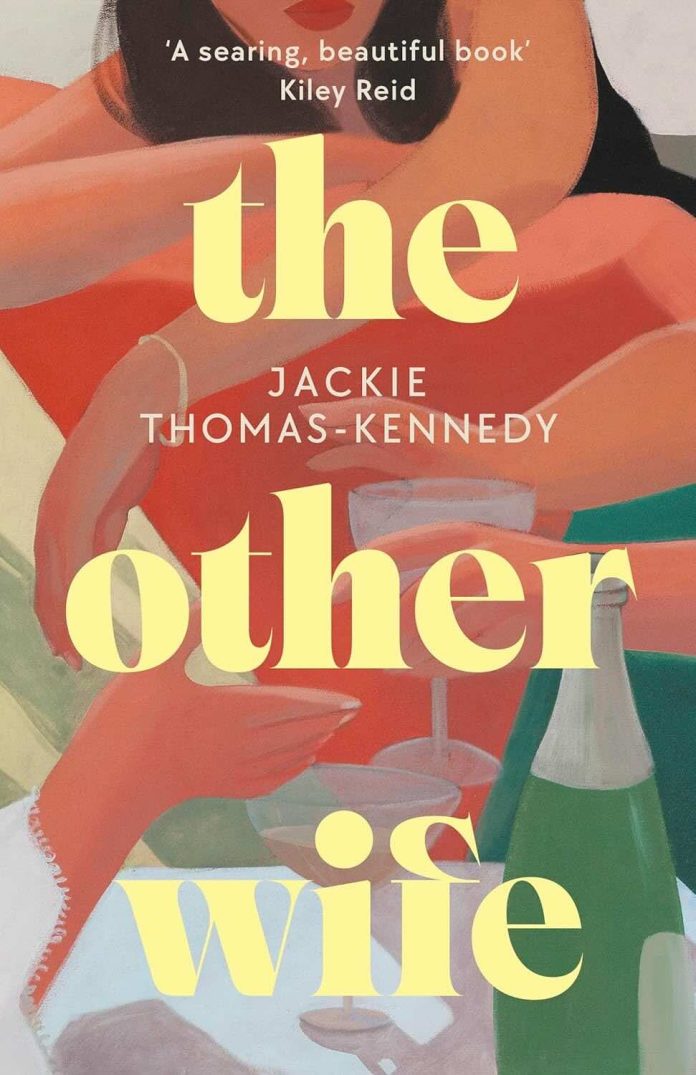
Jackie Thomas-Kennedy’s debut novel “The Other Wife” arrives as a deeply introspective examination of one woman’s reckoning with the choices that have shaped her life. Set against the backdrop of a single winter weekend, the novel follows Susan “Zuzu” Braeburn as she confronts the growing chasm between the life she imagined and the reality she inhabits. Thomas-Kennedy, a Stegner Fellow whose short fiction has appeared in publications like One Story and American Short Fiction, brings a nuanced understanding of contemporary relationships and the particular malaise of approaching middle age.
The novel opens with Zuzu observing the settled domesticity of her life with Agnes Blair, her successful lawyer wife, and their seven-year-old son Gideon. Yet beneath this veneer of suburban contentment lies a profound restlessness. Thomas-Kennedy skillfully captures the suffocating nature of routine—the endless dishes, the unopened mail, the careful choreography of avoiding conflict. Zuzu’s dissatisfaction isn’t born from any single catastrophic event but rather from the accumulation of small disappointments and the gradual erosion of intimacy.
The Architecture of Memory
What distinguishes Thomas-Kennedy’s approach is her non-linear narrative structure, which mirrors the way memory actually functions. The story moves fluidly between past and present, with chapters bearing evocative titles like “Sledding: January 15, 2001” and “California Roll.” This temporal fragmentation serves the novel’s central theme: how our past selves continue to haunt our present decisions.
The author demonstrates particular skill in rendering the intensity of college friendships and first loves. The relationship between Zuzu and James “Cash” Cashel is drawn with exquisite attention to the unspoken tensions and missed opportunities that characterize many formative relationships. Their dynamic—charged with possibility yet never fully realized—becomes a touchstone for Zuzu’s understanding of desire itself.
Thomas-Kennedy’s prose style recalls the introspective quality of writers like Joan Didion and Jennifer Egan, with its focus on the internal landscape of her protagonist. Her sentences have a measured, contemplative quality that matches Zuzu’s analytical nature:
“I believed that life was easy enough to find. I believed this until we skipped Friday classes and took another train, this time to the city.”
Exploring Queer Identity and Belonging
The novel’s treatment of LGBTQ+ themes is both subtle and profound. Zuzu’s marriage to Agnes isn’t presented as a political statement but as a genuine relationship with its own complexities and contradictions. Thomas-Kennedy avoids the trap of making her protagonist’s queerness the sole source of conflict, instead showing how sexual identity intersects with broader questions of authenticity and fulfillment.
The author’s portrayal of Zuzu’s attraction to Cash doesn’t negate her relationship with Agnes but rather complicates it in realistic ways. This nuanced approach to bisexuality is particularly noteworthy, as it avoids reductive stereotypes while honestly examining the challenges of navigating multiple desires within the constraints of monogamous marriage.
Family Dynamics and Generational Wounds
Thomas-Kennedy excels in her depiction of family relationships, particularly the complicated bond between Zuzu and her sister Julia. Their interactions crackle with a mixture of affection and competition that feels authentically sibling-like. The author also skillfully portrays the ripple effects of their parents’ divorce, showing how childhood arrangements—like alternating nights between households—can shape adult attachment patterns.
The death of Zuzu’s father serves as the novel’s catalyst, forcing her to confront not only her grief but also her regrets. Thomas-Kennedy handles this plot development with restraint, avoiding melodrama while honestly depicting the way loss can illuminate the urgency of living authentically.
Structural Strengths and Weaknesses
The novel’s episodic structure is both its greatest strength and occasional weakness. While the fragmented timeline effectively conveys the protagonist’s mental state, some chapters feel more like polished short stories than integral parts of a cohesive narrative. Certain sections, particularly those set in college, are so vividly rendered that they overshadow the present-day action.
Thomas-Kennedy’s ability to capture specific moments—the texture of an old sweatshirt, the awkwardness of running into an ex-boyfriend—is exceptional. However, the novel sometimes struggles with pacing, particularly in its middle sections where Zuzu’s passivity becomes frustrating rather than sympathetic.
The Question of Resolution
Perhaps the novel’s most daring aspect is its refusal to provide easy answers. Zuzu’s weekend journey doesn’t result in dramatic life changes or clear resolutions. Instead, Thomas-Kennedy suggests that self-awareness itself might be enough—that recognizing our patterns and limitations is a form of growth, even if it doesn’t lead to radical transformation.
This approach may frustrate readers seeking a more definitive conclusion, but it reflects the author’s commitment to psychological realism. Life rarely offers the clean narratives we crave, and Thomas-Kennedy honors this complexity while still providing emotional satisfaction.
Literary Merit and Contemporary Relevance
“The Other Wife” joins a growing body of literature examining millennial and Gen X disillusionment with traditional markers of success. Like novels by authors such as Hanya Yanagihara and Emma Straub, it captures the particular anxiety of a generation caught between idealism and pragmatism.
The novel’s exploration of marriage, parenting, and career disappointment feels especially relevant in our current cultural moment. Thomas-Kennedy’s unflinching examination of privilege—Zuzu’s comfortable lifestyle doesn’t shield her from existential angst—adds depth to what could have been a simple tale of suburban ennui.
Final Assessment
Despite occasional structural issues and a protagonist whose passivity can test reader patience, “The Other Wife” succeeds as a thoughtful meditation on choice, desire, and the stories we tell ourselves about our lives. Thomas-Kennedy writes with compassion for her flawed characters while maintaining enough critical distance to avoid sentimentality.
The novel’s greatest achievement is its honest portrayal of a marriage in decline without resorting to vilification of either partner. Both Zuzu and Agnes are fully realized characters whose relationship problems stem from genuine incompatibilities rather than moral failings.
For readers who appreciate character-driven literary fiction that prioritizes emotional truth over plot mechanics, “The Other Wife” offers considerable rewards. Thomas-Kennedy has crafted a debut that announces her as a writer capable of capturing the subtle ways we betray ourselves and each other.
Recommended Reading
Readers who appreciate “The Other Wife” might enjoy:
- “The Seven Husbands of Evelyn Hugo” by Taylor Jenkins Reid – Another exploration of love, identity, and the paths not taken
- “Real Life” by Brandon Taylor – A nuanced portrayal of queer identity and belonging
- “Weather” by Jenny Offill – A similar meditation on midlife anxiety and domestic life
- “The Idiot” by Elif Batuman – Coming-of-age narrative with comparable attention to internal landscape
- “Such a Fun Age” by Kiley Reid – Contemporary fiction examining privilege and relationships
Thomas-Kennedy has delivered a promising debut that suggests she will be a voice worth following in contemporary literary fiction. While “The Other Wife” may not revolutionize the genre, it offers a deeply felt exploration of universal themes rendered with skill and sensitivity.







