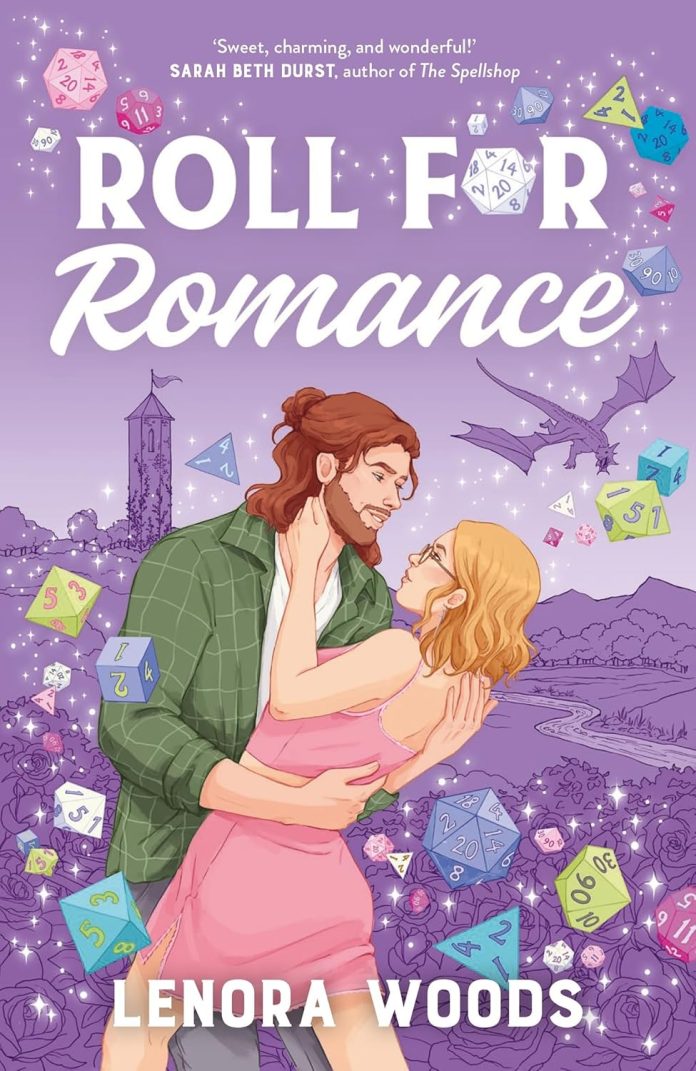
Lenora Woods delivers a remarkably authentic debut with Roll for Romance, a novel that transcends the typical boundaries of contemporary romance by weaving Dungeons & Dragons gameplay into a deeply personal story about identity, burnout, and finding home. This isn’t simply a romance with nerdy window dressing—it’s a thoughtful exploration of how we use different personas to navigate life’s challenges and how sometimes the characters we create reveal more about our true selves than we dare admit.
The premise follows Sadie Brooks, a marketing professional whose carefully constructed life crumbles when she’s fired from her prestigious New York agency. Fleeing to small-town Texas to stay with her best friend Liam, Sadie reluctantly joins his D&D campaign and creates Jaylie, a confident human cleric blessed by the Goddess of Luck. Enter Noah Walker, the charming bartender-turned-bard whose nomadic lifestyle and infectious enthusiasm challenge everything Sadie thought she wanted from life.
Character Development: More Than Just Rolling Dice
Sadie’s Journey: From Josephine to Jaylie to Herself
Woods crafts Sadie’s character arc in Roll for Romance with remarkable nuance, presenting a woman who has spent years performing different versions of herself. The corporate “Josephine” persona—complete with killer pencil skirts and magenta blazers—represents everything Sadie thought she should be, while Jaylie the cleric embodies the confidence and luck she desperately craves. This identity trifecta creates rich internal conflict that feels genuinely relatable to anyone who has ever wondered which version of themselves is “real.”
The author’s exploration of burnout feels particularly authentic, likely drawing from Woods’ own experiences as mentioned in her afterword. Sadie’s spiral isn’t dramatic or melodramatic—it’s the quiet desperation of someone who tied their entire self-worth to professional achievement. When she admits to being fired rather than laid off, the shame and self-doubt ring achingly true.
Noah: The Anti-Planning Romantic Lead
Noah Walker subverts the typical romance hero archetype in refreshing ways. Rather than being a brooding billionaire or small-town fixture, he’s genuinely transient—a former accountant who bought a van and embraced uncertainty. His backstory as a buttoned-up Chicago professional adds depth to his character, suggesting his wandering lifestyle is as much about escape as adventure. The professional headshot scene where Sadie barely recognizes the clean-shaven, corporate Noah creates a lovely parallel to her own identity struggles.
Woods resists the temptation to “fix” Noah’s wandering nature through love, instead allowing both characters to grow toward each other. His philosophy of making “the next right decision” rather than elaborate long-term plans provides a compelling counterpoint to Sadie’s overthinking tendencies.
The D&D Integration: Fantasy Meets Reality
Seamless World-Building
One of the greatest strengths of Roll for Romance lies in how naturally the tabletop gaming elements integrate with the contemporary romance. Woods clearly understands D&D culture—from the superstitions about dice rolls to the collaborative storytelling aspect that creates intimate bonds between players. The fantasy interludes featuring Jaylie and Loren’s adventures never feel forced or overly exposition-heavy.
The private roleplay sessions between Sadie and Noah add an extra layer of intimacy that works brilliantly. Their characters can express feelings and desires that the players aren’t ready to voice in real life, creating a safe space for emotional exploration. The scene where Jaylie and Loren spend their last night before the final battle crackles with both romantic and sexual tension while advancing their real-world relationship.
Character Creation as Self-Discovery
Woods uses the D&D framework to explore identity in sophisticated ways. Each party member’s character choice reflects their inner desires—Liam the anxious librarian plays a powerful wizard, while Morgan embodies a stealthy rogue. Sadie’s choice of a luck-blessed cleric becomes particularly poignant when contrasted with her belief that her own luck has run out.
Romance Development: Slow Burn with Purpose
The romantic progression between Sadie and Noah unfolds with careful pacing that serves the larger themes. Their relationship develops simultaneously on three levels: as themselves, as their D&D characters, and through their private collaborative fiction. This multi-layered approach creates genuine intimacy rather than relying on instalove or manufactured conflict.
Woods excels at small moments that build connection—Noah’s enthusiasm for Sadie’s artwork, their camping trip to the swimming hole, the way he sees through her various personas to appreciate who she really is. The physical chemistry feels natural and age-appropriate for characters in their twenties, with enough steam to satisfy romance readers without overwhelming the story.
Writing Style and Pacing
Authentic Voice and Natural Dialogue
Woods writes with a conversational warmth in Roll for Romance that makes spending time with these characters genuinely enjoyable. The dialogue feels natural, particularly the D&D sessions where different characters’ personalities shine through their roleplay choices. The author captures the rhythm of friend group dynamics beautifully—the inside jokes, gentle teasing, and mutual support that characterize healthy relationships.
The first-person narration from Sadie’s perspective works well, allowing readers inside her anxious thought patterns without becoming overwhelming. Woods demonstrates restraint in not over-explaining gaming concepts, trusting readers to pick up context clues or simply enjoy the story regardless of their D&D familiarity.
Structure and Pacing
The novel’s structure cleverly mirrors a D&D campaign, building toward the climactic confrontation while developing character relationships through smaller encounters. The pacing occasionally slows during Sadie’s internal monologues about career anxiety, but these moments serve the larger themes about identity and belonging.
The dual timeline of present-day romance and fantasy adventure creates natural momentum, with each storyline informing the other. The resolution feels earned rather than convenient, with Sadie’s final decision growing organically from her character development rather than external pressure.
Themes and Social Commentary
Burnout Culture and Identity
Woods tackles millennial burnout with surprising depth for a romance novel. Sadie’s experience of tying her entire identity to professional achievement reflects broader cultural pressures that will resonate with many readers. The contrast between New York’s relentless pace and small-town Texas’s more sustainable rhythm never feels heavy-handed or judgmental.
The exploration of different life paths—Sadie’s corporate ambitions versus Noah’s nomadic freedom—avoids easy answers. Neither lifestyle is presented as inherently superior; instead, the focus remains on finding what works for individual people at specific points in their lives.
Community and Belonging
The D&D group serves as a beautiful metaphor for chosen family and the importance of community in personal growth. Each member brings different strengths to both the game and real-life relationships, creating a supportive environment where people can explore different aspects of their personalities.
Critical Assessment
Strengths
- Authentic Gaming Integration: Woods clearly understands tabletop gaming culture and integrates it naturally rather than treating it as a quirky gimmick. The D&D elements enhance rather than distract from the romance.
- Realistic Character Growth: Both protagonists have genuine character arcs that feel earned rather than convenient. Sadie’s journey from people-pleasing perfectionist to someone who prioritizes her own happiness is particularly well-executed.
- Fresh Romance Dynamics: The story avoids many romance novel clichés—no evil exes, no manufactured misunderstandings, no dramatic gestures that solve fundamental incompatibilities.
- Emotional Authenticity: The portrayal of anxiety, burnout, and impostor syndrome feels genuine and respectful rather than romanticized.
Areas for Improvement
- Pacing Issues: Some sections focusing on Sadie’s career anxiety become repetitive, particularly in the middle third where her internal conflicts circle without much forward progress.
- Supporting Character Development: While Liam, Morgan, and Jules provide excellent support, they could use more individual development beyond their roles in Sadie’s story.
- Conflict Resolution: The final confrontation with Sadie’s career decision resolves perhaps too neatly, though the emotional journey feels authentic.
- Cultural Details: Small-town Texas could be more vividly rendered—while Heller feels welcoming, it sometimes lacks specific cultural details that would make it feel like a real place.
Comparison to Similar Works
Roll for Romance fits comfortably alongside other “geek culture” romances like Christina Lauren’s The Unhoneymooners or Jasmine Guillory’s The Proposal, but distinguishes itself through its deeper exploration of identity themes. The D&D elements are more integral to plot and character development than in novels like Jen DeLuca’s Well Met series, where Renaissance faire culture provides atmosphere but less thematic significance.
The exploration of millennial career anxiety recalls Sally Thorne’s The Hating Game or Beth O’Leary’s The Flatshare, but Woods brings a fresher perspective by examining how hobbies and chosen communities can provide identity stability when professional life becomes unstable.
Final Verdict
Roll for Romance succeeds as both an entertaining contemporary romance and a thoughtful exploration of identity in an achievement-obsessed culture. Woods demonstrates impressive skill for a debut novelist, creating characters who feel like real people navigating genuine challenges rather than romance novel archetypes hitting predetermined plot points.
The novel works equally well for readers familiar with D&D culture and those encountering it for the first time. The gaming elements enhance rather than distract from the romantic and personal development storylines, creating a unique reading experience that feels fresh within the contemporary romance landscape.
While not perfect—some pacing issues and relatively simple supporting characters prevent it from reaching five-star territory—Roll for Romance delivers exactly what its premise promises: a charming, thoughtful romance that celebrates both love and self-discovery. Woods has created a delightful debut that suggests even better things to come.
Recommended Reading
For readers who enjoyed Roll for Romance, consider these similar titles:
- Beach Read by Emily Henry – Another novel about writers finding themselves and love
- The Spanish Love Deception by Elena Armas – Features academic burnout and fake relationship elements
- Get a Life, Chloe Brown by Talia Hibbert – Explores anxiety and finding authentic self through new experiences
- The Ten Rules for Faking It by Sophie Sullivan – Radio DJ protagonist with anxiety and career challenges
- Well Met by Jen DeLuca – Renaissance faire setting with similar geek culture romance elements







