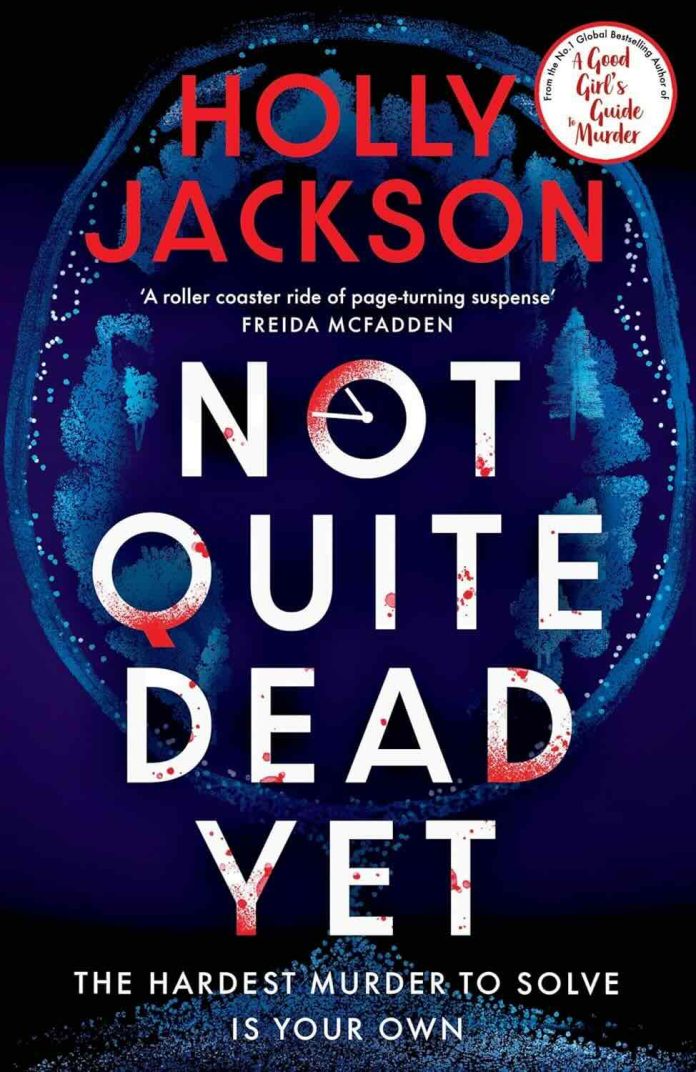
Holly Jackson has built her literary career on the foundation of intricate mysteries that challenge both her characters and readers. From the phenomenal success of A Good Girl’s Guide to Murder trilogy that introduced us to the tenacious Pippa Fitz-Amobi, to the psychological thrillers Five Survive and The Reappearance of Rachel Price, Jackson has consistently demonstrated her ability to craft compelling whodunnits that keep readers guessing until the final page. With Not Quite Dead Yet, she makes her bold transition into adult fiction, delivering a premise so audacious it borders on the impossible: what if you had seven days to solve your own murder?
The Ticking Clock: A Race Against Mortality
Margaret “Jet” Mason represents a fascinating departure from Jackson’s previous protagonists. At twenty-seven, she’s a woman perpetually stuck in the “I’ll do it later” mindset, living in the shadow of her wealthy Vermont family’s expectations while accomplishing precisely nothing with her privileged position. This character foundation provides Jackson with rich material to explore themes of wasted potential and the urgency that only impending death can provide.
The medical premise anchoring the plot demonstrates Jackson’s meticulous research approach. After suffering a catastrophic head injury during a Halloween night attack, Jet faces an inevitable aneurysm that will prove fatal within seven days. The author consulted extensively with medical professionals to ensure the scenario’s plausibility, creating a ticking clock mechanism that feels both scientifically grounded and narratively compelling. This medical countdown serves as more than mere plot device; it becomes the catalyst for Jet’s first genuine act of determination.
Jackson’s decision to structure the investigation around Jet’s deteriorating condition adds layers of complexity rarely seen in traditional murder mysteries. As Jet’s physical capabilities diminish—losing the use of her arm, experiencing increasing pain—her mental resolve strengthens proportionally. This juxtaposition creates a uniquely urgent investigative dynamic where every clue discovered might be the last.
Small-Town Secrets and Family Dysfunction
The Vermont setting of Woodstock provides more than picturesque autumn imagery; it becomes a character unto itself. Jackson expertly utilizes the claustrophobic nature of small-town life where everyone knows everyone’s business, yet somehow the most significant secrets remain buried. The Halloween fair that opens the novel establishes this duality perfectly—a community gathering that masks underlying tensions and hidden resentments.
The Mason family dynamics reveal Jackson’s growing sophistication in character development. Scott Mason’s failing kidneys mirror his daughter’s medical crisis, creating an unexpected parallel between father and daughter that Jackson handles with subtle emotional intelligence. Dianne Mason’s controlling nature and barely concealed disappointment in Jet provide authentic family tension without descending into caricature. Luke Mason, Jet’s successful brother, represents everything Jet isn’t—accomplished, driven, the family favorite—yet Jackson avoids making him a simple foil.
Billy Finney emerges as perhaps Jackson’s most compelling supporting character to date. His relationship with Jet transcends typical friendship or romantic interest categories, embodying a deep, unconditional loyalty that proves crucial to the investigation. His role as both emotional anchor and investigative partner showcases Jackson’s ability to create relationships that feel lived-in and authentic.
The Investigation: Amateur Detective Meets Professional Incompetence
Jackson’s portrayal of the official police investigation serves as both plot driver and social commentary. Detective Ecker and the local police force represent institutional thinking at its most frustrating—quick to arrest the obvious suspect (JJ, Jet’s ex-boyfriend) based on circumstantial evidence while missing crucial connections. This creates space for Jet’s amateur investigation to feel necessary rather than contrived.
The evidence trail Jackson constructs demonstrates her mastery of fair-play mystery conventions. The red synthetic hair from a Halloween wig, the mysterious “Sorry” text message, the hidden financial fraud involving a $30,000 loan—each clue feels organically discovered rather than artificially planted. When Jet uncovers her phone and the murder weapon (a Coleby hammer) at the construction site, the discovery feels earned through genuine detective work rather than convenient coincidence.
Jackson’s handling of red herrings particularly shines in the character of JJ Lim. While the evidence against him appears overwhelming—the hair transfer, his sudden disappearance, the fraudulent loan—Jackson plants enough doubt to keep astute readers questioning his guilt. The reveal that Andrew Smith also wore an identical red wig effectively doubles the suspect pool while maintaining plot momentum.
Technical Craft: Voice and Pacing
Jackson’s writing style has evolved significantly since her YA origins, and Not Quite Dead Yet showcases this maturation. Jet’s narrative voice carries the cynical wit of someone who’s given up on life suddenly finding purpose in death. Her internal monologue balances dark humor with genuine emotion, particularly in her interactions with her family and observations about her wasted potential.
The pacing demonstrates Jackson’s confidence in her material. Rather than rushing through the investigation, she allows time for character development and emotional processing. Jet’s hospital scenes, her confrontations with family members, and her gradual physical deterioration are given appropriate weight alongside the mystery elements.
The dialogue throughout “Not Quite Dead Yet” feels natural and distinctive. Each character maintains a consistent voice, from Billy’s gentle earnestness to Detective Ecker’s professional frustration. Jackson particularly excels in family conversation scenes, capturing the specific rhythms of people who’ve known each other their entire lives but struggle to communicate meaningfully.
Themes: Second Chances and Self-Worth
Beneath the mystery framework, Jackson explores profound themes about second chances and the concept of a meaningful life. Jet’s transformation from passive observer to active investigator serves as metaphor for taking control of one’s destiny, even when—or especially when—that destiny appears fixed.
The novel’s examination of family expectations and individual worth resonates beyond the specific Mason family dynamics. Jet’s position as the underachieving daughter in a successful family reflects broader social pressures about measuring personal value through external accomplishments. Her decision to spend her final days pursuing answers rather than accepting comfort represents a powerful statement about the importance of personal agency.
Jackson also explores the nature of justice and closure. Jet’s determination to solve her own murder isn’t driven by revenge fantasies but by a deeper need to understand why her life was deemed worthless enough to end. This psychological motivation elevates the investigation beyond simple whodunit mechanics.
Critical Considerations: Where the Novel Struggles
Despite its many strengths, Not Quite Dead Yet occasionally suffers from pacing inconsistencies in its middle section. Certain investigative sequences feel somewhat repetitive, particularly when Jet revisits evidence or suspects multiple times without significant new information. The novel’s length could benefit from tighter editing in these areas.
Some secondary characters remain underdeveloped, particularly members of the extended Mason Construction company crew who become potential suspects. While Jackson provides sufficient detail for plot purposes, these characters lack the depth she brings to central figures like Billy and the Mason family.
The medical aspects, while generally well-researched, occasionally feel convenient to the plot. Jet’s selective deterioration—losing arm function while maintaining mental acuity and mobility—serves the story’s needs perhaps too perfectly.
The Resolution: Satisfying Yet Bittersweet
Without revealing specific plot details, Jackson delivers a resolution that honors both the mystery’s complexity and the novel’s emotional core. The identity of Jet’s killer emerges from carefully planted clues while providing genuine surprise. More importantly, the solution feels psychologically authentic—the killer’s motivation springs from realistic human emotions rather than melodramatic plotting.
The novel’s conclusion balances satisfaction with melancholy in ways that acknowledge both Jet’s investigative success and her tragic circumstances. Jackson resists the temptation to provide false hope while delivering meaningful closure for both character and reader.
Jackson’s Evolution as a Writer
Not Quite Dead Yet represents a significant step forward in Jackson’s artistic development. The complexity of its emotional landscape, the sophistication of its character work, and the maturity of its thematic concerns demonstrate an author fully comfortable with her craft. While maintaining the page-turning qualities that made her YA work so successful, Jackson proves capable of addressing adult concerns with appropriate depth and nuance.
The novel’s exploration of mortality, family dysfunction, and personal agency marks territory distinctly different from Holly Jackson’s previous work while maintaining her signature attention to plotting detail and character motivation.
Similar Reads and Recommendations
Readers who appreciate Not Quite Dead Yet might enjoy:
- Tana French’s Dublin Murder Squad series – For sophisticated character work within mystery frameworks
- Kate Atkinson’s Case Histories series – For complex family dynamics and multilayered mysteries
- Gillian Flynn’s Sharp Objects – For dark family secrets in small-town settings
- Ruth Ware’s The Woman in Cabin 10 – For unreliable protagonists facing mortal danger
- Louise Penny’s Inspector Gamache series – For small-community mysteries with emotional depth
Final Verdict: A Worthy Transition
Not Quite Dead Yet succeeds as both an engaging mystery and a meaningful exploration of how people find purpose when confronted with their own mortality. Jackson’s transition to adult fiction feels natural and confident, suggesting a promising future in this more complex literary territory.
While the novel isn’t perfect—certain pacing issues and character development gaps prevent it from achieving true greatness—it represents a solid, entertaining read that respects both its genre conventions and its emotional responsibilities. Jackson proves she can craft compelling adult fiction without abandoning the plotting skills that made her a YA sensation.
For longtime Jackson readers, “Not Quite Dead Yet” offers familiar pleasures while exploring new emotional terrain. For newcomers to her work, it provides an excellent entry point that showcases her strengths without requiring knowledge of previous novels. Most importantly, it delivers on its ambitious premise: proving that sometimes the most important mysteries are the ones we solve about ourselves, even when time is running out.







