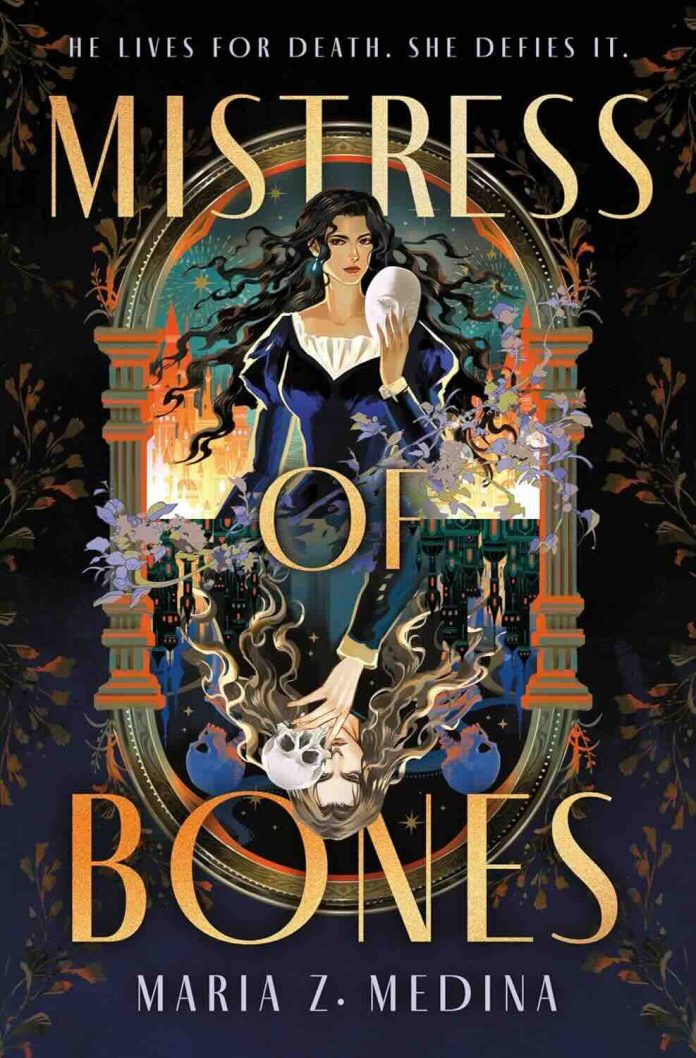
In the sprawling landscape of contemporary fantasy fiction, where necromancers have become almost commonplace, Maria Z. Medina’s debut novel “Mistress of Bones” emerges as both familiar and startlingly fresh. This inaugural offering in what promises to be a compelling duology doesn’t merely play with death—it interrogates our understanding of what it means to be truly alive.
A Familiar Foundation with Unexpected Depths
Set in a world where the gods have literally sacrificed their bones to anchor the continents, Medina constructs a mythology that feels both grand and intimately personal. The premise follows Azul del Arroyo, a young woman haunted by guilt over her sister Isadora’s death nine years prior—a death she prevented through mysterious means, only to lose her sister permanently years later. When the opportunity arises to reclaim Isadora’s bones from an ossuary, Azul believes she can resurrect her sister once more.
The worldbuilding here deserves particular praise. Medina creates a society where the gods’ sacrifice has been largely forgotten, leading to a fascinating tension between faith and science. The Anchor cities, built from divine bone, pulse with otherworldly energy while political intrigue swirls in the capital of Cienpuentes. This backdrop provides rich soil for both intimate character development and sweeping plot machinations.
Character Complexity: Where the Novel Truly Shines
Azul del Arroyo stands as one of the more compelling protagonists in recent fantasy literature. Medina crafts her as neither purely heroic nor tragically flawed, but as a young woman whose desperate love for her sister blinds her to larger truths. Her journey from naive necromancer to understanding her true nature as a “child of the Lord Life” provides the emotional backbone of the narrative.
The supporting cast proves equally well-developed. Virel Enjul, the Emissary of the Lord Death, emerges as a complex antagonist whose rigid faith masks deeper insecurities about mortality. His cat-and-mouse dynamic with Azul crackles with tension that feels genuinely earned rather than artificially manufactured. Count Emiré de Anví brings weary pragmatism to court intrigue, while the mysterious Faceless Witch serves as both ally and threat in ways that keep readers constantly off-balance.
Perhaps most impressively, Medina avoids the trap of making her characters mere plot devices. Even secondary figures like Nereida de Guzmán and Miguel Esparza feel like complete individuals with their own motivations and histories.
Pacing and Plot: A Mixed Symphony
The novel’s structure follows multiple perspectives, allowing Medina to build tension through dramatic irony while exploring different facets of her world. The pacing proves deliberately measured in the first half, focusing on character development and political maneuvering. Some readers may find this section slower than expected, particularly given the book’s marketing emphasis on adventure.
However, this deliberate buildup pays dividends in the novel’s second half, where revelations cascade with increasing intensity. The discovery that Azul’s brother Sergado has been conducting his own necromantic experiments, the true nature of the Faceless Witch’s body-swapping abilities, and the climactic confrontation in the ossuary all feel properly earned rather than hastily constructed.
The romance elements, while present, never overwhelm the central narrative about grief, family, and identity. Medina handles the attraction between Azul and Enjul with appropriate complexity, never allowing it to become the driving force of the plot.
Writing Style: Strength Through Restraint
Medina’s prose demonstrates remarkable maturity for a debut novel. She employs a relatively straightforward narrative voice that allows the story’s emotional weight to emerge naturally without overwhelming readers with purple prose. Her descriptions of the bone-built cities and necromantic magic feel visceral without becoming gratuitously graphic.
The dialogue feels authentic to each character, from Azul’s stubborn determination to Enjul’s formal cadences to the Faceless Witch’s mercurial personality shifts. Medina particularly excels at subtext, allowing characters to communicate layers of meaning through seemingly simple exchanges.
Where the writing occasionally stumbles is in exposition. While generally well-integrated, there are moments where worldbuilding information feels slightly forced into conversations or internal monologues. These instances are relatively minor but noticeable enough to briefly pull readers from the narrative flow.
Thematic Resonance: Life, Death, and the Spaces Between
Beyond its surface-level adventure plot, “Mistress of Bones” grapples with profound questions about grief, identity, and what we owe the dead. Azul’s journey becomes a meditation on whether love can become destructive when it refuses to accept loss. Her gradual understanding that she creates life rather than controls death provides both personal revelation and broader commentary on how we misunderstand our own natures.
The political intrigue surrounding the child king and various noble houses serves as effective backdrop, but the novel’s true strength lies in its exploration of family dynamics and survivor’s guilt. Medina doesn’t offer easy answers about when we should let go of those we’ve lost, instead presenting the question in all its messy complexity.
Technical Craft: Strengths and Weaknesses
The novel’s multi-POV structure generally works well, though some perspective shifts feel more organic than others. The Count’s chapters provide necessary political context but occasionally feel disconnected from the central emotional journey. The Faceless Witch’s sections prove consistently engaging, offering both mystery and dark humor.
Medina demonstrates strong command of fantasy genre conventions while subverting expectations in meaningful ways. The revelation that Azul isn’t truly a necromancer reframes the entire narrative in retrospect, making a second reading almost essential for full appreciation.
The magic system, while not extensively detailed, feels consistent and grounded in the world’s mythology. The distinction between creating life and controlling death provides clear rules without becoming overly mechanistic.
Areas for Improvement
Despite its many strengths, “Mistress of Bones” isn’t without flaws. The middle section occasionally drags as political maneuvering takes precedence over character development. Some plot threads, particularly involving the mining interests and certain court nobles, feel underdeveloped.
The climactic confrontation with Sergado, while emotionally satisfying, resolves somewhat quickly given the buildup. More exploration of the brother-sister dynamic and Sergado’s motivations would have strengthened this element.
Additionally, while the novel’s ending provides closure for Azul’s primary arc, some readers may find it leaves too many questions unanswered for the first book in a duology. The balance between resolution and setup for the sequel occasionally tilts too far toward the latter.
Comparisons and Context
Readers of Fonda Lee’s “The Bone Shard Daughter” will find familiar themes of bone-based magic and political intrigue, though Medina’s approach feels more intimate and character-driven. The multi-POV structure and court politics echo Robin Hobb’s work, while the necromantic elements share DNA with Tamsyn Muir’s “Gideon the Ninth,” albeit with a more serious tone.
This marks Medina’s debut novel, making her accomplishment all the more impressive. The Spanish cultural influences woven throughout the worldbuilding feel authentic and add distinctive flavor to what could have been generic European-inspired fantasy.
Similar Reads for Fantasy Lovers
Readers who enjoy “Mistress of Bones” should consider these complementary titles:
- “The Bone Shard Daughter” by Andrea Stewart – For bone-based magic systems and political intrigue
- “Six of Crows” by Leigh Bardugo – For multi-POV heist elements and complex character dynamics
- “The Priory of the Orange Tree” by Samantha Shannon – For epic worldbuilding and strong female protagonists
- “Gideon the Ninth” by Tamsyn Muir – For necromantic themes with different tonal approaches
- “The City of Brass” by S.A. Chakraborty – For rich cultural worldbuilding and family dynamics
Final Verdict: Promise Fulfilled and Future Potential
“Mistress of Bones” succeeds as both an engaging standalone read and the foundation for what promises to be a compelling series. While not perfect, it demonstrates remarkable ambition and emotional intelligence for a debut novel. Medina has created a world worth revisiting and characters worth caring about.
The novel works best for readers who appreciate character-driven fantasy with political elements and aren’t looking for non-stop action. Those seeking pure adventure might find the pacing occasionally slow, but patient readers will be rewarded with genuine emotional depth and thoughtful worldbuilding.
As the first entry in a duology, “Mistress of Bones” establishes Medina as a promising new voice in fantasy literature. Her blend of intimate character work with epic fantasy elements suggests great potential for future installments. While the novel occasionally struggles with the balance between setup and payoff, its strengths far outweigh its weaknesses.
For readers seeking fantasy that grapples with grief, family bonds, and the nature of life itself, “Mistress of Bones” offers a compelling and worthwhile journey. It may not revolutionize the genre, but it certainly enriches it with thoughtful storytelling and genuine emotional resonance.
- Recommended for fans of: Character-driven fantasy, political intrigue, necromantic magic systems, Spanish-influenced worldbuilding, and stories exploring themes of grief and family.
- Content warnings: Violence, death, themes of grief and loss, political manipulation.







