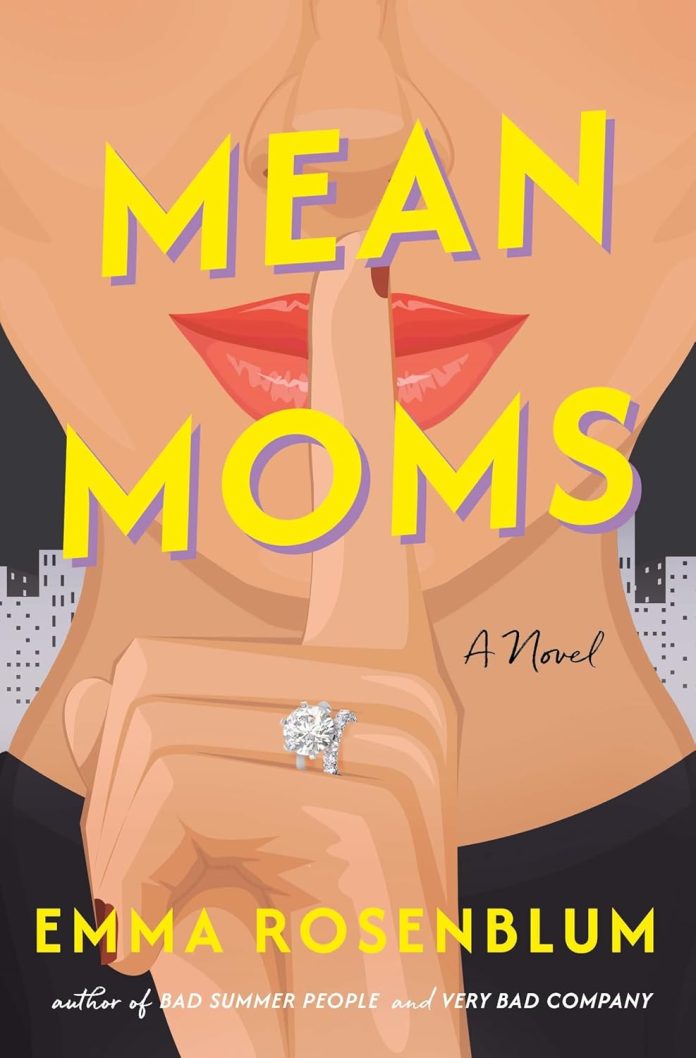
Emma Rosenblum’s third novel, Mean Moms, arrives as a scathing indictment of Manhattan’s private school elite, wrapped in the gleaming package of a mystery thriller. Following her previous successes with Bad Summer People and Very Bad Company, Rosenblum has carved out a distinct niche exploring the dark underbelly of wealthy East Coast society. In this latest offering, she turns her razor-sharp wit to the most competitive arena of all: Manhattan private school motherhood.
Set against the backdrop of the fictional Atherton Academy, Mean Moms follows three established queen bees—Frost Trevor, Belle Redness, and Morgan Chary—whose carefully orchestrated world of themed parties and social hierarchies gets upended by the arrival of Sofia Perez, a mysterious new mom from Miami. What begins as typical social maneuvering quickly spirals into something far more sinister, as inexplicable misfortunes begin plaguing the established trio.
Character Development: Depth Beneath the Designer Surface
Rosenblum’s greatest strength lies in her character construction. Each protagonist feels authentically flawed, moving beyond simple caricature to reveal genuine psychological complexity. Belle Redness emerges as perhaps the most sympathetic figure—a struggling fashion designer whose attempts to launch “The Dress” become increasingly desperate as her social standing crumbles following a humiliating lice outbreak scandal. Her vulnerability beneath the privilege makes her downfall genuinely affecting.
Frost Trevor, the former It Girl turned artist, carries the weight of a crumbling marriage while pursuing her collage work with touching earnestness. Her affair with Morgan’s husband Art provides both motivation and complication, grounding her character in recognizable human failings rather than simple villainy.
The real revelation, however, is Morgan Chary—the perfect, helpful, eternally cheerful mom who masks a profound sociopathy. Rosenblum’s gradual unveiling of Morgan’s true nature is masterfully handled, with early hints that accumulate into a devastating portrait of someone who has learned to weaponize kindness. The revelation that Morgan has systematically planned to destroy her best friends’ lives, complete with a handwritten goals list that casually includes “Ruin Frost Trevor’s life” between improving her marathon time and learning mah-jongg, is both chilling and darkly comic.
The Mystery Structure: Misdirection and Revelation
The novel’s mystery structure works on multiple levels, creating a layered narrative that rewards careful readers while maintaining page-turning momentum. Rosenblum employs Sofia as the perfect red herring—her outsider status and mysterious background make her an obvious suspect, while her genuine attempts to establish herself as a travel agent provide believable motivation for her suspicious behavior.
The true genius lies in the double revelation: first, that Morgan orchestrated the systematic destruction of her friends, and second, that her daughter Gertrude not only knew but actively participated, manipulating her mother through fabricated bullying stories. This mother-daughter conspiracy adds a particularly disturbing dimension to the narrative, suggesting that sociopathy might be both learned and inherited.
However, the pacing occasionally stumbles under the weight of its social commentary. The middle section, particularly during the winter chapters, sometimes feels more interested in satirizing mom culture than advancing the plot. While the observations about private school politics are often hilarious, they occasionally slow the mystery’s momentum.
Social Satire: Sharp Observations with Occasional Overreach
Rosenblum’s background as a magazine editor serves her well in capturing the specific vernacular and preoccupations of Manhattan’s elite. Her depiction of theme parties, WhatsApp drama, and the constant performance of perfect motherhood feels authentically observed rather than externally imagined. The detail about moms measuring success through their children’s private lesson schedules or the casual mention of $8 million apartment renovations creates a world both absurd and believable.
The novel’s contemporary touches—discussions of Wegovy, deepfake technology, and e-bike accidents—ground the story in recognizable modern anxieties. The integration of social media, from Instagram stories to WhatsApp group dynamics, feels natural rather than forced, demonstrating Rosenblum’s understanding of how digital communication shapes modern relationships.
Yet sometimes the satire becomes heavy-handed. The repeated emphasis on brand names and luxury consumption, while effective in establishing the world, occasionally reads like a shopping list rather than social commentary. Similarly, some supporting characters, particularly the peripheral moms, remain frustratingly one-dimensional despite their frequent appearances.
Writing Style: Conversational Brilliance with Technical Flaws
Rosenblum’s prose sparkles with wit and observational precision. Her ability to capture the specific language of privileged Manhattan mothers—the exclamation points, the performative enthusiasm, the coded competition—demonstrates remarkable ear for dialogue. The narrative voice maintains an engaging conversational tone that makes complex social dynamics accessible without dumbing them down.
The novel’s structure, divided into seasonal sections with playfully punctuated chapter titles (complete with exclamation points), mirrors the breathless enthusiasm of its setting while providing ironic commentary on the darkness beneath. This formatting choice works particularly well in highlighting the disconnect between surface cheerfulness and underlying malice.
However, the novel occasionally suffers from pacing issues. The revelation about Morgan’s systematic campaign comes somewhat late in the narrative, leaving insufficient time to fully explore its psychological implications. Additionally, some plot threads—particularly Sofia’s travel agent aspirations and her relationship with her ex-husband JP—feel underdeveloped given their setup.
Thematic Resonance: More Than Just Surface Glitter
Beneath its glossy surface, Mean Moms grapples with serious themes about female friendship, competition, and the corrosive effects of extreme privilege. The novel asks uncomfortable questions about what happens when people have everything except genuine human connection. The friendship between Frost, Belle, and Morgan reveals itself as fundamentally transactional, held together by social convenience rather than genuine affection.
The mother-daughter relationship between Morgan and Gertrude provides the novel’s most disturbing insight: the possibility that toxic behaviors perpetuate across generations. Gertrude’s manipulation of her mother through fabricated victimhood stories suggests that the cycle of cruelty may be unbreakable, particularly within environments that reward performance over authenticity.
The novel’s exploration of economic anxiety, even among the wealthy, adds unexpected depth. Sofia’s desperation to establish herself financially, Belle’s fear of professional failure, and even Morgan’s need to maintain her perfect image all stem from genuine vulnerabilities that wealth cannot entirely eliminate.
Critical Shortcomings: Where the Polish Dims
Despite its considerable strengths, Mean Moms suffers from several notable weaknesses. The resolution feels somewhat rushed, with Sofia’s elaborate revelation ceremony providing satisfying comeuppance but lacking psychological believability. The idea that the other mothers would simply accept Sofia’s accusations without question strains credibility, particularly given their recent suspicions about her.
The novel’s treatment of class issues, while often perceptive, occasionally veers into exploitation. The contrast between the protagonists’ extreme wealth and others’ struggles sometimes feels more like voyeurism than social commentary. Characters like the detective Greg Summerly, reduced to dog-walking to make ends meet, exist primarily to highlight the protagonists’ privilege rather than as fully realized individuals.
Additionally, some plot mechanics feel forced. The coincidences that allow Gertrude to discover her father’s affairs and manipulate the situation seem too convenient, undermining the otherwise careful plotting. The technical aspects of Morgan’s schemes—from accessing email accounts to coordinating with hired actors—occasionally require suspension of disbelief.
Comparative Context: Rosenblum’s Evolution as a Writer
Mean Moms represents both continuity and growth in Rosenblum’s literary development. Like Bad Summer People, it explores the toxic dynamics within insular wealthy communities, but with greater psychological sophistication. The character work here surpasses her previous efforts, particularly in creating genuinely complex female antagonists who resist simple categorization.
The mystery elements show marked improvement from her earlier work, with more sophisticated plotting and better-integrated clues. However, the social observation remains Rosenblum’s strongest suit, and readers seeking pure mystery thrills might find themselves occasionally frustrated by the emphasis on cultural critique over plot momentum.
Contemporary Relevance: A Mirror to Modern Motherhood
The novel’s timing feels particularly relevant in an era of increased scrutiny around intensive parenting and social media performance. Rosenblum captures the specific pressures facing upper-class mothers in major cities, where every parenting decision becomes a statement about values, resources, and social positioning. The constant documentation of their lives through photos and messages reflects broader anxieties about authentic versus performed relationships in the digital age.
The exploration of female aggression, particularly indirect aggression masked as helpfulness, taps into ongoing conversations about how women express and manage conflict. Morgan’s character represents an extreme version of passive-aggressive behavior taken to sociopathic lengths, offering a darkly comic examination of feminine competition.
Verdict: A Flawed but Compelling Social Thriller
Mean Moms succeeds admirably as both entertainment and social commentary, despite its structural weaknesses. Rosenblum’s sharp observations about privilege, motherhood, and female friendship create a compelling reading experience that lingers beyond its final pages. The novel’s exploration of how extreme wealth can corrupt human relationships feels both timely and universal.
While the mystery elements occasionally feel secondary to the social satire, and some plot mechanics strain credibility, the character work and dialogue are strong enough to carry the narrative. Readers who enjoyed the cutting social observation of Curtis Sittenfeld’s Eligible or the domestic suspense of Liane Moriarty’s Big Little Lies will find much to appreciate here.
The novel ultimately asks whether genuine friendship can exist within systems designed to promote competition and hierarchy. Its answer—a resounding no—may be pessimistic, but Rosenblum’s execution makes it convincingly, if uncomfortably, entertaining.
Mean Moms establishes Rosenblum as a distinctive voice in contemporary domestic fiction, capable of mining both humor and horror from the seemingly mundane world of elite motherhood. Despite its flaws, it’s a wickedly enjoyable read that offers genuine insights into the human capacity for both cruelty and self-deception.
Recommended Reading for Fans of Mean Moms
Readers who enjoyed Mean Moms should consider:
- Big Little Lies by Liane Moriarty – Similar themes of competitive motherhood with darker psychological undertones
- The Seven Husbands of Evelyn Hugo by Taylor Jenkins Reid – Another exploration of female ambition and friendship with mystery elements
- Show Don’t Tell by Curtis Sittenfeld – Sharp social satire of contemporary upper-class life
- I Would Die For You by Sandie Jones – Psychological manipulation within family relationships
- Social Creature by Tara Isabella Burton – Young women navigating wealth and social climbing in New York
- Such a Pretty Girl by Laura Wiess – Dark examination of family secrets and protection







