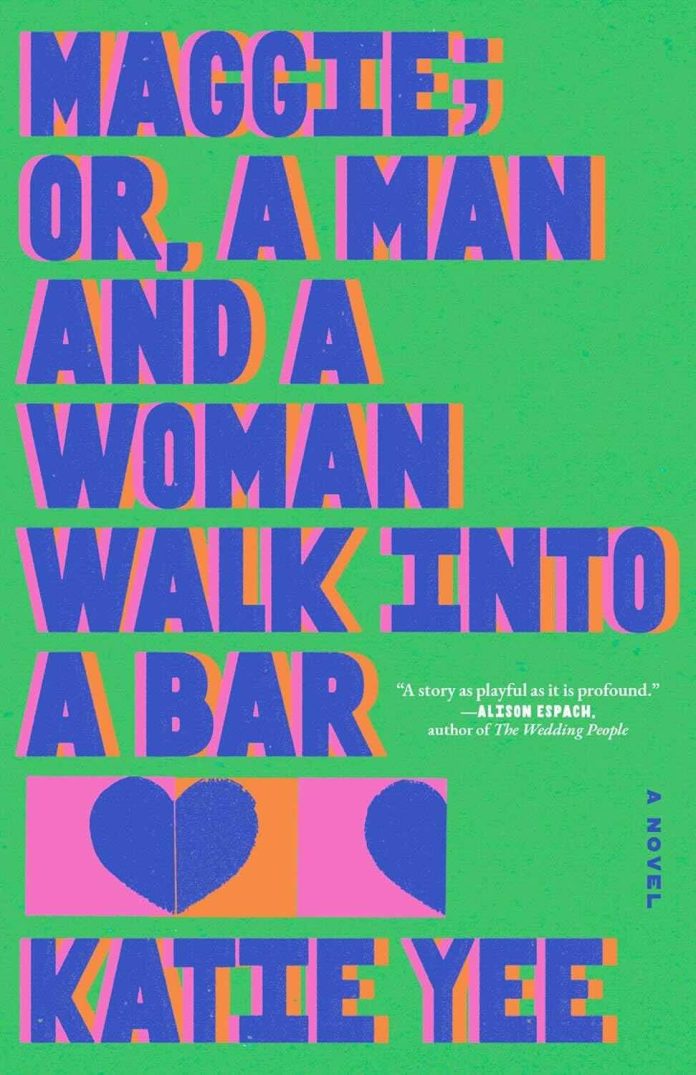
Katie Yee’s debut novel Maggie; or, A Man and a Woman Walk Into a Bar arrives like a perfectly timed anti-joke—unexpected, sharp, and somehow exactly what you didn’t know you needed. In a literary landscape often saturated with earnest tales of female suffering, Yee has crafted something refreshingly different: a story that refuses to let grief consume its narrator, instead transforming pain into a darkly comic survival guide for modern motherhood and marriage.
A Double Dose of Betrayal
The premise is deceptively simple, yet devastatingly effective. Our unnamed Chinese American narrator walks into what she expects to be a pleasant dinner at an all-you-can-eat Indian buffet, only to discover her husband Sam is having an affair with a woman named Maggie. Shortly after, she discovers a lump in her breast—cancer—which she promptly names Maggie as well. This dual betrayal, both marital and bodily, becomes the engine that drives the entire narrative.
What sets Yee’s approach apart is her refusal to wallow. Instead of descending into melodrama, the narrator develops an almost conversational relationship with her tumor, treating it as both enemy and confidant. This personification of cancer isn’t merely a literary device—it’s a coping mechanism that reveals the narrator’s fundamental resilience and dark humor. She begins compiling a “Guide to My Husband: A User’s Manual” for the other Maggie, a gesture that’s simultaneously generous and cutting, revealing her deep knowledge of Sam’s quirks while highlighting his departure from her life.
The Art of Fragmented Storytelling
Yee structures Maggie; or, A Man and a Woman Walk Into a Bar in fragments that mirror the scattered nature of trauma and recovery. This isn’t a linear progression from crisis to resolution; instead, it’s a collection of moments, observations, and memories that gradually coalesce into a complete picture. The episodic nature works brilliantly, allowing readers to experience the narrator’s emotional state—the way grief and illness fragment time and memory.
The writing style itself reflects this fragmentation. Yee moves seamlessly between present-moment scenes and philosophical observations, between childhood memories and immediate concerns about her children’s future. Her prose is lean but dense with meaning, every sentence carrying emotional weight without feeling overwrought. The author demonstrates remarkable control, knowing exactly when to deploy humor and when to let genuine pain surface.
Cultural Heritage as Lifeline
One of the novel’s greatest strengths lies in how Yee weaves Chinese folklore and mythology throughout the narrative. The narrator begins telling her children traditional stories—tales of moon trees, zodiac races, and goddesses who sacrifice their immortality for love. These aren’t mere cultural window dressing; they’re essential to the narrator’s process of identity reclamation and her attempt to pass down something meaningful to her children.
The folklore serves multiple purposes: it connects the narrator to her late mother’s voice, provides alternative frameworks for understanding suffering and resilience, and offers her children cultural anchors as their family structure changes. Yee handles this integration masterfully, never making it feel forced or overly explanatory. The myths simply exist as part of the narrator’s worldview, as natural as her tendency toward dark humor.
The Comedy of Contemporary Motherhood
Perhaps the most impressive aspect of Yee’s debut is how she balances genuine pathos with sharp observational humor. The narrator’s voice is consistently engaging, finding absurdity in everything from PTA meetings to medical waiting rooms. Her observations about modern parenting—the pressure to have the “right” opinions about screen time, the competitive nature of childhood activities, the way divorce affects school pickup dynamics—ring with authentic experience.
The humor never feels dismissive of real pain; instead, it serves as a survival mechanism. When the narrator jokes about her tumor or makes cutting observations about her ex-husband’s new relationship, we understand this as a form of resistance against being overwhelmed by circumstances beyond her control.
Marriage, Motherhood, and Identity
Yee explores the complex ways marriage and motherhood reshape identity, particularly for women who have sublimated their own dreams and ambitions. The narrator’s occasional references to wanting to be a children’s book author feel significant—she’s someone who has stories to tell but has been focused on managing other people’s narratives instead.
Maggie; or, A Man and a Woman Walk Into a Bar doesn’t shy away from the messiness of divorce, particularly when children are involved. The custody arrangements, the awkward coordination with Sam, the way the children process their parents’ separation—all of this feels genuine and unromanticized. Yee captures the particular exhaustion of single motherhood while also showing the narrator’s growing sense of agency and self-determination.
Medical Realities and Emotional Truths
The cancer storyline is handled with remarkable sensitivity and specificity. Yee doesn’t exploit the illness for easy sympathy; instead, she focuses on the mundane realities—insurance forms, waiting rooms, the strange intimacy of medical procedures. The narrator’s decision to keep her diagnosis secret from Sam adds another layer of complexity, showing how illness can become a source of personal power rather than just vulnerability.
The medical scenes are interspersed with moments of unexpected beauty—conversations with other patients, small kindnesses from healthcare workers, the narrator’s growing friendship with her best friend Darlene who serves as both emotional support and comic relief.
Minor Criticisms
While Maggie; or, A Man and a Woman Walk Into a Bar succeeds brilliantly overall, there are moments where the fragmented structure occasionally feels more like a stylistic choice than an organic necessity. Some transitions between scenes could be smoother, and certain secondary characters, particularly the children, sometimes feel more like plot devices than fully realized individuals.
The ending, while satisfying, arrives somewhat abruptly. Readers might wish for a bit more resolution regarding the narrator’s future, particularly her romantic life and career aspirations. However, this restraint also feels true to the novel’s overall approach—life doesn’t tie up neatly, and healing happens gradually.
Literary Companions and Influences
Yee’s work will appeal to readers who enjoyed Rental House by Weike Wang, Crying in H Mart by Michelle Zauner, and Weather by Jenny Offill. Like these authors, Yee excels at finding profound meaning in everyday experiences while maintaining a distinctive narrative voice. The book also shares DNA with classic works about female resilience like Heartburn by Nora Ephron and The Last Thing He Wanted by Joan Didion.
For readers interested in contemporary Asian American literature that grapples with family, identity, and cultural inheritance, Maggie; or, A Man and a Woman Walk Into a Bar fits well alongside works by:
- Such a Pretty Girl by Laura Wiess
- The School for Good Mothers by Jessamine Chan
- Ghost Forest by Pik-Shuen Fung
- Little Fires Everywhere by Celeste Ng
A Remarkable Debut
Maggie; or, A Man and a Woman Walk Into a Bar establishes Katie Yee as a significant new voice in contemporary fiction. This is the kind of debut that announces not just talent but a distinctive worldview—one that finds hope without denying pain, humor without minimizing trauma, and beauty in the midst of genuine hardship.
The novel succeeds because it trusts its readers to handle complexity. Yee doesn’t provide easy answers or neat resolutions; instead, she offers something more valuable: a clear-eyed, compassionate, and ultimately hopeful vision of how we might navigate life’s inevitable betrayals and disappointments. In a time when many novels about female experience lean heavily into victimhood or triumphant recovery narratives, Yee has created something more nuanced and ultimately more truthful.
Maggie; or, A Man and a Woman Walk Into a Bar is a book that will reward multiple readings, revealing new layers of meaning and connection with each encounter. It’s a debut that promises great things to come from an author who clearly understands that the best fiction doesn’t just tell us what happens—it shows us how to live.







