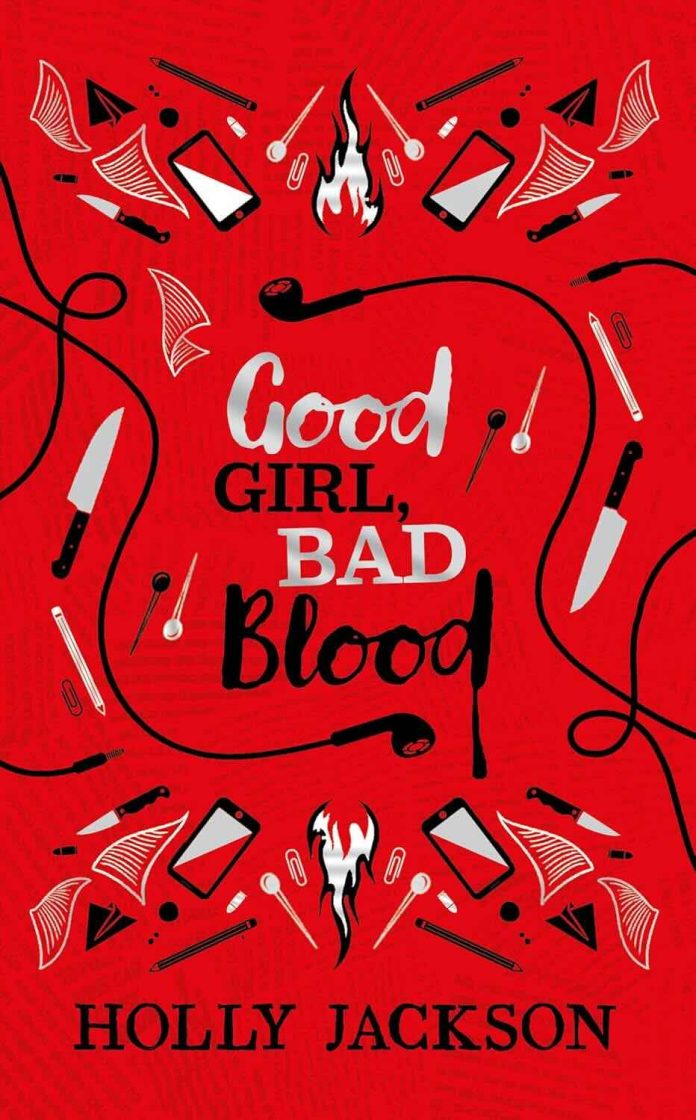
Holly Jackson’s sophomore effort in the A Good Girl’s Guide to Murder series delivers a masterclass in psychological tension that surpasses even its stellar predecessor. Good Girl, Bad Blood transforms Pip Fitz-Amobi from a curious amateur sleuth into something far more complex and morally ambiguous—a young woman haunted by her previous investigation while being inexorably drawn into another web of deception that threatens to consume everything she holds dear.
Set six months after the explosive conclusion of A Good Girl’s Guide to Murder (2019), this sequel finds our protagonist in an entirely different headspace. The trauma of her first case has left visible scars, and Jackson doesn’t shy away from exploring the psychological aftermath of teenage vigilantism. When Jamie Reynolds, brother of Pip’s close friend Connor, disappears on the same night as a memorial for Andie Bell and Sal Singh, the police dismiss it as another case of a young man walking away from his problems. But Pip knows better—and more dangerously, she can’t resist the pull of another mystery.
The Evolution of a Detective
What makes Good Girl, Bad Blood exceptional is how Jackson refuses to simply replicate the formula that made the first book successful. Instead, she presents us with a Pip who is fundamentally changed—one carrying the weight of violence she witnessed and participated in. The author skillfully weaves Pip’s PTSD symptoms throughout the narrative, showing how trauma manifests in hypervigilance, angry outbursts, and an inability to truly disconnect from the darkness she’s encountered.
The relationship between Pip and Ravi Singh continues to provide emotional anchor points, though even their connection feels more fragile here. Jackson explores how solving one mystery doesn’t heal the wounds it creates—it often deepens them. Ravi’s patience with Pip’s obsessive tendencies feels more strained, adding realistic relationship tension that many YA mysteries avoid addressing.
A Case That Cuts Deep
The disappearance of Jamie Reynolds initially appears straightforward—a young man with a history of conflict with his father who has simply walked away again. But Jackson layers complexity through the introduction of Layla Mead, a mysterious catfish who has been manipulating men online, seemingly searching for someone specific. The revelation that she’s hunting for Child Brunswick—the son of a serial killer who testified against his father—elevates the stakes beyond a simple missing person case.
Jackson’s research into the psychology of online manipulation feels thoroughly authentic. The way Jamie falls under Layla’s spell, performing increasingly dangerous tasks to prove his devotion, creates a chilling portrait of modern digital predation. The author demonstrates keen understanding of how vulnerable individuals can be exploited through carefully crafted online personas, making the threat feel contemporary and immediate.
Technical Mastery and Narrative Innovation
The podcast format returns as Pip’s method of investigation, but Jackson uses it more strategically here. Rather than simply providing exposition, the podcast becomes a character in its own right—generating both helpful leads and dangerous attention. The way social media responds to Pip’s investigation, including false accusations and conspiracy theories, reflects genuine contemporary anxieties about true crime entertainment and internet mob justice.
Jackson’s pacing remains exceptional, though some middle chapters feel slightly repetitive as Pip pursues various leads that ultimately prove tangential. However, this actually serves the story well, creating the same frustrating dead-ends that real investigations encounter while maintaining reader engagement through character development and relationship dynamics.
Dark Territory and Moral Complexity
Where Good Girl, Bad Blood truly distinguishes itself is in its willingness to explore moral ambiguity. Stanley Forbes, when revealed as Child Brunswick, becomes neither pure victim nor irredeemable monster. Jackson’s portrayal of someone trying to build a normal life while carrying the weight of childhood participation in horrific crimes is nuanced and empathetic without excusing or minimizing the original trauma inflicted on victims’ families.
The character of Charlie Green/Charlie Nowell represents perhaps Jackson’s most complex antagonist creation. His quest for vengeance is understandable—losing his sister Emily to the “Monster of Margate” and watching his family disintegrate in the aftermath provides clear motivation. Yet his methods, manipulating Jamie and others as pawns in his revenge scheme, demonstrate how trauma can twist someone into perpetuating the very cycles of violence they seek to end.
Series Context and Character Development
Within the broader A Good Girl’s Guide to Murder universe, this second installment successfully bridges the gap between Pip’s initial curiosity-driven investigation and the darker territory she’ll explore in As Good As Dead (2021). The psychological deterioration that becomes central to the third book begins here, making this entry essential reading for understanding Pip’s character arc.
The supporting cast receives stronger development than in the first book. Connor Reynolds emerges as more than just “the worried brother,” showing genuine personality and agency. Cara Ward continues to provide emotional support while dealing with her own family trauma. Even minor characters like Stanley Forbes feel fully realized rather than simply functional to the plot.
Writing Style and Technical Craft
Jackson’s prose has evolved between books, displaying greater confidence in handling darker material while maintaining the accessible style that made the series popular with teen readers. Her dialogue remains sharp and authentic, particularly in depicting how trauma affects communication patterns and relationships.
The integration of digital communication—texts, social media posts, podcast transcripts—feels organic rather than gimmicky. Jackson understands how contemporary teenagers actually communicate and investigate, making Pip’s methods feel authentic rather than artificially enhanced for dramatic effect.
Critical Assessment and Minor Shortcomings
While Good Girl, Bad Blood succeeds in most areas, it’s not without minor flaws. Some red herrings feel slightly forced, particularly the extended focus on Luke Eaton and Nat da Silva, which serves more to delay revelation than to genuinely develop character or advance plot. Additionally, certain secondary characters could benefit from deeper development—Joanna Reynolds, in particular, remains somewhat one-dimensional despite her central importance to the story.
The book’s treatment of online safety and digital manipulation, while generally well-handled, occasionally veers toward didactic territory. However, given the target audience, this educational aspect may be more feature than flaw.
Comparison with Similar Works and Series Standing
Good Girl, Bad Blood stands favorably alongside other contemporary YA mystery series like One of Us Is Lying by Karen M. McManus or The Cheerleaders by Kara Thomas. However, Jackson’s series distinguishes itself through its commitment to showing realistic consequences for teenage detective work—something many similar works gloss over.
Compared to classic YA mystery series like Nancy Drew or more recent entries like Pretty Little Liars, Jackson’s work feels more grounded in contemporary realities while still delivering the puzzle-solving satisfaction readers expect from the genre.
Cultural Impact and Themes
The novel’s exploration of internet culture, true crime obsession, and vigilante justice feels particularly relevant to contemporary discussions about social media’s role in criminal investigations. Jackson raises important questions about the ethics of amateur detective work and the potential for public attention to both help and harm active investigations.
The book’s treatment of trauma, particularly childhood trauma and its long-term effects, brings psychological depth often missing from YA literature. Jackson doesn’t offer easy answers or quick healing, instead showing the messy, ongoing process of living with psychological wounds.
Recommended Reading and Series Continuation
For readers new to the series, starting with A Good Girl’s Guide to Murder remains essential, as this sequel builds heavily on emotional and character development from the first book. The series conclusion, As Good As Dead, provides necessary resolution to character arcs begun here, making this truly the middle chapter of a trilogy rather than a standalone work.
Readers who enjoy Jackson’s work might appreciate:
- The Cousins by Karen M. McManus – for similar contemporary mystery elements
- Sadie by Courtney Summers – for darker explorations of teenage investigation
- Turtles All the Way Down by John Green – for authentic portrayal of teenage mental health struggles
- We Were Liars by E. Lockhart – for psychological complexity and unreliable narration
- The Female of the Species by Mindy McGinnis – for examination of violence and justice
Final Verdict
Good Girl, Bad Blood succeeds as both an entertaining mystery and a meaningful exploration of trauma, justice, and the price of truth. Jackson has crafted a sequel that deepens rather than merely extends her original concept, creating a work that satisfies mystery fans while offering genuine psychological insight.
The book earns its place as a standout entry in contemporary YA mystery fiction, proving that series can evolve and deepen without losing their essential appeal. While not perfect, it represents significant growth from an already impressive debut and sets up the trilogy’s conclusion with skill and emotional honesty.
For readers seeking mystery fiction that respects both their intelligence and emotional maturity, Good Girl, Bad Blood delivers complexity and satisfaction in equal measure. It stands as proof that YA literature can tackle serious subjects without sacrificing entertainment value, making it essential reading for both teen and adult mystery enthusiasts.







