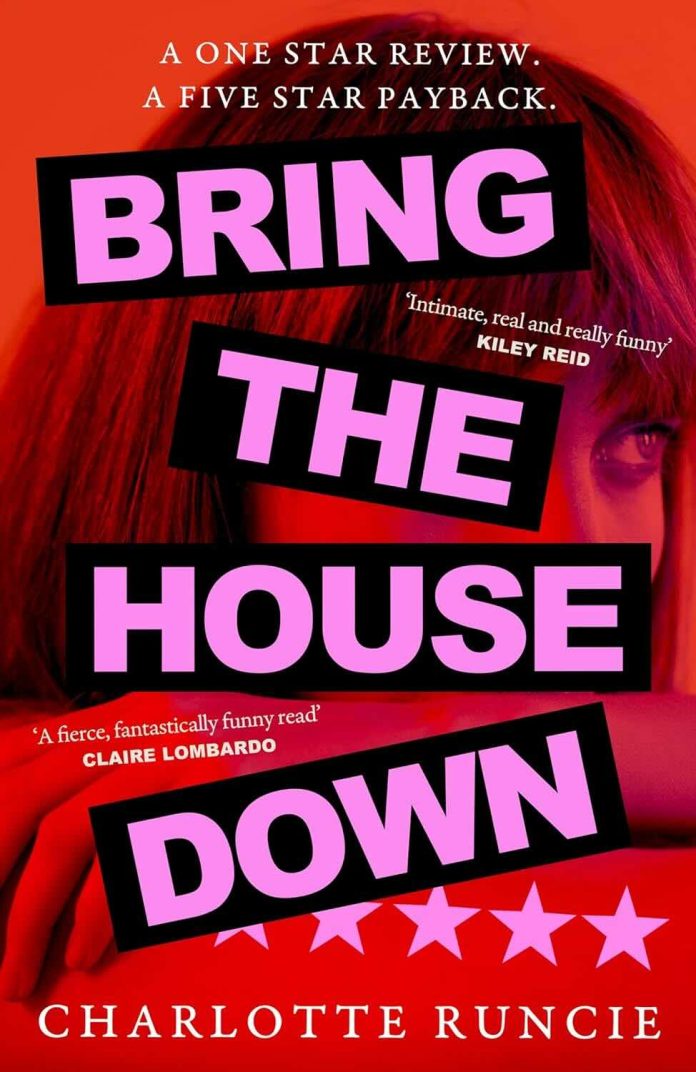
Charlotte Runcie’s inaugural novel arrives with the force of a theatrical spotlight, illuminating the murky intersection between art, power, and personal destruction. Bring the House Down is a razor-sharp exploration of contemporary media culture, misogyny, and the complex dynamics between creators and critics. Set against the vibrant backdrop of the Edinburgh Festival Fringe, Runcie crafts a narrative that is both devastatingly funny and deeply unsettling, examining how quickly lives can unravel when personal and professional boundaries collapse.
The novel follows Alex Lyons, a theatre critic whose binary worldview—five stars or one star, nothing in between—mirrors his approach to life itself. When he writes a scathing review of struggling actress Hayley Sinclair’s climate change performance piece, then sleeps with her without revealing his identity, the resulting fallout becomes a cultural firestorm that consumes everything in its path.
Character Development and Moral Complexity
The Unreliable Narrator’s Web
Runcie’s masterstroke lies in her choice of narrator. Sophie Rigden, a junior culture writer who becomes Alex’s confidante and eventual replacement, serves as our guide through this moral labyrinth. Sophie’s perspective is crucial because she occupies the liminal space between victim and complicit observer, between professional colleague and personal confidante. Her growing proximity to Alex creates an uncomfortable intimacy that mirrors the reader’s own conflicted relationship with him.
Alex emerges as a fascinatingly reprehensible character—privileged, narcissistic, yet occasionally vulnerable. Runcie refuses to make him a simple villain, instead presenting him as a product of his circumstances: the son of celebrated actress Dame Judith Lyons, raised in theatrical circles where performance and reality blur. His cruelty stems not from calculated malice but from a profound inability to see beyond his own experience.
Hayley Sinclair transforms from victim to viral sensation, her pain becoming performance in ways that complicate traditional narratives of empowerment. Her evolution from struggling actress to cultural phenomenon raises difficult questions about the commodification of trauma and the performative nature of modern activism.
Thematic Depth and Cultural Commentary
The Performance of Power
The novel’s central thesis revolves around the theatrical nature of power itself. Alex’s reviews become performances of intellectual superiority, while Hayley’s show transforms personal violation into public spectacle. Even Sophie’s narration becomes a kind of performance, as she curates her own complicity and moral awakening for the reader.
Runcie demonstrates how the festival setting—with its temporary stages, borrowed identities, and fluid boundaries—serves as a perfect metaphor for contemporary life. Everyone is performing something: critics perform authority, artists perform authenticity, and audiences perform engagement. The line between genuine emotion and calculated effect dissolves entirely.
Misogyny and Male Privilege
The novel’s feminist credentials are not in question, but Runcie avoids didactic messaging in favor of nuanced character work. Alex’s treatment of women reveals itself gradually, through accumulated small cruelties rather than dramatic confrontations. His relationships with India, Lavinia, and numerous other women create a pattern of emotional exploitation that feels depressingly authentic.
The author’s background as a culture journalist lends credibility to her portrayal of media dynamics. The way Alex’s colleagues initially protect him, the paper’s eventual abandonment of him, and the public’s appetite for his destruction all ring true to contemporary cancel culture debates.
Narrative Structure and Pacing
The Slow Burn of Revelation
Runcie employs a week-by-week structure that mirrors the festival’s progression, creating mounting tension as Alex’s world collapses. The pacing is deliberately measured, allowing readers to understand how institutional protection and personal charisma can shield someone from consequences—until they can’t.
The author’s decision to reveal Alex’s transgressions gradually, through different voices and perspectives, creates a cumulative effect that feels more devastating than any single revelation might. Each new story adds another layer to our understanding of his character while complicating our relationship with him.
The Edinburgh Setting as Character
The festival city becomes almost a character in its own right, with its temporary transformation, influx of creative energy, and atmosphere of possibility tinged with desperation. Runcie’s intimate knowledge of Edinburgh’s cultural landscape provides authenticity that grounds the more outrageous elements of the plot.
Literary Craft and Style
Voice and Authenticity
Runcie’s prose style mirrors her journalistic background—clean, observant, and occasionally cutting. Sophie’s voice feels genuinely contemporary without relying on trendy vernacular that might date the novel. The author demonstrates particular skill in capturing the rhythms of professional discourse and the way people speak differently in private versus public settings.
The dialogue crackles with intelligence and subtext. Conversations between Alex and Sophie reveal character through what remains unsaid, while Alex’s public statements expose his inability to read social cues or acknowledge his own privilege.
Structural Weaknesses
Despite its strengths, the novel occasionally struggles with pacing in its middle sections. Some of Sophie’s extended reflections on grief and her relationship with Josh, while emotionally resonant, feel somewhat disconnected from the main narrative thrust. The subplot involving her mother’s death, though beautifully written, doesn’t always integrate seamlessly with the central story.
Additionally, the novel’s climactic fire scene, while dramatically effective, strains credibility in ways that the more realistic character work does not. The resolution feels slightly too neat given the complexity of the moral questions raised.
Cultural Relevance and Timeliness
#MeToo and Media Accountability
Bring the House Down arrives at a moment when questions about media ethics, power dynamics, and public accountability dominate cultural discourse. Runcie’s novel doesn’t provide easy answers but instead illuminates the messy reality of how these issues play out in real time.
The book’s exploration of how quickly someone can be elevated to symbol status—whether as victim or villain—feels particularly relevant to our social media age. Both Alex and Hayley become larger than their individual selves, transformed into representative figures in ways that ultimately serve no one.
Comparative Context
While this is Runcie’s debut novel, readers familiar with works like Curtis Sittenfeld’s Eligible or Emma Straub’s The Vacationers will appreciate similar themes of privileged characters confronting their own moral failures. The novel also shares DNA with Hanya Yanagihara’s A Little Life in its unflinching examination of how trauma shapes relationships, though Runcie’s tone is considerably lighter.
Final Assessment
Bring the House Down succeeds as both entertainment and cultural commentary. Runcie has crafted a novel that feels urgently contemporary while avoiding the trap of becoming a mere issue book. Her characters are complex enough to sustain reader interest beyond their symbolic functions, and her insights into media culture feel earned rather than imposed.
The novel’s four-star trajectory reflects its ambitious reach occasionally exceeding its grasp. While the character work is consistently strong and the central premise compelling, some plotting elements feel forced, and the resolution doesn’t quite earn its emotional weight. Nevertheless, this is a confident debut that establishes Runcie as a voice worth following.
Recommended Reading
Readers who appreciate Bring the House Down might also enjoy:
- The Seven Husbands of Evelyn Hugo by Taylor Jenkins Reid
- Such a Fun Age by Kiley Reid
- The Female Persuasion by Meg Wolitzer
- My Education by Susan Choi
- The Idiot by Elif Batuman
Bring the House Down is a novel that lingers in the mind long after the final page, raising questions about complicity, accountability, and the stories we tell ourselves about our own moral positions. It’s a book that rewards discussion and reflection, making it an ideal choice for book clubs and literature courses examining contemporary feminist fiction.







