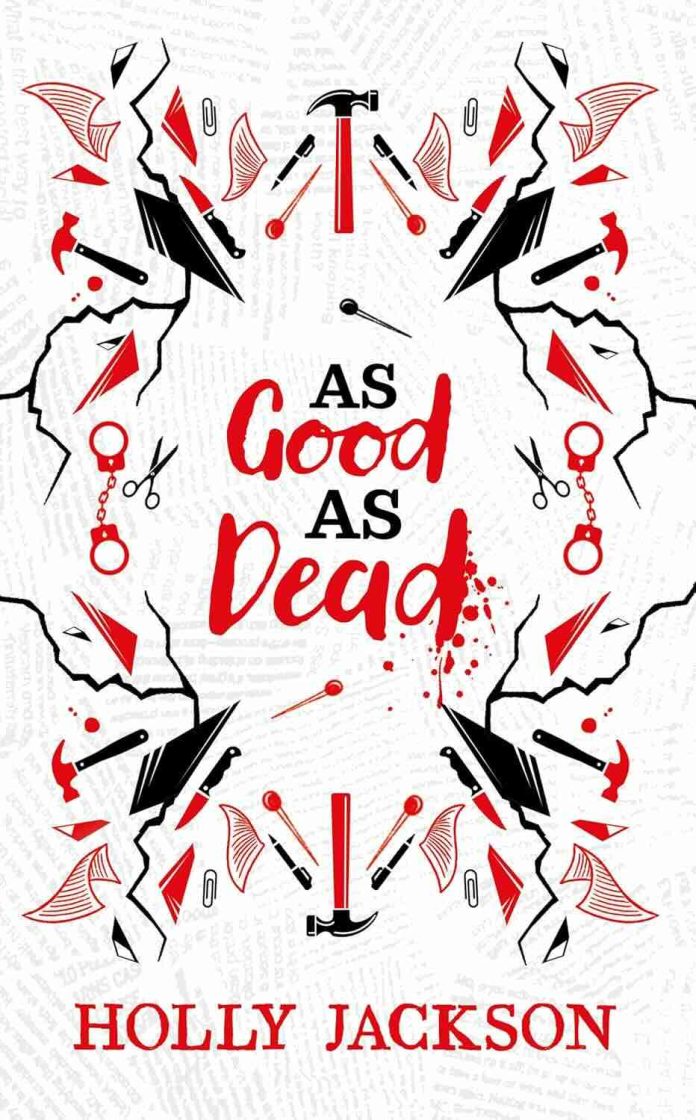
Holly Jackson’s third and final installment in the beloved A Good Girl’s Guide to Murder series delivers a conclusion that will leave readers questioning everything they thought they knew about justice, morality, and the price of truth. As Good As Dead is not merely a mystery novel—it’s a psychological descent into trauma that transforms Pip Fitz-Amobi from the determined amateur detective we’ve come to love into something far more complex and troubling.
After the events of A Good Girl’s Guide to Murder (2019) and Good Girl, Bad Blood (2020), readers might have expected another clever investigation with Pip’s characteristic wit and determination. Instead, Jackson delivers something far more ambitious and infinitely darker. This isn’t the Pip we knew—this is a young woman wrestling with PTSD, addiction, and the weight of having taken a life, even if it was in self-defense.
A Protagonist Transformed: Pip’s Psychological Journey
The brilliance of As Good As Dead lies in Jackson’s unflinching portrayal of trauma’s aftermath. Pip isn’t the plucky teen detective anymore; she’s someone who “felt like her skin was recoiling from it, unwrapping from her flesh, begging her to turn back.” Jackson’s prose becomes more fragmented and desperate as Pip’s mental state deteriorates, creating an immersive experience that puts readers directly into the mind of someone struggling with severe trauma.
The book opens with Pip dealing with online death threats following her viral true-crime podcast, but the real terror begins when an anonymous stalker starts leaving dead pigeons and chalk figures around her home. These aren’t your typical YA mystery clues—they’re deeply unsettling psychological warfare tactics that Jackson uses to explore how victims can become perpetrators when pushed beyond their breaking point.
Jackson’s decision to give Pip a substance abuse problem is particularly bold for YA fiction. Pip’s reliance on stolen Xanax to cope with her trauma adds layers of moral complexity that most authors in this genre wouldn’t dare touch. “She did need them, needed them as much as she needed sleep. This was her strategy. And at the same time, she knew. She knew he was right, and she was making everything worse.”
The DT Killer Case: A Masterclass in Misdirection
The central mystery revolving around the DT (Duct Tape) Killer showcases Jackson’s evolution as a mystery writer. Unlike the previous books where Pip methodically gathered evidence and interviewed suspects, this investigation becomes deeply personal when Pip realizes she’s meant to be the sixth victim. The revelation that Jason Bell—Andie Bell’s father from the first book—is the real DT Killer while innocent Billy Karras sits in prison creates a stunning full-circle moment that connects all three books in the series.
Jackson’s research into serial killer psychology shines through in her portrayal of Jason Bell. The detail that he stopped killing when Andie was born, only to resume when she reached the age where she resembled her mother, adds a chilling layer of psychological realism. The discovery that he kept trophies from his victims, including giving Andie’s mother Dawn a necklace that belonged to one of his victims, demonstrates Jackson’s ability to weave disturbing details that feel authentically researched rather than sensationalized.
The connection between the DT Killer case and Jason’s company, Green Scene Ltd, provides the kind of logical investigation thread that made the first two books so compelling. Jackson doesn’t rely on coincidence; every piece of evidence feels earned and interconnected.
The Moral Complexity That Defines the Series
What sets As Good As Dead apart from typical YA thrillers is Jackson’s willingness to explore the grey areas of justice. When the police refuse to believe Pip about her stalker—echoing the systemic failures that ran through the previous books—she makes a choice that fundamentally changes her character and challenges readers’ expectations.
Pip’s decision to return to Jason Bell with a hammer, knowing she intends to kill him, represents the book’s most controversial and compelling element. Jackson doesn’t present this as heroic or justified; instead, she shows the psychological toll of becoming someone who chooses violence. “She went back. And maybe that other Pip in that other life would say she’d made the right choice… But this Pip could also say hers was the right choice. Dead was the only way she could be sure the DT Killer would never hurt anyone again.”
The parallel story involving Max Hastings—Pip’s rapist from the second book—adds another layer to the theme of justice versus revenge. Jackson’s decision to have Pip frame Max for Jason’s murder while simultaneously ensuring both predators are removed from society creates a morally complex scenario that defies easy categorization.
Writing Style and Narrative Technique
Jackson’s prose in As Good As Dead marks a significant evolution from her earlier work. While A Good Girl’s Guide to Murder relied heavily on interview transcripts and evidence logs, this final book adopts a more stream-of-consciousness approach that mirrors Pip’s deteriorating mental state. The writing becomes increasingly fragmented and desperate, using techniques like:
- Repetitive phrases that echo Pip’s obsessive thoughts
- Fragmented sentences during high-stress scenes
- Integration of Pip’s internal voice with external narration
- Time jumps that reflect trauma’s impact on memory
The use of multimedia elements—emails, text messages, and podcast transcripts—feels organic rather than gimmicky, serving to build tension and provide exposition without slowing the narrative pace.
Problematic Elements and Valid Criticisms
Despite its strengths, As Good As Dead is not without significant flaws. The book’s treatment of violence, particularly Pip’s transformation into someone capable of premeditated murder, may feel too extreme for readers who fell in love with the character’s moral compass in the first two books. Jackson doesn’t provide easy answers about whether Pip’s actions are justified, which may frustrate readers seeking clear moral guidance.
The pacing, particularly in the middle section where Pip investigates the DT Killer case, occasionally feels rushed compared to the methodical investigations of the previous books. Some of the connections between Jason Bell and the serial killings rely on convenient timing that strains credibility.
Additionally, the book’s portrayal of PTSD and medication abuse, while generally well-researched, occasionally veers into territory that might be triggering for readers dealing with similar issues. Jackson’s depiction is realistic but unforgiving, showing how trauma can fundamentally change someone in ways that aren’t easily healed.
Series Context and Character Development
Understanding As Good As Dead requires familiarity with the entire series. Newcomers to Jackson’s work should absolutely start with A Good Girl’s Guide to Murder to fully appreciate the character development and recurring themes. The book also benefits from reading the short story Kill Joy (2021), which provides additional context for Pip’s relationship with the other characters.
The evolution from the first book’s school project investigation to this final book’s psychological thriller represents one of the most dramatic character arcs in recent YA fiction. Jackson deserves credit for refusing to keep Pip static; instead, she shows how repeated trauma and the burden of seeking justice in an unjust system can fundamentally change a person.
Themes and Social Commentary
As Good As Dead serves as Jackson’s most direct commentary on systemic failures in the justice system. Pip’s experience of being disbelieved by the police despite providing evidence echoes real-world experiences of victims whose reports are dismissed or minimized. The book’s exploration of how women are often forced to protect themselves when institutions fail them feels particularly relevant.
The theme of moral ambiguity runs throughout the series, but reaches its peak here. Jackson questions whether there’s a meaningful difference between justice and revenge when the legal system fails to protect victims. Pip’s transformation from truth-seeker to vigilante reflects broader questions about what happens when good people are pushed too far by an indifferent system.
Comparison to Similar Works
As Good As Dead shares DNA with works like Gillian Flynn’s Sharp Objects in its unflinching portrayal of female rage and trauma. However, Jackson’s work stands apart by grounding its psychological elements in realistic detective work and social commentary. The book also echoes themes found in Laurie Halse Anderson’s Speak regarding trauma’s long-term impact, though Jackson’s treatment is notably darker.
Readers who enjoyed Tana French’s Dublin Murder Squad series will appreciate Jackson’s attention to psychological realism and the way past cases inform present investigations. However, Jackson’s work maintains the accessibility and pacing of YA fiction while dealing with decidedly adult themes.
Recommended Reading for Series Fans
If you enjoyed this series, consider:
- The Cheerleaders by Kara Thomas – Another YA mystery exploring small-town secrets and systemic failures
- Sadie by Courtney Summers – A dark examination of justice and revenge following a young woman seeking her sister’s killer
- One of Us Is Lying by Karen M. McManus – Though lighter in tone, offers similar investigative elements and character development
- The Haunting of Hill House by Shirley Jackson – For readers interested in psychological horror and unreliable narrators
- In the Woods by Tana French – Adult crime fiction with similar attention to character psychology and the lasting impact of violence
Final Assessment
As Good As Dead succeeds brilliantly as a psychological thriller while occasionally struggling under the weight of its own ambitions. Jackson’s willingness to take her beloved character into genuinely dark territory demonstrates remarkable courage as a writer, even if the execution doesn’t always match the concept’s boldness.
The book works best when read as a meditation on trauma and justice rather than a traditional mystery. Readers expecting another cozy investigation will be disappointed, but those open to a more challenging and morally complex narrative will find much to admire. Jackson’s prose is at its strongest when exploring Pip’s psychological state, creating moments of genuine unease and empathy.
While the book’s violence and moral ambiguity may prove divisive among the series’ fanbase, there’s no denying that Jackson has created something unique in the YA mystery space. As Good As Dead refuses to provide easy answers or comfortable resolutions, instead forcing readers to grapple with questions about justice, revenge, and the price of seeking truth in an unjust world.
This is not a perfect book, but it’s an important one that elevates the entire series from entertaining mystery novels to genuine literary commentary on contemporary social issues. Jackson has created a finale that honors the complexity of her characters while challenging readers to examine their own assumptions about justice and morality.
As Good As Dead proves that YA fiction can tackle difficult subjects without losing its emotional impact or accessibility. It’s a haunting conclusion to a series that began with a school project and ends with questions that will linger long after the final page.







