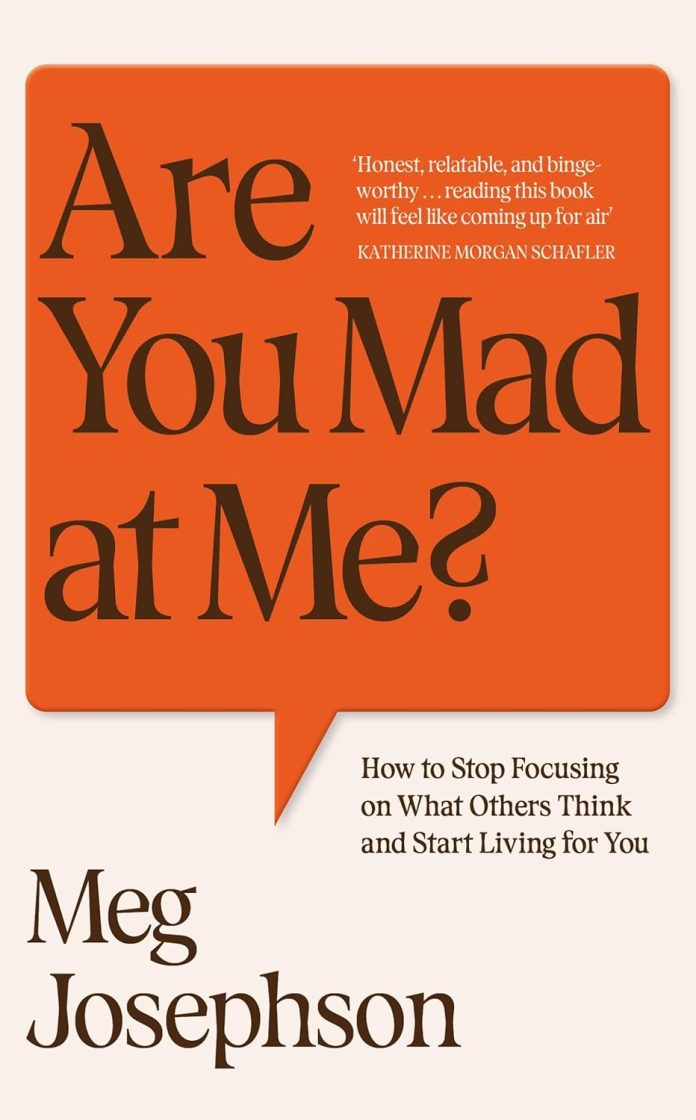
In a world where people-pleasing has become so normalized it’s almost considered a virtue, psychotherapist Meg Josephson delivers a groundbreaking exploration of what lies beneath our chronic need for approval. “Are You Mad at Me?” isn’t just another self-help book about setting boundaries—it’s a profound examination of survival mechanisms that shape our entire existence, often without our conscious awareness.
Understanding the Hidden Survival Mechanism
Josephson introduces readers to the concept of “fawning,” the least discussed of the four trauma responses (fight, flight, freeze, and fawn). Drawing from Pete Walker’s pioneering work on complex PTSD, she illuminates how fawning manifests as an unconscious strategy to gain safety through appeasement. What makes this book particularly compelling is Josephson’s ability to connect childhood survival strategies to adult relationship patterns with both clinical precision and deeply personal vulnerability.
The author’s own journey from chronic people-pleaser to self-aware therapist provides the narrative backbone for this exploration. Her candid revelations about growing up in a household marked by emotional volatility and her father’s unpredictable mood swings create an intimate foundation for understanding how fawning develops. Josephson doesn’t position herself as someone who has “conquered” these patterns but rather as someone who has learned to recognize and work with them—a refreshingly honest approach that builds immediate trust with readers.
The Six Faces of Fawning
One of the greatest strengths of “Are You Mad at Me?” lies in Josephson’s detailed exploration of different fawning archetypes. Through compelling client stories, she presents six distinct roles people adopt:
The Peacekeeper emerges from high-conflict households where maintaining harmony becomes a survival necessity. These individuals learn that their emotional expression threatens family stability, leading to chronic self-suppression and an inability to tolerate even minor disagreements.
The Performer develops in environments of constant tension, using humor and relentless positivity to regulate others’ emotions. Josephson’s portrayal of clients who feel perpetually “onstage” resonates deeply, particularly her insight that performers often struggle with authentic relationships because they’ve lost touch with who they are beneath the entertainment.
The Caretaker represents perhaps the most complex pattern, arising from parentification—when children assume adult responsibilities prematurely. Josephson’s analysis of how caretakers develop harsh inner critics and struggle with hyperindependence provides crucial understanding for readers who pride themselves on self-sufficiency while secretly yearning for support.
The remaining archetypes—the Lone Wolf, Perfectionist, and Chameleon—each receive equally nuanced treatment, with Josephson skillfully weaving together psychological theory, personal narrative, and practical application.
Mindfulness Meets Trauma-Informed Therapy
Josephson’s integration of Eastern mindfulness practices with Western trauma therapy creates a uniquely accessible healing framework. Her NICER technique (Notice, Invite, Curiosity, Embrace, Return) offers readers a concrete tool for navigating overwhelming emotions without requiring years of meditation experience. This approach particularly shines in her chapter on emotions, where she dismantles the myth that mindfulness equals constant calm.
The author’s background as a certified meditation teacher becomes evident in her gentle guidance around sitting with discomfort. She avoids the spiritual bypassing common in many self-help books, instead acknowledging that healing requires facing pain rather than transcending it. Her emphasis on “dipping our toes in discomfort” rather than diving into overwhelming emotional territory demonstrates sophisticated understanding of trauma recovery.
The Body as Battleground and Sanctuary
Josephson’s exploration of how fawning affects physical health provides some of the book’s most revelatory moments. Her personal account of chronic acid reflux that resolved only after emotional healing offers a compelling example of the mind-body connection. The chapter dedicated to physical manifestations of chronic people-pleasing—from autoimmune conditions to exhaustion—brings necessary attention to how survival mode impacts our entire system.
However, this section occasionally veers toward oversimplification. While the connection between emotional suppression and physical symptoms is well-established, Josephson sometimes presents correlations as causations without sufficient nuance. Her discussion of intergenerational trauma, while fascinating, could benefit from more careful distinction between established research and emerging theories.
Reframing Conflict and Connection
Perhaps the book’s most transformative insight concerns conflict avoidance. Josephson argues convincingly that our terror of disagreement often stems from witnessing unresolved ruptures in childhood. Her framework for understanding repair—acknowledging what happened, taking responsibility, and sharing lessons learned—offers a roadmap for healthier relationships.
The distinction she draws between “avoiding conflict” (fear-based) and “avoiding drama” (healthy) provides crucial clarity for readers struggling to determine when engagement is worthwhile. Her exploration of “secondhand fawning”—attempting to control others’ behavior to prevent imagined consequences—reveals sophisticated understanding of how trauma responses can extend beyond direct interactions.
Practical Wisdom with Gentle Accountability
Throughout “Are You Mad at Me?”, Josephson maintains remarkable balance between compassion and accountability. She validates readers’ experiences while gently challenging the stories we tell ourselves about our limitations. Her approach to boundary-setting reframes these conversations as “bids for connection” rather than defensive walls, offering a more relational understanding of self-advocacy.
The author’s discussion of “leaning back”—releasing the urge to volunteer, over-function, or prove ourselves—provides particularly practical guidance. Her insight that for chronic fawners, “leaning back” often means simply matching others’ energy levels rather than dramatically withdrawing offers realistic recalibration rather than extreme behavioral shifts.
Areas for Deeper Exploration
While Josephson excels at identifying patterns and providing tools, “Are You Mad at Me?” occasionally lacks deeper exploration of why certain approaches work. Her integration of Compassion-Focused Therapy concepts could be expanded, particularly around working with inner critics. Additionally, her treatment of cultural and systemic factors, while present, could be more thoroughly woven throughout rather than contained in specific sections.
The book’s focus on women’s experiences, while valuable, sometimes feels limiting. Male readers might struggle to see themselves in many examples, despite fawning affecting all genders. Similarly, her exploration of how different cultural backgrounds shape people-pleasing patterns could be more comprehensive.
Clinical Expertise Meets Personal Vulnerability
Josephson’s credentials as both a licensed psychotherapist and someone who has navigated these patterns personally create unique authority. Her ability to translate complex therapeutic concepts into accessible language without dumbing them down demonstrates mastery of her material. The book avoids both overly clinical language and new-age platitudes, striking a tone that feels professional yet warmly human.
Recommended Companions and Similar Works
Readers drawn to Josephson’s approach in “Are You Mad at Me?” would benefit from exploring Pete Walker’s “Complex PTSD: From Surviving to Thriving” for deeper understanding of fawn responses, and Lindsay Gibson’s “Adult Children of Emotionally Immature Parents” for additional perspective on childhood emotional neglect. Bessel van der Kolk’s “The Body Keeps the Score” provides complementary understanding of trauma’s physical manifestations, while Kristin Neff’s work on self-compassion offers additional tools for the inner critic work Josephson begins.
For those interested in the mindfulness aspects, Tara Brach’s “Radical Acceptance” shares Josephson’s gentle approach to sitting with difficulty, while Richard Schwartz’s “No Bad Parts” expands on the Internal Family Systems concepts the author briefly touches upon.
A Necessary Voice in Mental Health Literature
“Are You Mad at Me?” fills a crucial gap in popular psychology literature by naming and addressing patterns that millions experience but rarely understand. Josephson’s combination of clinical expertise, personal vulnerability, and practical tools creates a resource that feels both authoritative and deeply human. While the book could benefit from expanded exploration in certain areas, it succeeds brilliantly in its primary mission: helping readers understand that their people-pleasing isn’t a character flaw but a survival strategy that can be gently transformed.
“Are You Mad at Me?” isn’t a book about becoming someone new—it’s about returning to who you’ve always been beneath the protective mechanisms. For anyone who has ever felt the exhausting weight of constant approval-seeking, Josephson offers both explanation and hope, wrapped in the kind of compassionate understanding that makes healing possible.







