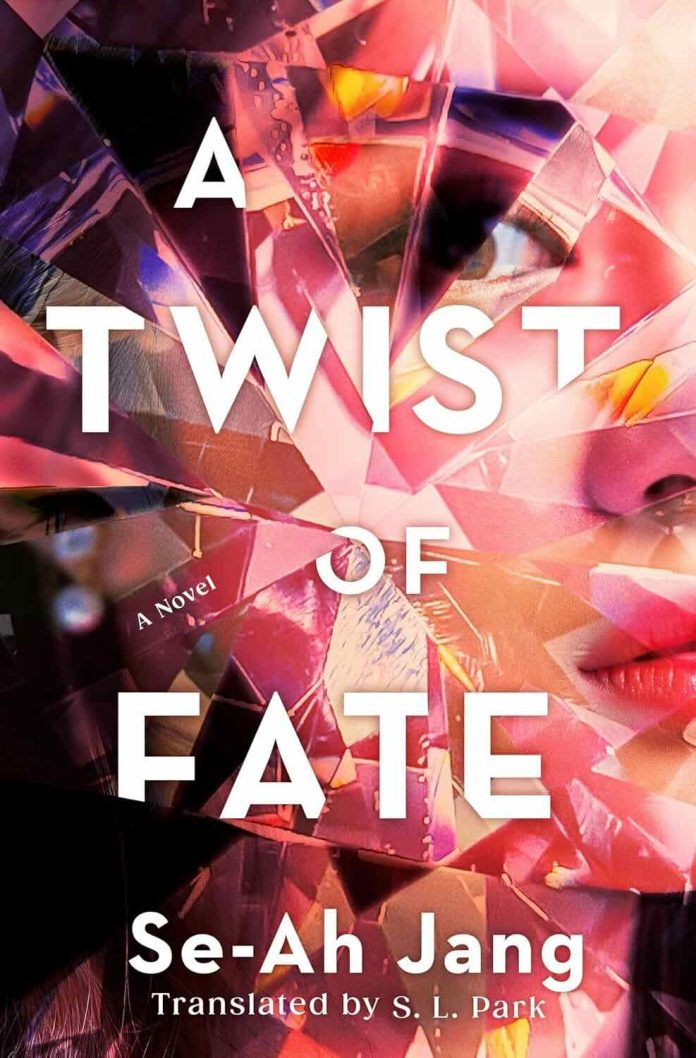
Se-ah Jang’s debut novel, A Twist of Fate, emerges from the shadow of Korean noir with the force of a locomotive barreling through darkened tunnels. This psychological thriller, translated with remarkable precision by S. L. Park, presents readers with a disturbing meditation on identity, desperation, and the lengths people will go to escape their circumstances. In a genre increasingly dominated by formulaic twists, Jang crafts something genuinely unsettling—a story that lingers in the mind like the taste of bitter medicine.
The novel opens with Jae-young, a woman fleeing a life of abuse and violence, boarding a train to Seoul after leaving her boyfriend dead on her kitchen floor. Her desperate flight from consequences takes an unexpected turn when she encounters Hyojin, a young mother traveling with her infant son. When Hyojin mysteriously disappears, leaving only her child and a cryptic note, Jae-young finds herself thrust into a web of deception that will ultimately consume everyone involved.
The Architecture of Deception
Jang demonstrates remarkable skill in constructing a narrative that operates on multiple levels of unreliability. The story unfolds in two distinct parts, with the first following Jae-young’s perspective as she assumes Hyojin’s identity and infiltrates a wealthy family’s mansion. The gothic mansion itself becomes a character—a sprawling, luxurious prison where secrets fester beneath polished surfaces. The author’s use of this classic gothic setting feels both familiar and fresh, grounding the psychological horror in a tangible environment that reflects the moral decay of its inhabitants.
The dual narrative structure proves particularly effective when the second part shifts to reveal Hyojin’s perspective, systematically dismantling everything readers thought they understood about the first half. This technique could have felt gimmicky in less capable hands, but Jang uses it to explore the theme of identity with surgical precision. Both women are running from their pasts, and both find themselves trapped in roles they never chose—yet their responses to these circumstances reveal fundamentally different moral compasses.
Characters Carved from Desperation
The strength of A Twist of Fate lies not in its plot machinations, though they are expertly handled, but in its unflinching portrayal of characters pushed beyond their breaking points. Jae-young emerges as a particularly complex protagonist—neither purely sympathetic nor entirely villainous. Her desperation feels authentic, born from years of abuse and economic marginalization. When she makes the split-second decision to assume Hyojin’s identity, readers understand the logic even as they question the morality.
Soohyun, the younger son of the wealthy family, represents perhaps Jang’s most ambitious character creation. The author herself admits to feeling conflicted about him, and this ambivalence translates into a portrayal that defies easy categorization. He is simultaneously victim and perpetrator, damaged by family trauma yet responsible for perpetuating cycles of manipulation and violence. His obsessive attachment to his older brother Hyun-wook reveals the dark underbelly of familial loyalty, twisted into something predatory and destructive.
The supporting characters, particularly the family patriarch and the household staff, feel lived-in and authentic. Jang avoids the trap of making her wealthy characters cartoonishly evil; instead, she presents a family corroded by secrets, where love and control have become indistinguishable.
Where Desire Becomes Destruction
Perhaps the most compelling aspect of the novel is its exploration of desire as a corrupting force. As Jang notes in her author’s note, this is fundamentally “a novel about desire”—everyone wants something beyond their reach and destroys others in pursuit of it. This theme elevates the work beyond a simple thriller into something approaching social commentary.
The economic disparity between characters serves as more than background detail; it drives the central conflicts. Jae-young’s desperate grab for a better life, the family’s paranoid protection of their wealth, and Hyojin’s calculated revenge all stem from the brutal inequalities that define contemporary Korean society. Jang doesn’t belabor these points, allowing them to emerge naturally from character interactions and plot developments.
Technical Craftsmanship and Translation
S. L. Park’s translation deserves particular praise for maintaining the novel’s distinctive voice while making it accessible to English-speaking readers. The prose strikes an effective balance between literary sophistication and genre accessibility. Park successfully preserves the cultural specificity of the Korean context while ensuring that emotional beats land effectively for international audiences.
The pacing is expertly controlled, with tension building methodically throughout the first half before exploding in the revelatory second section. Jang demonstrates an understanding of when to withhold information and when to deploy revelations for maximum impact. The final act, set primarily in the mansion’s basement, transforms the gothic atmosphere into something approaching genuine horror.
Critical Considerations
While A Twist of Fate succeeds as both thriller and character study, it occasionally stumbles under the weight of its ambitions. Some plot developments in the final third feel slightly rushed, particularly the resolution involving Soohyun’s ultimate fate. The novel’s exploration of trauma and its intergenerational effects sometimes threatens to overwhelm the thriller elements, though this may be intentional on Jang’s part.
The book’s moral universe is deliberately murky, with nearly every character bearing responsibility for tragedy. While this complexity enriches the narrative, it may frustrate readers seeking clearer moral delineations. Jang’s insistence that “no one’s entirely innocent or evil” creates compelling psychological portraits but occasionally makes it difficult to emotionally invest in any particular outcome.
Literary Context and Comparisons
A Twist of Fate fits comfortably within the tradition of Korean thriller fiction while drawing clear influences from gothic literature and psychological suspense. Readers familiar with works by Gillian Flynn or Tana French will recognize the commitment to character psychology over plot mechanics. The novel also echoes themes found in films by directors like Bong Joon-ho and Park Chan-wook, particularly in its examination of class conflict and family dysfunction.
As Jang’s debut novel under this pseudonym—she has previously published web novels and styling books under other names—it represents an impressive entry into literary thriller territory. The book’s selection for film adaptation by Kyobo, South Korea’s largest bookstore chain, suggests industry recognition of its commercial and artistic potential.
Final Verdict
A Twist of Fate announces Se-ah Jang as a significant new voice in international thriller fiction. While the novel occasionally strains under its thematic ambitions, it succeeds brilliantly as both page-turning entertainment and serious examination of contemporary social issues. The gothic atmosphere, complex characterizations, and moral ambiguity create a reading experience that challenges as much as it entertains.
This is not a book that offers easy answers or comfortable resolutions. Instead, it forces readers to confront uncomfortable questions about survival, morality, and the prices people pay for reinvention. For readers willing to embrace its darkness, A Twist of Fate offers rewards that extend far beyond its final page.
Recommended for Readers Who Enjoyed
- Gone Girl by Gillian Flynn – for its unreliable narrators and marital deception
- The Silent Companions by Laura Purcell – for gothic atmosphere and family secrets
- In the Woods by Tana French – for psychological depth and moral ambiguity
- Parasite (film) by Bong Joon-ho – for its exploration of class conflict in Korean society
- The Handmaiden by Park Chan-wook (film) – for complex plotting and shifting perspectives
- Mexican Gothic by Silvia Moreno-Garcia – for its blend of gothic elements with social commentary
A Twist of Fate stands as a remarkable debut that positions Se-ah Jang as an author to watch in the evolving landscape of international thriller fiction.







