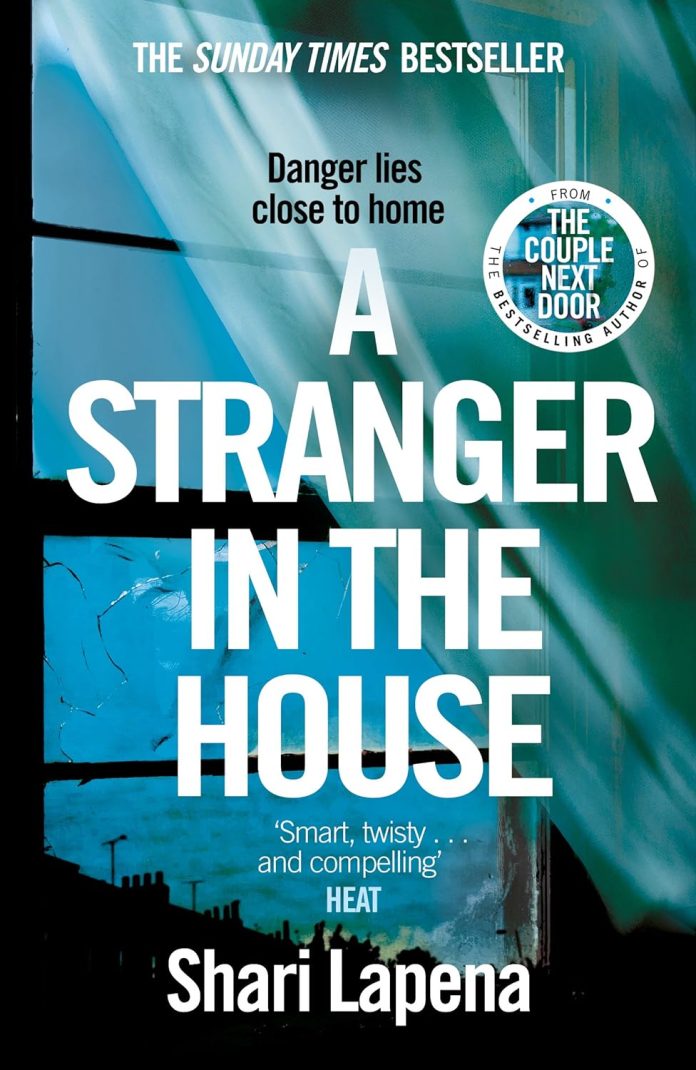
Shari Lapena’s second psychological thriller, A Stranger in the House, demonstrates why the author has become a formidable voice in domestic suspense. Following her breakout debut The Couple Next Door, Lapena crafts a story where the most dangerous stranger might be the person sleeping next to you every night. This is a novel that understands the fragile nature of trust and the devastating power of selective memory.
The premise hooks you immediately: Karen Krupp crashes her car after speeding through the worst part of town, leaving behind her purse, phone, and any memory of why she left home in such a desperate rush. What begins as a simple case of amnesia following a car accident gradually peels back layers of deception, revealing a web of lies that threatens to destroy not just Karen’s marriage, but her entire carefully constructed life.
Plot Dynamics: A Web of Deception Skillfully Unwoven
Lapena structures her narrative with the precision of a master clockmaker, each revelation perfectly timed to maximum effect. The story operates on multiple levels of mystery—the immediate question of Karen’s missing hours, the broader mystery of her true identity, and the underlying tension of a murder investigation that slowly engulfs the suburban tranquility of Dogwood Drive.
The pacing is particularly noteworthy. Lapena resists the temptation to rush toward revelations, instead allowing tension to build through seemingly mundane domestic moments. A glass left on a counter becomes sinister. A perfume bottle with its stopper removed transforms into evidence of invasion. These small details accumulate into an atmosphere of paranoia that makes every interaction feel loaded with potential threat.
Detective Rasbach emerges as more than just a procedural device; he’s a relentless force who sees through carefully constructed facades. His investigation method—patient, methodical, and psychologically astute—provides the perfect counterpoint to Karen’s increasingly desperate attempts to maintain her innocence. The cat-and-mouse game between detective and suspect creates some of the novel’s most compelling moments.
Character Study: The Psychology of Deception
Karen Krupp stands as one of the more complex protagonists in recent domestic thrillers. Lapena skillfully walks the tightrope of making her simultaneously sympathetic and suspect. Her apparent vulnerability following the accident contrasts sharply with glimpses of steel beneath the surface. The amnesia plot device, which could easily feel contrived, becomes psychologically credible through Lapena’s careful attention to the trauma of confronting one’s past.
Tom’s character arc proves equally fascinating as he grapples with discovering that his wife is essentially a stranger. His journey from devoted husband to reluctant detective in his own marriage provides emotional weight to the procedural elements. The strain on their relationship feels authentic—love tested against the reality of fundamental deception.
Perhaps most intriguingly, Brigid Cruikshank represents the dangers of obsession masked as friendship. Her character serves multiple functions: red herring, genuine threat, and mirror reflecting Karen’s own capacity for manipulation. The revelation of her voyeuristic behavior and her affair with Tom adds layers of complexity that prevent easy categorization of victim and villain.
Technical Mastery: Structure and Style
Lapena demonstrates considerable skill in managing multiple narrative threads without losing focus. The alternating perspectives allow readers to piece together information while maintaining uncertainty about ultimate truth. The author’s background as both lawyer and English teacher shows in her precise prose and logical plot construction.
The suburban setting becomes almost a character itself—the kind of neighborhood where secrets fester behind perfectly manicured facades. Lapena captures the claustrophobic nature of communities where everyone watches everyone else, yet no one truly knows their neighbors. The contrast between the public face of domestic happiness and private desperation drives much of the novel’s psychological tension.
Her use of amnesia as a plot device deserves particular praise. Rather than employing it as a simple mystery box, Lapena explores the psychological implications of lost memory—how it affects relationships, self-perception, and the nature of truth itself. The gradual return of Karen’s memories feels organic rather than mechanically convenient.
Strengths That Elevate the Genre
The novel’s greatest strength lies in its refusal to provide easy answers or clear-cut villains. Even when major revelations occur, Lapena maintains ambiguity about character motivations and moral culpability. This complexity elevates the work beyond simple whodunit territory into more sophisticated psychological exploration.
The domestic setting grounds the thriller elements in recognizable reality. The fears explored—that our partners might be strangers, that our safe neighborhoods harbor danger, that our own memories might betray us—tap into universal anxieties that resonate long after the final page.
Lapena also excels at misdirection without resorting to cheap tricks. Clues are fairly planted, and the final revelations feel both surprising and inevitable when viewed in retrospect. This balance between surprise and logical consistency marks the work of a skilled thriller writer.
Areas Where the Foundation Shows Cracks
Despite its considerable strengths, “A Stranger in the House” occasionally suffers from the weight of its own complexity. The number of secrets and revelations sometimes feels excessive, threatening to tip from intricate plotting into melodrama. Certain character motivations, particularly in the final act, strain credibility even within the heightened reality of psychological thriller.
The resolution, while satisfying on a plot level, leaves some emotional threads unexplored. The full psychological impact of Karen’s deceptions on Tom receives less attention than it deserves, particularly given the careful groundwork laid for their relationship dynamics.
Some secondary characters feel more functional than fully realized, existing primarily to advance plot rather than enrich the emotional landscape. This is particularly noticeable with Detective Jennings, who serves mainly as Rasbach’s sounding board rather than developing as an independent character.
Comparison to Contemporary Works
A Stranger in the House fits comfortably within the domestic thriller boom that includes works like Gone Girl and The Girl on the Train, but Lapena brings her own sensibility to familiar territory. Her approach feels less cynical than Gillian Flynn’s work while maintaining psychological complexity. The suburban setting and focus on marriage under pressure echo Liane Moriarty’s work, though Lapena’s tone remains consistently darker.
Compared to her debut The Couple Next Door, this second novel shows growth in character development and thematic complexity. The plotting feels more assured, and the psychological elements more deeply integrated into the mystery structure.
Final Verdict: A Compelling Addition to the Psychological Thriller Canon
A Stranger in the House succeeds as both an engaging page-turner and a thoughtful exploration of identity, memory, and trust. Lapena has crafted a novel that works on multiple levels—as procedural mystery, domestic drama, and psychological study. While it occasionally buckles under the weight of its ambitions, the core strength of the storytelling carries it through.
“A Stranger in the House” is a book that understands its genre conventions while finding fresh angles within familiar territory. It rewards careful readers with fair clues while maintaining enough ambiguity to spark post-reading discussions about truth, justice, and the nature of identity itself.
For readers who appreciate psychological complexity in their thrillers, A Stranger in the House delivers satisfaction without sacrificing intelligence. It confirms Lapena’s position as a significant voice in contemporary domestic suspense and promises even stronger work to come.
If You Enjoyed This Book, Try These Similar Titles
- The Couple Next Door by Shari Lapena – Lapena’s debut thriller
- Big Little Lies by Liane Moriarty – Suburban secrets and complex relationships
- The Woman in the Window by A.J. Finn – Unreliable narrators and psychological suspense
- In a Dark, Dark Wood by Ruth Ware – Friendship, secrets, and memory loss
- She’s Not Sorry by Mary Kubica – Identity, deception, and domestic thriller elements
- Everything I Never Told You by Celeste Ng – Family secrets and hidden truths







