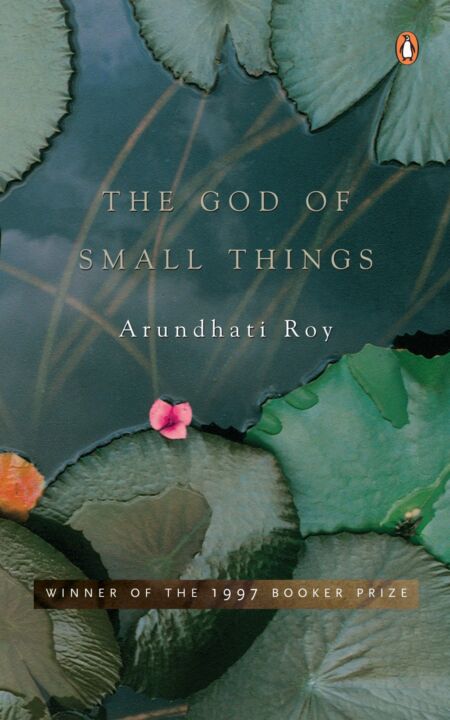
Book Summary: The God Of Small Things
Booker Prize winner ‘God of Small Things’ is a story about two children, Esthappen and Rahel. This was Arundhati Roy’s debut novel, in which she throws light on certain facets of life in Kerala, highlighting issues of caste system, Keralite Syrian Christian lifestyle and communism.
Esthappen and Rahel at a very young age come to learn about horrifying truth of life, as they are being tortured and blamed for every misfortune. Their less than perfect life gets infected by unexpected events. Though the novel begins with Esthappen and Rahel, most of its part holds wider stories of the political events shaping the state, their parents and relatives.
The darker undertones in the life of twins get more evident, as secrets, bitterness and lies destroy their world. The heat-aching story of two innocent young children will surely keep you hooked till the end and leave you searching for more.
Book Review: The God Of Small Things
It is 1969 and India although having achieved independence twenty years earlier is still mired in its caste system. In this light, Arundhati Roy brings us her masterful first novel The God of Small Things which won the Man Booker Prize in 1997. A powerful novel filled with luscious prose and a heart rending story, Roy reveals to her readers an India hanging onto to the traditions of the past with a slight glimpse of her future.
“That’s what careless words do. They make people love you a little less.”
Ammukutty Kochamma, the daughter of a respected entomologist and classical violin player, desired an education rather than an arranged marriage. Her family belonged to the Touchable caste and, while tolerable of others, desired that their daughter married someone from a family like theirs. Ammu met a Bengali and married for love. He turned out to be an alcoholic and they divorced within two years, although not before giving birth to fraternal twins Esthappen (Estha) a boy and Rahel a girl. Ammu retreats with her children to the family estate, doomed to live a miserable life as an outcast.
“And the air was full of Thoughts and Things to Say. But at times like these, only the Small Things are ever said. Big Things lurk unsaid inside.”
Even though Ammu raises Estha and Rahel to be brilliant children, the rest of the family resents their presence at the home in Ayemenem. Her father has died and her mother, although a presence, is blind. The new head of the family is her brother Chacko, a former Rhodes Scholar and current member of the communist party. Although he attempts to be a father to the twins, his pseudo-love pines for his biological daughter Sophie Mol who lives in England. While Chacko tolerates the family, Ammu’s aunt Baby Kochamma spews nothing but venom at Ammu and her children for the rest of her life. Failed at both becoming a nun and winning over her true love in life, Baby Kochamma desires nothing more than to make all those around her miserable, but especially her divorced niece Ammu and two bastard children.
“This was the trouble with families. Like invidious doctors, they knew just where it hurt.”
Arundhati Roy merited the Booker prize for her story alone as it featured forbidden love within the caste system and memorable, multi-layered characters. Yet, what most likely won Arundhati Roy this award was her masterful prose, which, when combined with her tale, results in an instant classic. Switching from current time to flashbacks, speaking backwards in twin language, and detailed descriptions of Indian life are only a few of the facets contributing to this tale. Adding to the prose the tragic tale of twins separated, a woman denied love because he belongs to another untouchable caste, and other characters pining for a life that might have been, Roy has woven together a true gem.







