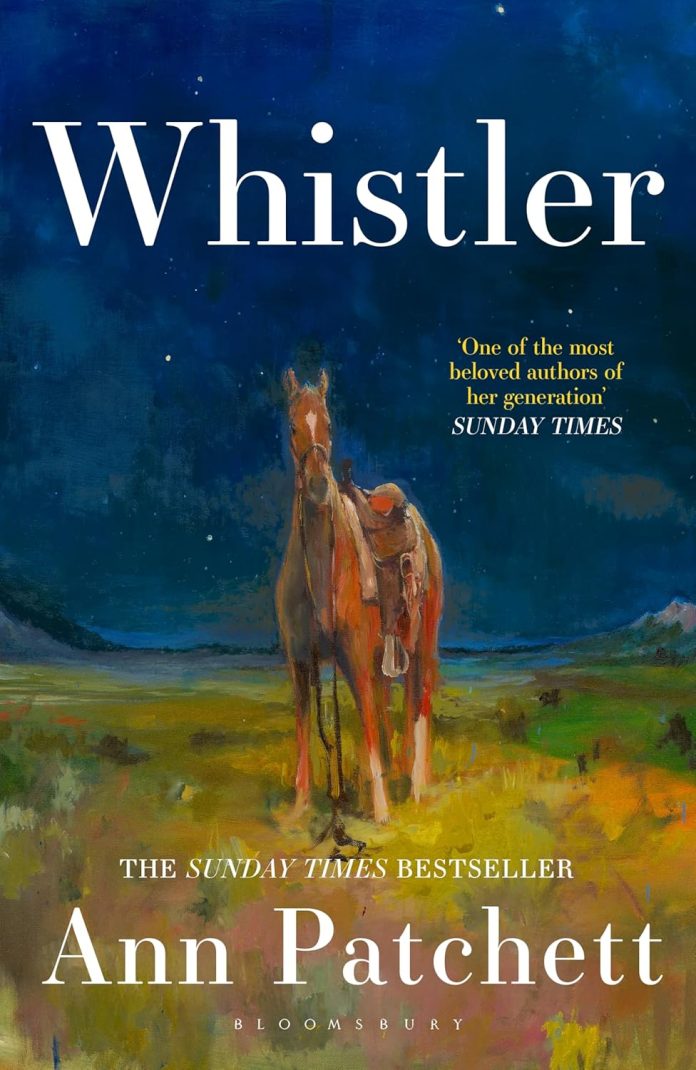
There are stories that whisper to us about the threads connecting our past selves to who we’ve become, and Whistler by Ann Patchett speaks in precisely this hushed, intimate register. In her latest novel, Patchett excavates the archaeology of a single childhood year—one that seemed inconsequential at the time yet carved channels deep enough to shape an entire life. This is a book about the bravery of being nine years old and the courage required to reckon with that bravery decades later.
The Chance Encounter That Changes Everything
The novel opens with Daphne Fuller, a fifty-three-year-old English teacher, visiting the Metropolitan Museum of Art with her husband Jonathan. When a white-haired stranger follows them through the galleries, what begins as mildly uncomfortable vigilance transforms into something far more profound: Eddie Triplett, Daphne’s stepfather for barely more than a year when she was nine, has found her again after forty-four years of silence. Whistler by Ann Patchett excavates what happens when two people who shared a defining moment are given an unexpected second chapter together.
Patchett structures her narrative with remarkable economy, alternating between the present reunion and the buried past. The accident that bound Eddie and Daphne forever happened during a winter evening when Eddie picked her up from school while her mother stayed at the hospital with Daphne’s younger sister. What should have been a simple drive to look at stars becomes a night trapped in a snow-filled ravine, with Eddie’s ankle pinned beneath the emergency brake and nine-year-old Daphne eventually climbing out the window to trudge through the snow and find help.
The Story Within the Story
The novel’s titular horse emerges not from the present-day narrative but from the story Eddie tells young Daphne as they wait in the freezing car. It’s the true account of Mary Carter, a Wyoming rancher whose horse Whistler came back to rescue her after she was thrown and badly injured in a remote pasture. Whistler by Ann Patchett uses this nested narrative to profound effect—the story of animal loyalty and survival becomes a metaphor for Eddie’s own promise to return to Daphne, a promise circumstance prevented him from keeping for decades.
What makes this storytelling device so effective is how Patchett refuses to overexplain the parallels. She trusts readers to feel the resonance between Mary waiting in the wilderness for rescue and Daphne waiting in the snow, between Whistler’s faithful return and Eddie’s eventual reappearance in Daphne’s life. The restraint here demonstrates Patchett’s mastery—she knows that the most powerful connections are those readers discover for themselves.
The Architecture of Memory
Patchett’s exploration of how we construct and reconstruct our past feels particularly urgent in Whistler by Ann Patchett. Daphne has buried the accident so thoroughly that even her husband doesn’t know the full story. She’s carried a white scar down the side of her face for forty-four years without dwelling on its origin. Yet when Eddie reappears, time collapses. The novel asks: What happens to the experiences we’ve trained ourselves not to think about? Do they lose their power, or does that power merely wait, patient as a horse in a pasture, for the day we’re ready to face it?
The author portrays this psychological excavation with characteristic subtlety. There are no melodramatic revelations or therapeutic breakthroughs. Instead, Daphne’s memories surface gradually through conversation, each detail pulling another to the surface. We learn about Eddie’s complicated relationship with Daphne’s mother, his identity as a gay man trying to live a conventional life, and the family dynamics that made his departure both inevitable and devastating.
Character Portraits in Miniature
One of Patchett’s particular gifts lies in rendering fully realized characters with astonishing economy. Eddie emerges as someone who has lived with both courage and regret—a man who built a successful career in publishing, maintained a long partnership with Skip Hotalling, yet never stopped wondering about the little girl he left behind. Daphne’s mother, glimpsed primarily through Daphne’s complicated perspective, appears as someone determined to control her narrative by simply refusing to acknowledge uncomfortable history.
Jonathan, Daphne’s husband, provides a touching counterpoint. He’s seventeen years older than Daphne, and the novel quietly suggests that her lifelong attraction to older men stems directly from Eddie’s brief but formative presence. Rather than making this connection explicit or pathological, Whistler by Ann Patchett simply allows it to exist as one of the many ways our early attachments echo through our lives.
The Weight of Brevity
At approximately 200 pages, Whistler by Ann Patchett accomplishes in its compact form what many novels fail to achieve in triple the length. Patchett has always excelled at distillation, and this novel represents that skill refined to near-perfection. Every scene serves multiple purposes; every conversation reveals character while advancing both plot and theme. The brevity itself becomes meaningful—just as Eddie and Daphne’s relationship lasted barely more than a year yet shaped both their lives, the novel’s slenderness belies its emotional heft.
This compression does occasionally work against the narrative. Readers seeking the immersive quality of The Dutch House or Commonwealth may find themselves wishing for more time with these characters. Eddie’s illness, mentioned but not dwelt upon, feels like fertile ground Patchett chooses not to till. The present-day reunion, which could sustain its own novella, sometimes feels rushed as the narrative toggles between past and present.
Where the Novel Stumbles
The book’s greatest weakness lies in its treatment of supporting characters. Daphne’s sister Leda, a therapist who should provide valuable perspective on the family dynamics, remains somewhat underdeveloped. The subplot involving Daphne’s mother’s current husband Lucas and her half-brothers feels sketched rather than fully realized. While these elements contribute to Daphne’s sense of being peripheral to her mother’s “real” family, they occasionally feel like narrative obligations rather than organic story components.
Additionally, readers accustomed to Patchett’s lush descriptive passages may find Whistler by Ann Patchett almost austere in comparison. The prose remains elegant and precise, but there’s a deliberate spareness here that, while thematically appropriate, sometimes leaves you hungering for the sensory richness of her earlier work.
The Power of Small Moments
What ultimately elevates this novel is Patchett’s faith in the significance of ordinary grace. The relationship between Eddie and Daphne never becomes romantic or even particularly dramatic in its present incarnation. They’re simply two people who recognize in each other something essential—the person who saw them clearly at a crucial moment. Their reunion consists of museum visits, lunches with family, conversations about the past. Yet these modest activities carry profound weight because Patchett understands that transformation doesn’t always announce itself with fireworks.
The novel’s title, referring to a horse Daphne never met from a story she heard forty-four years ago, becomes a meditation on which memories we carry and why. Whistler represents loyalty, courage, and the possibility of rescue when all seems lost. That Eddie chose this particular story to tell a frightened child, and that Daphne remembered it all her life, speaks to the novel’s central conviction: love, even in its briefest forms, endures.
Final Thoughts
Whistler by Ann Patchett won’t satisfy readers seeking plot-driven momentum or extensive world-building. This is a chamber piece, intimate and interior, more concerned with emotional truth than external drama. Yet for those willing to meet it on its own terms, the novel offers something increasingly rare in contemporary fiction—a meditation on memory, loss, and connection that trusts both its characters and its readers to handle complexity without resolution, longing without melodrama.
Patchett, author of beloved novels including Bel Canto, Commonwealth, and Tom Lake, continues her exploration of how families—both biological and chosen—shape our lives. While not her most ambitious work, Whistler may be her most distilled, a story that resonates precisely because of what it chooses not to say. It’s a novel about showing up for the people we love, even when decades have passed, even when we failed them the first time around.
In an era that often demands grand gestures and definitive endings, Patchett offers us something more honest: the quiet courage of two people choosing to be present for each other in whatever time remains. That may not sound like much, but in her hands, it’s everything.
If You Enjoyed This Book
Readers drawn to the meditative quality and emotional precision of Whistler might appreciate:
- Commonwealth by Ann Patchett – Explores how a single kiss at a christening party ripples through decades of family life
- The Dutch House by Ann Patchett – A brother and sister grapple with the house that shaped their childhood
- Olive Kitteridge by Elizabeth Strout – Interconnected stories about aging, relationships, and small-town New England life
- My Name is Lucy Barton by Elizabeth Strout – A daughter and mother reconcile their complicated history during a hospital stay
- Gilead by Marilynne Robinson – A elderly minister reflects on his life in intimate, meditative prose
- The Remains of the Day by Kazuo Ishiguro – An aging butler reconsiders choices made in service of duty over love
Disclosure: This review is based on a complete reading of Whistler by Ann Patchett. All opinions expressed are my own and reflect an honest assessment of the book’s strengths and limitations.