
Title: We Need to Talk About Kevin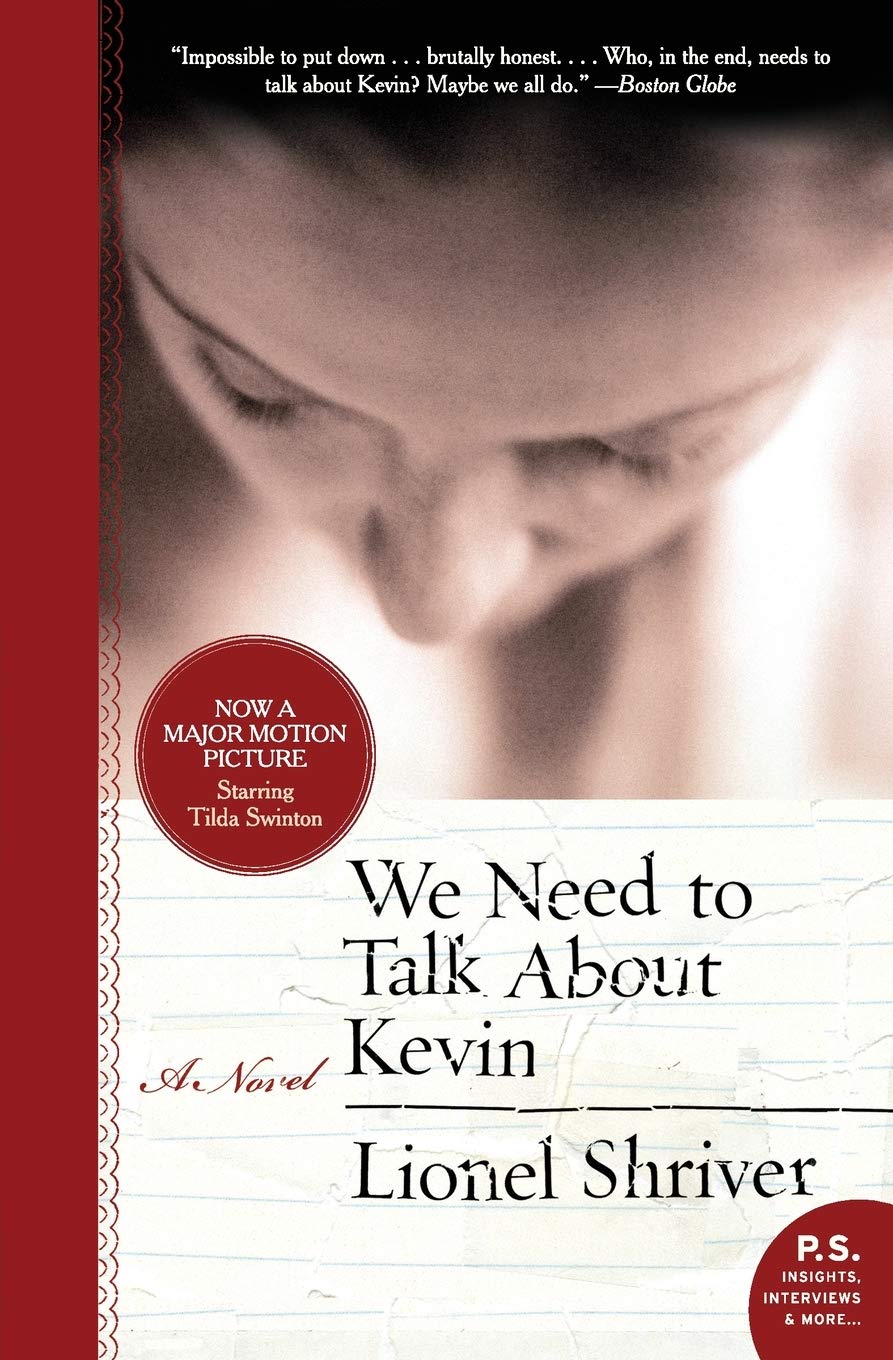
Author: Lionel Shriver
Publisher: Harper Perennial
Genre: Contemporary, Thriller
First Publication: 2003
Language: English
Major Characters: Eva Khatchadourian, Kevin Khatchadourian, Franklin Plaskett, Celia Khatchadourian
Setting Place: The United States in the 1990s and 2001
Theme: Guilt and Blame, Manipulation, Dissatisfaction, Family, Violence, Society and Class
Narrator: First Person from Eva’s Point of view
Book Summary: We Need to Talk About Kevin by Lionel Shriver
Eva never really wanted to be a mother – and certainly not the mother of the unlovable boy who murdered seven of his fellow high school students, a cafeteria worker, and a much-adored teacher who tried to befriend him, all two days before his sixteenth birthday.
Now, two years later, it is time for her to come to terms with marriage, career, family, parenthood, and Kevin’s horrific rampage in a series of startlingly direct correspondences with her estranged husband, Franklin.
Uneasy with the sacrifices and social demotion of motherhood from the start, Eva fears that her alarming dislike for her own son may be responsible for driving him so nihilistically off the rails.
Book Review: We Need to Talk About Kevin by Lionel Shriver
We Need to Talk About Kevin by Lionel Shriver is written in the form of letters from Eva to her husband Franklin, about their son Kevin. It is clear that Eva and Franklin are no longer together, and Eva feels tremendous regret. She writes to clarify things in her own mind, and to try discover what and where they went wrong—since Kevin is currently in prison for bringing his crossbow to school–and murdering 9 people there.
Eva writes about Kevin’s life and upbringing, all the things he said and did that seemed “off”, all the things that no one else seemed to see, all the things that in retrospect were leading up to the horrific day of the school massacre.
“It’s far less important to me to be liked these days than to be understood.”
Eva was never truly able to bond with Kevin, always feeling that he had no real emotions and was always playing a part—a role that fooled her husband Franklin completely. “Accidents” always seemed to happen to people around Kevin, anyone who annoyed him.
Eva suspected him of killing his sister Celia’s pets, and was convinced that he poured drain cleaner in Celia’s eye intentionally, even though he said it was an accident. Everyone besides Eva believes Kevin. Eva believes he is still playing his role to perfection, and only she sees the mocking and underlying sarcasm in everything he does and says.
“Children live in the same world we do. To kid ourselves that we can shelter them from it isn’t just naive it’s a vanity.”
The tension slowly builds through the novel. We know from the beginning that Kevin murdered people, the story winds like a fine watch up to the conclusion. I finished the book feeling shocked, horrified, saddened. It is rare that a book can elicit THIS much emotion, and even rarer that it has resonated with me ever since. I have never forgotten the shock and despair I felt when reading it.
This book marks one of the few occasions where I enjoyed the film adaptation of the book equally as much as I liked this superb novel. It’s only after reading ‘We Need to Talk About Kevin’ do I now realise how brilliant the casting was for the film. Ezra Miller has the look of an arrogant and sinister teenager; Tilda Swinton gives the hard appearance of a stubborn and slightly neglectful mother and John C Reilly plays the moronic, gullible father to a tee. It is worth a second viewing.







